
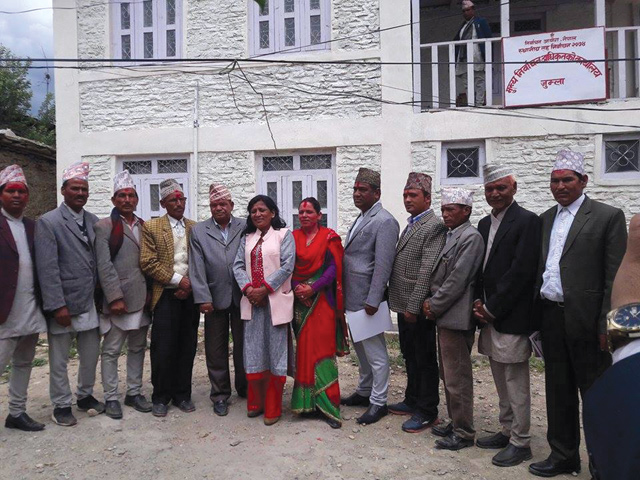
 Pic: Hem Budthapa
Nepal is still a patriarchy. Girls are discriminated against within families, communities and society. Men from privileged castes dominate decision-making, they are disproportionately represented in the cabinet, the executive branch, the civil service and also in senior positions in the private sector. Men sit where it matters.
Yet, there are winds of change blowing across Nepal’s gender landscape. Nepal’s President, Speaker of Parliament and Chief Justice are all women, and nearly a third of Parliament is female. And now, the feminisation of Nepali politics is trickling down to the grassroots through new constitutionally-mandated quotas for women candidates in local elections.
With 90 % of the votes counted from the 14 May elections as we go to press, women have won 4 of the mayorships and 65 of the vice-mayoral in races to municipal councils. Women also won 8 of village council chairs and 263 vice-chairs, and 2,598 of ward memberships. The vice-mayors in all four metropolitan cities where ballot papers are still being counted are sure to be women as well.
Compared to the total number of male candidates this may not seem like much, but it represents a revolution in the way many new villages, municipalities and cities will be governed from now on. This election is putting Dalit women not just in policy-making positions, but also making them responsible for implementation. Nowhere else in Asia has this gender shift in governance been as dramatic, and it is the most vivid indication yet of the inclusiveness promised in the new constitution.