
 |
When electroluminescence was discovered in1907, it was little more than a scientific curiosity. It took another 70 years for light-emitting diodes (LED) to come into use and found an application in infrared equipment and as the red lights that made up counters in early calculators.
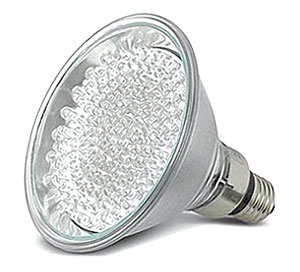
But in the years since LEDs have become an important component of lighting equipment in torches, emergency lights and even traffic signals, vehicle brake lights, and outdoor street illumination. Unlike incandescent light bulbs or fluorescent tubes, LEDs use very little power as electrons hit holes within the device to create electroluminescence.
The main advantage of LEDs, which is of relevance for us here in Nepal, is their low electricity consumption which makes it ideal for solar-powered lighting during load-shedding. There are now several companies manufacturing solar-powered LED lights for remote parts of Nepal.
"We designed them for use in Humla, but because of winter power cuts more and more are being sold in Kathmandu itself," says Dharmendra Maharjan of Lotus Energy that installs solar lights in remote area monasteries and homes.