
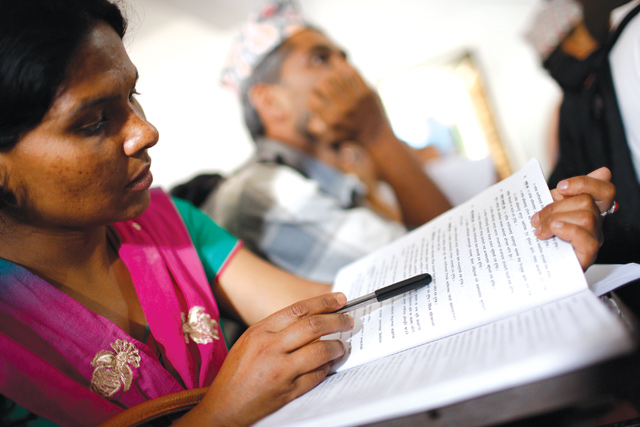
Just when it looked like that the feedback process on the new constitution would be nothing more than a show, the Nepali people have once again proven naysayers wrong by their massive participation in which they displayed political astuteness and alertness.
After all, they have waited over eight years in the current run and over six decades if you consider King Tribhuvan’s promise of a constitution through a Constituent Assembly, long before the Maoists launched their revolution in 1996.
The challenge and responsibility of the political leadership now is to respect this and accept suggestions from the people to the extent possible. True, it will not be practical to accommodate everyone’s views since many are diametrically opposite. But wide acceptability should be the guiding principle to improve the draft.
Most of the political parties, including the Madhes-based and Janajati ones, have agreed that Nepal would be a democratic republic which should be inclusive, federal and secular. Keeping these as unchangeable principles, the political parties should now bow down to the wishes of the people in democracy.
There is a real danger, though, that the political parties may interpret this participation as endorsement of their roadmap and ignore suggestions that came out of the consultations. This would be a big letdown. The road ahead should not be mapped by the pre-agreed script of a few top politicians nor by a handful of loud commentators who have opposed this exercise all along on one pretext or the other.
There are two main historically oppressed communities in Nepal: women and Dalits. When it comes to the rights of women, this draft is shameful and the UML would do well to read the writing on the wall on citizenship through mothers. In the case of Dalits, too, the draft is woefully short of addressing their genuine grievances.
Citizenship through mother is a legitimate and natural right. When the UML or others try to deny this, they are forced to come up with multiple sub-clauses in the draft. These xenophobic leaders infest most parties, including Madhes-based ones, and justify their stance on citizenship because of fears of Indian inundation.
This whole exercise of public consultation on the draft of the constitution would have been far more fruitful had the parties demarcated the boundaries of the new states by rightly leaving the names of new provinces to elected state legislatures.