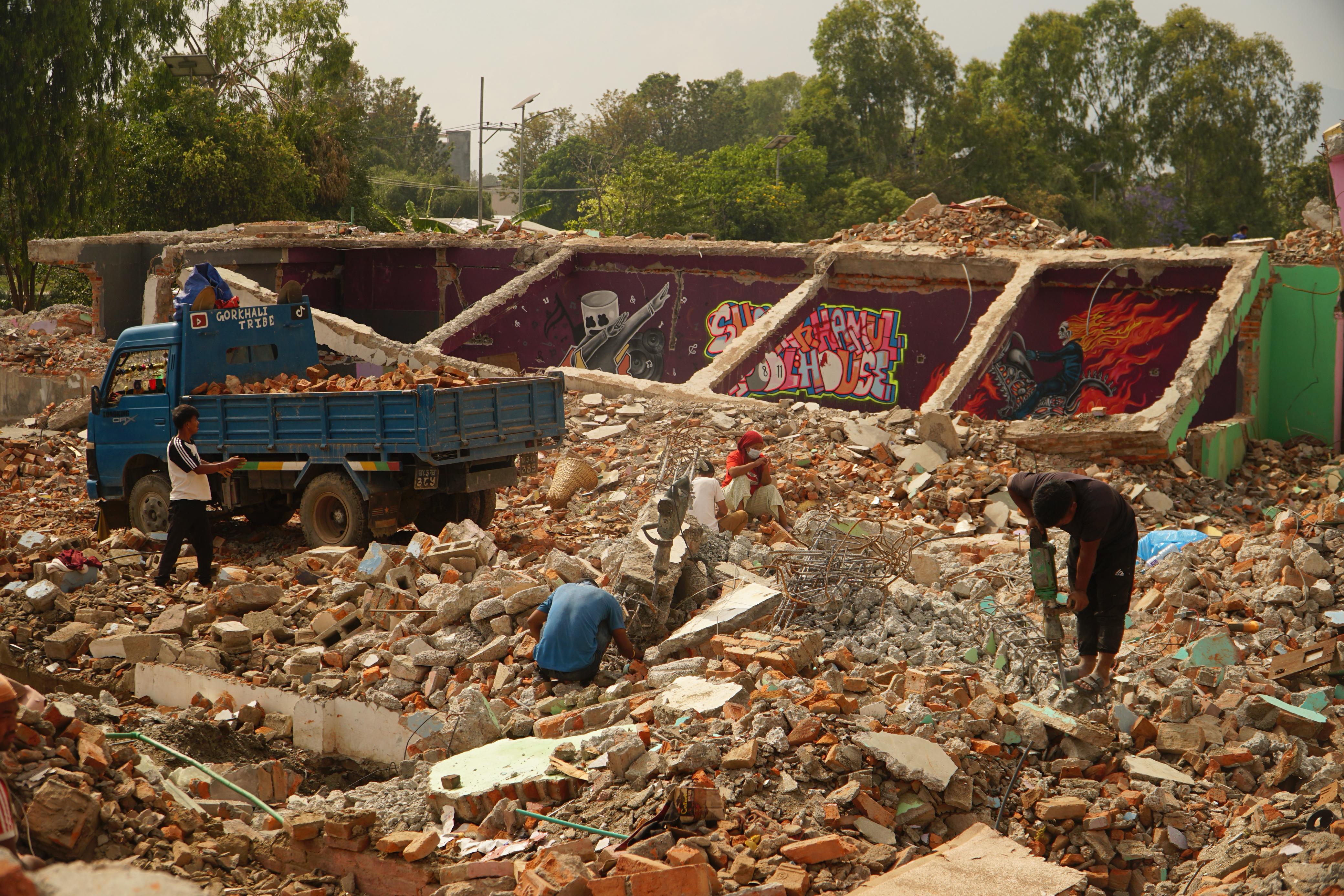
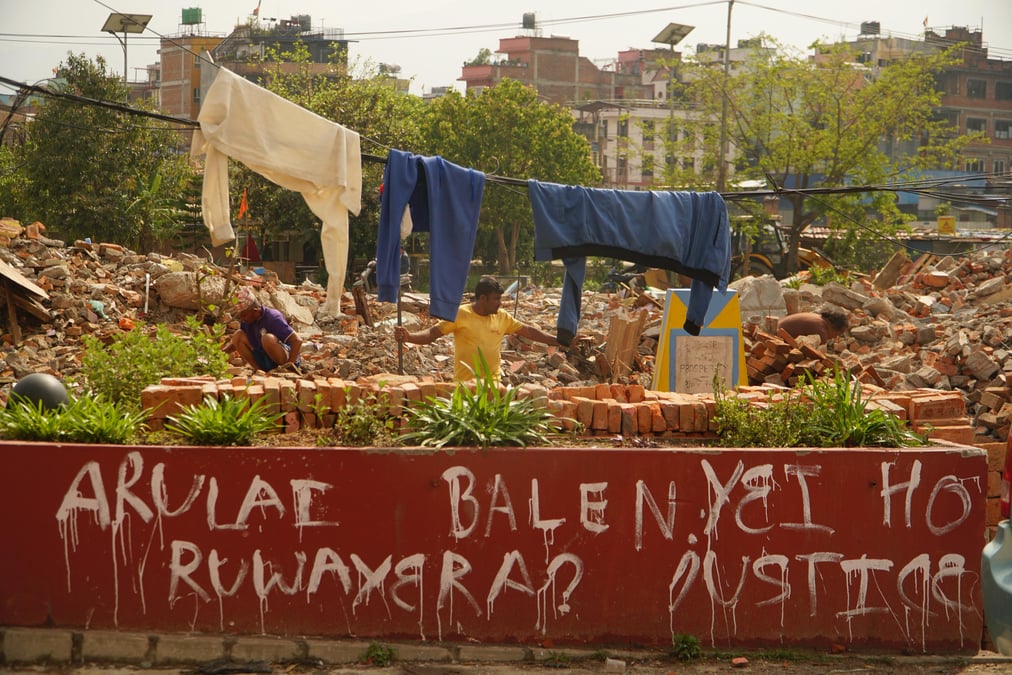
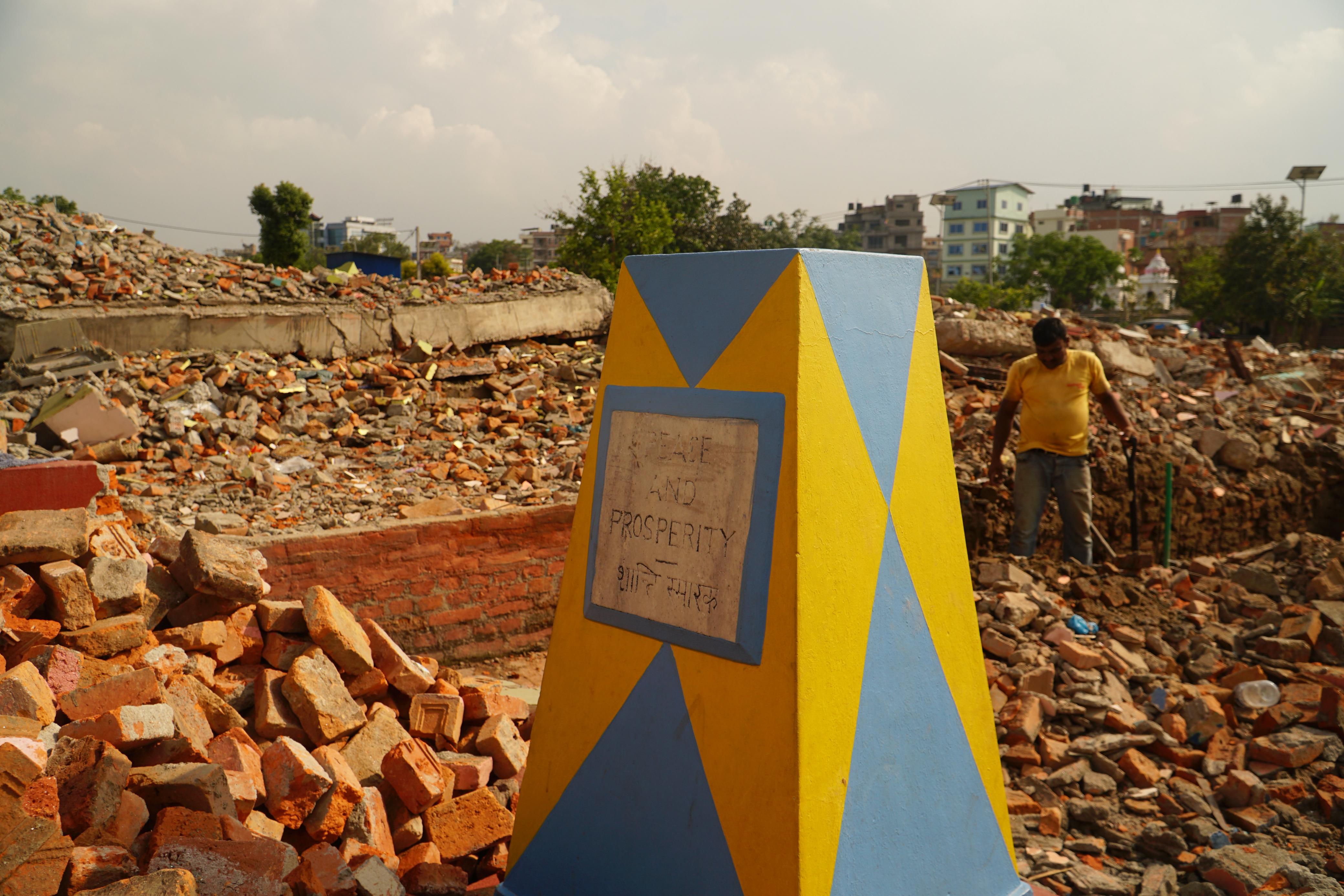
The graffiti on the broken walls amidst the ruins express the desperation and anger of those who were evicted from their homes in Kathmandu. ‘Peace and Prosperity’ was the slogan of the ruling RSP, and now it sounds like satire.
Another one scrawled in red is an expletive directed at Prime Minister Balendra Shah who ordered the demolitions.
It has been two weeks since the shantytown along the banks of the Bagmati in Kathmandu was razed after a 24-hour notice. Residents are still picking up what is left of their homes – both literally and figuratively.
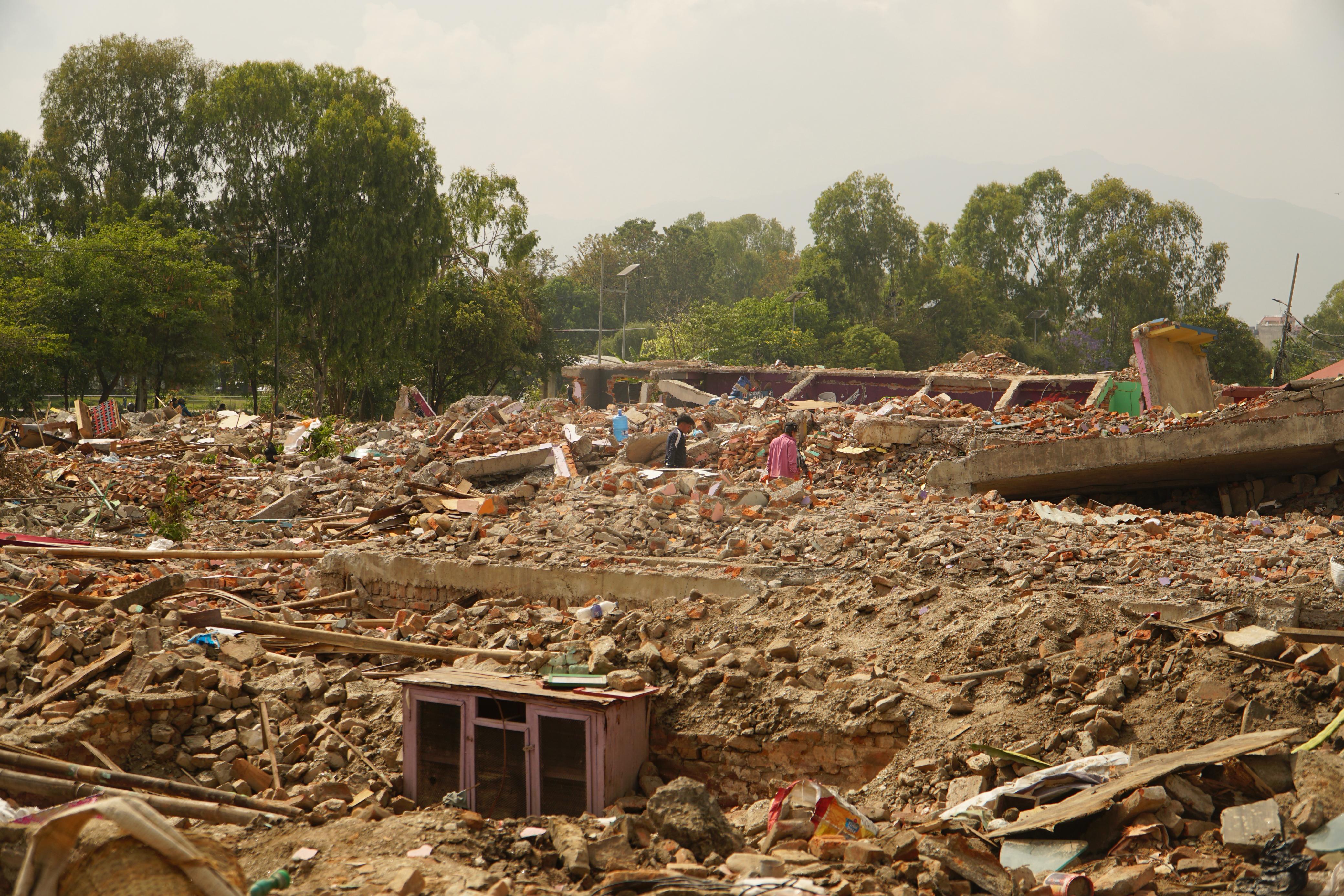
Everything that can be salvaged is being taken out: bricks, iron rods, corrugated sheets, pieces of timber. Abandoned pets roam the ruins, rummaging for food.
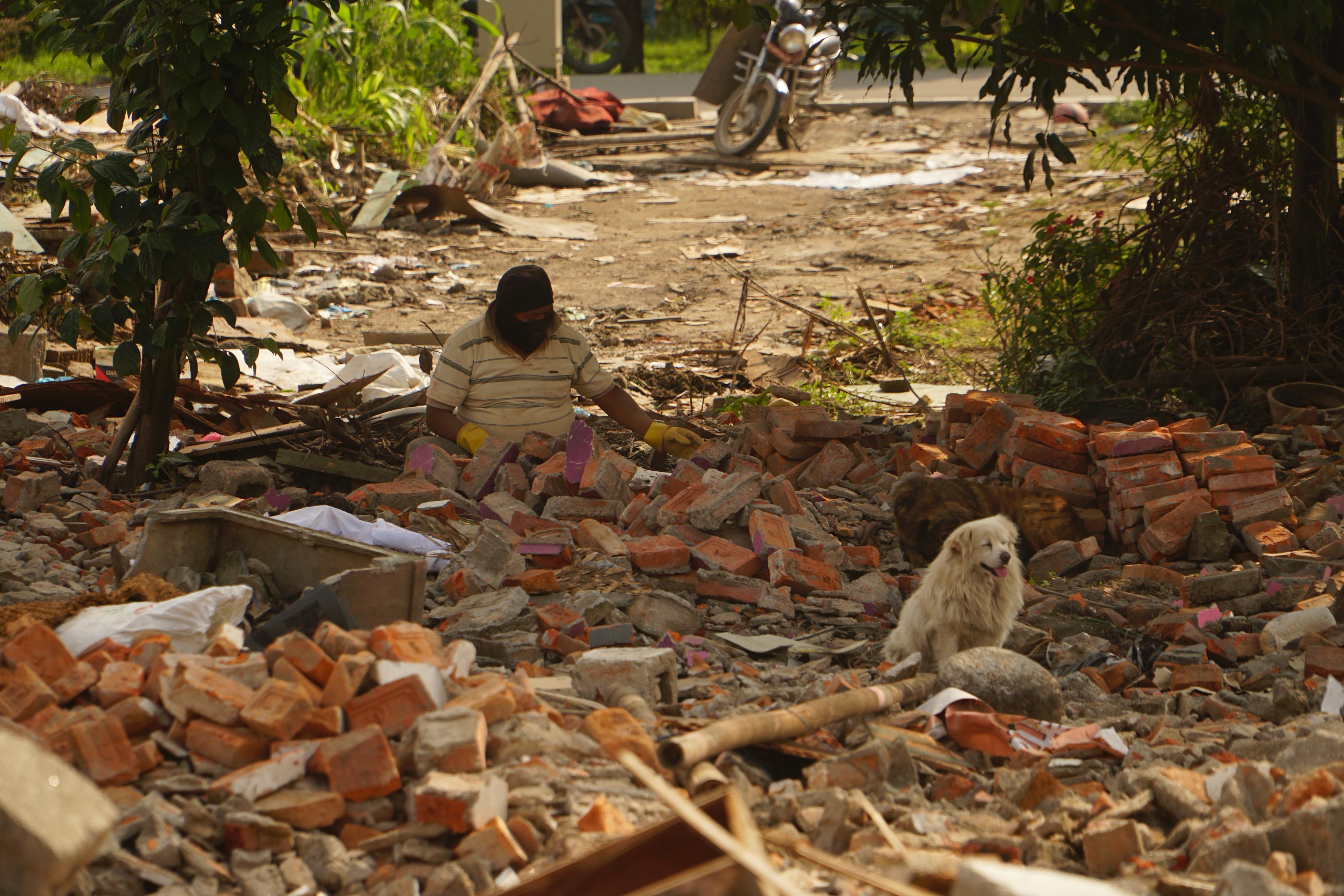
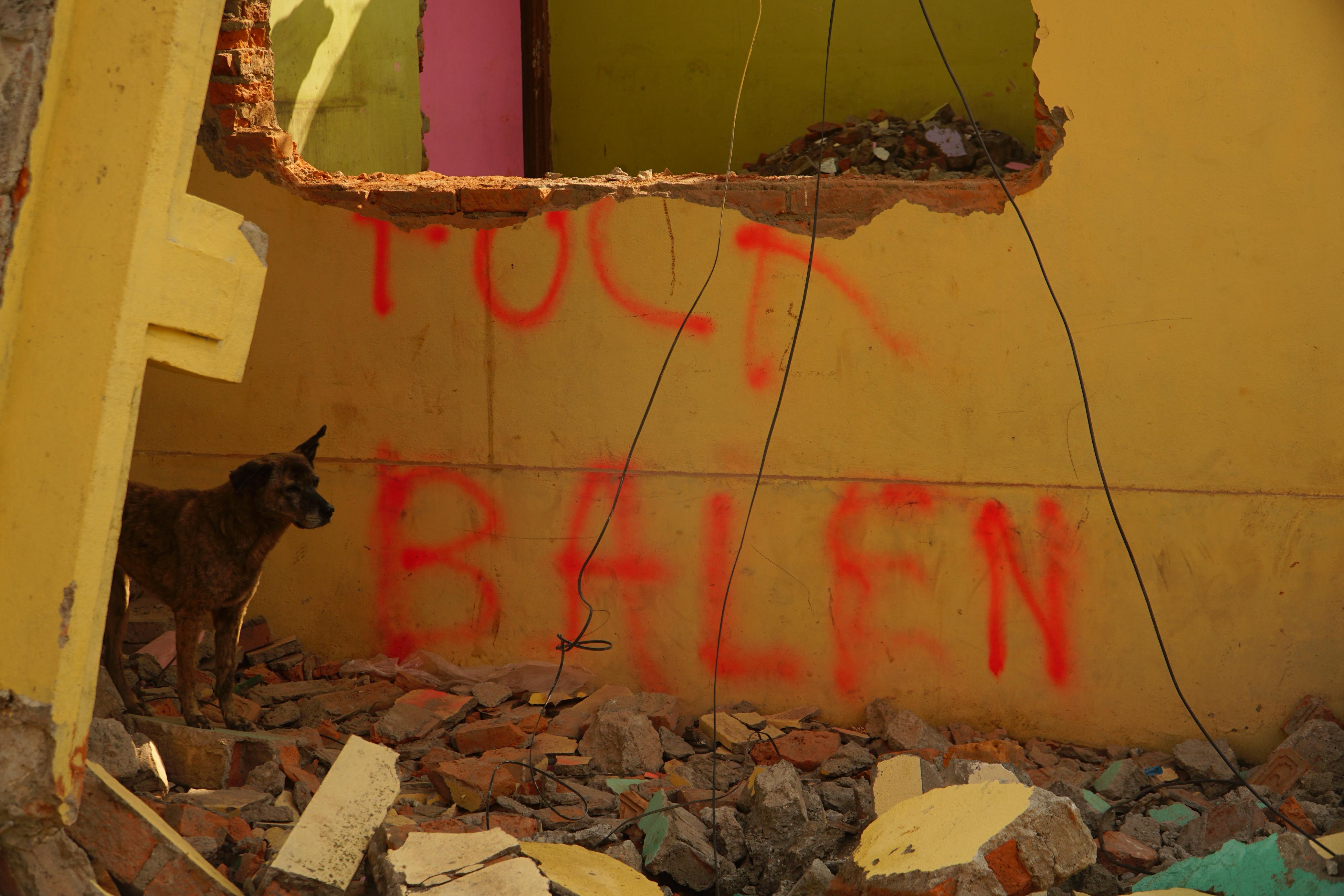
The YouTubers and Content Creators have long gone – moved on to other developing news stories outside Parliament. Even the pedestrians and motorcyclists on the Bagmati Corridor pass by, not even glancing at the flattened buildings. There is no police presence.
“I have no place to go. The government has not followed up since,” says Bishnu Shrestha, as he sorts out bricks to sell later for food. “The government couldn’t differentiate between the rich and poor.”
His family members pull him aside, worried someone may steal their bricks. Nearby, another family is digging through the rubble that was their home for lost belongings.
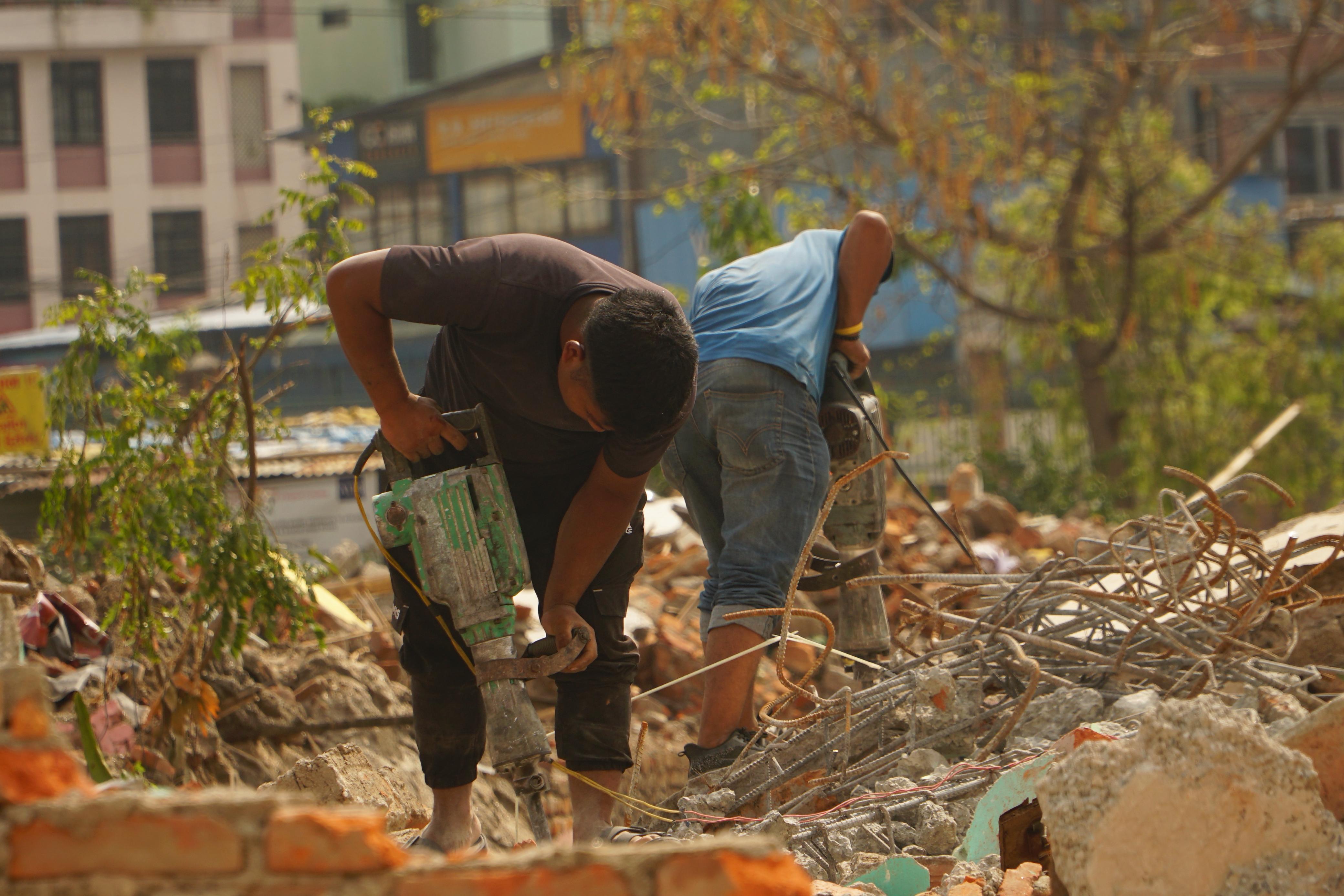
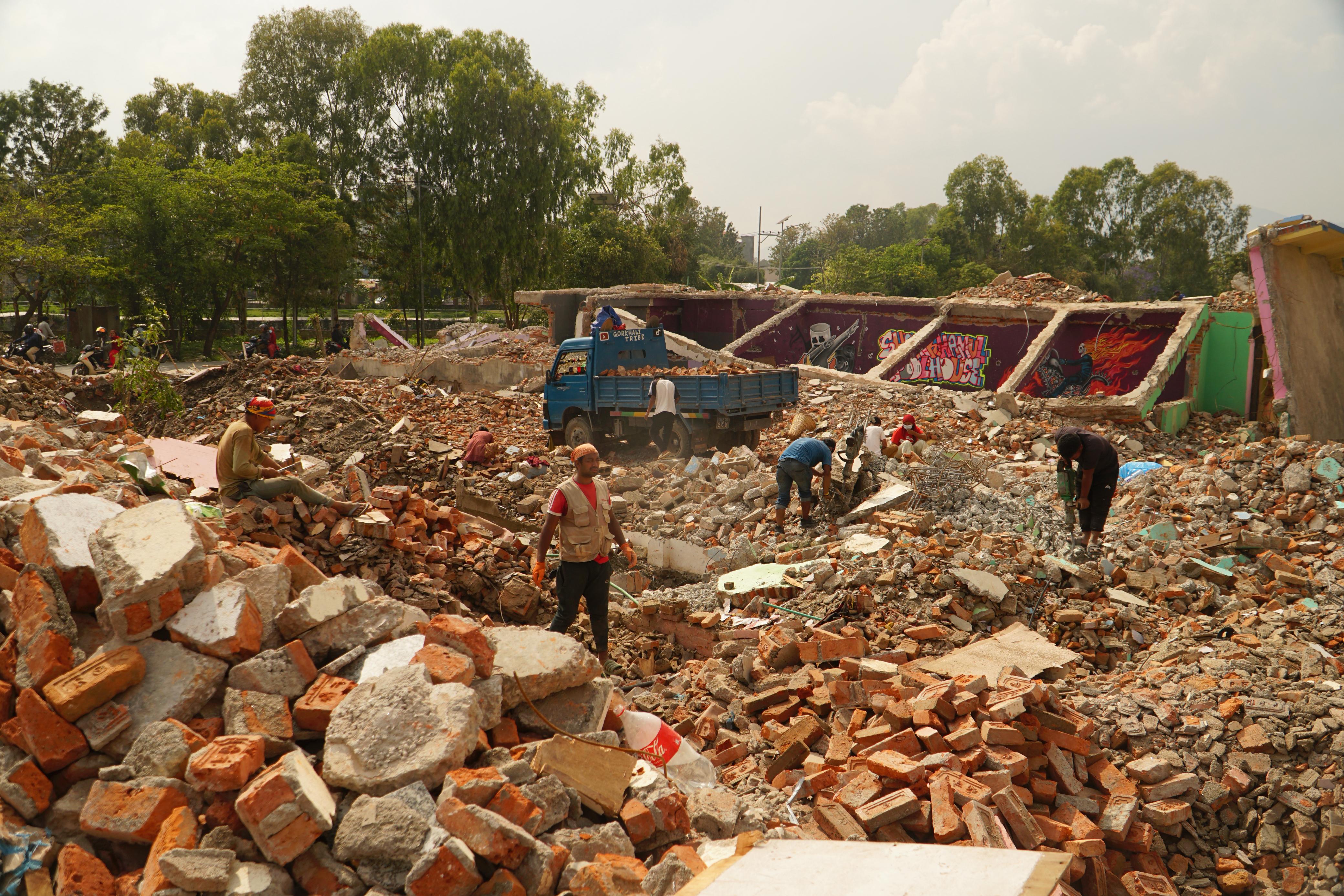
The government has temporarily resettled some of the registered families in Kirtipur and Banepa until they are verified as landless and then given options. Those in the shelters are getting Rs15,000 a month until they have a place.
But that is only a fraction of the estimated 10,000 people who were displaced. While some of them did have property elsewhere in Nepal and were settled along Kathmandu’s rivers by political parties to bolster their vote banks, many families have lived here for decades, raising children and paying municipal taxes.
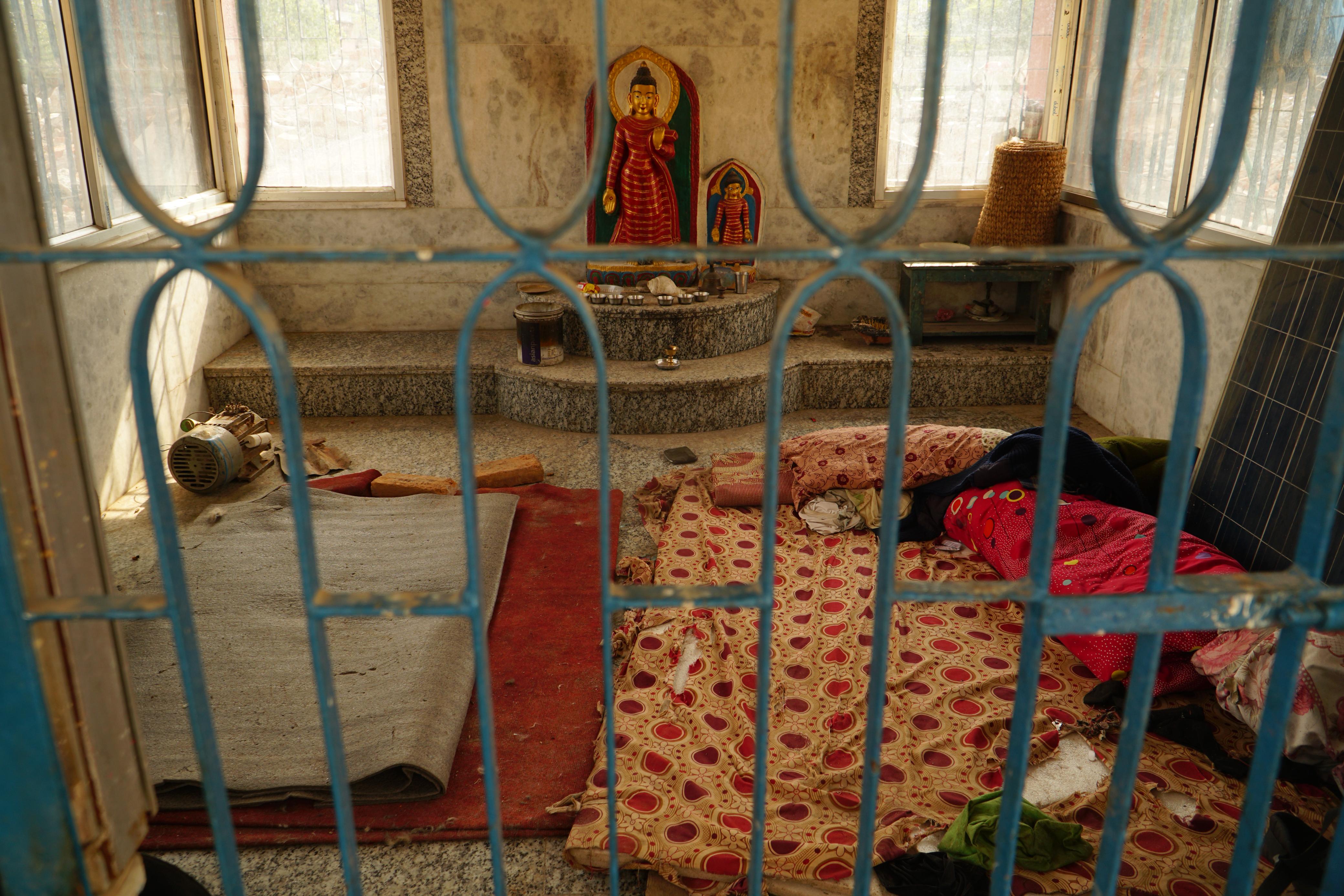
Another resident, Suresh, is squatting on the steps of a nearby shrine (pictured) and says he has nowhere to go after this waste dumping site was also demolished. “It was a black day for us,” he sighs. “Now someone else will benefit from all this.”
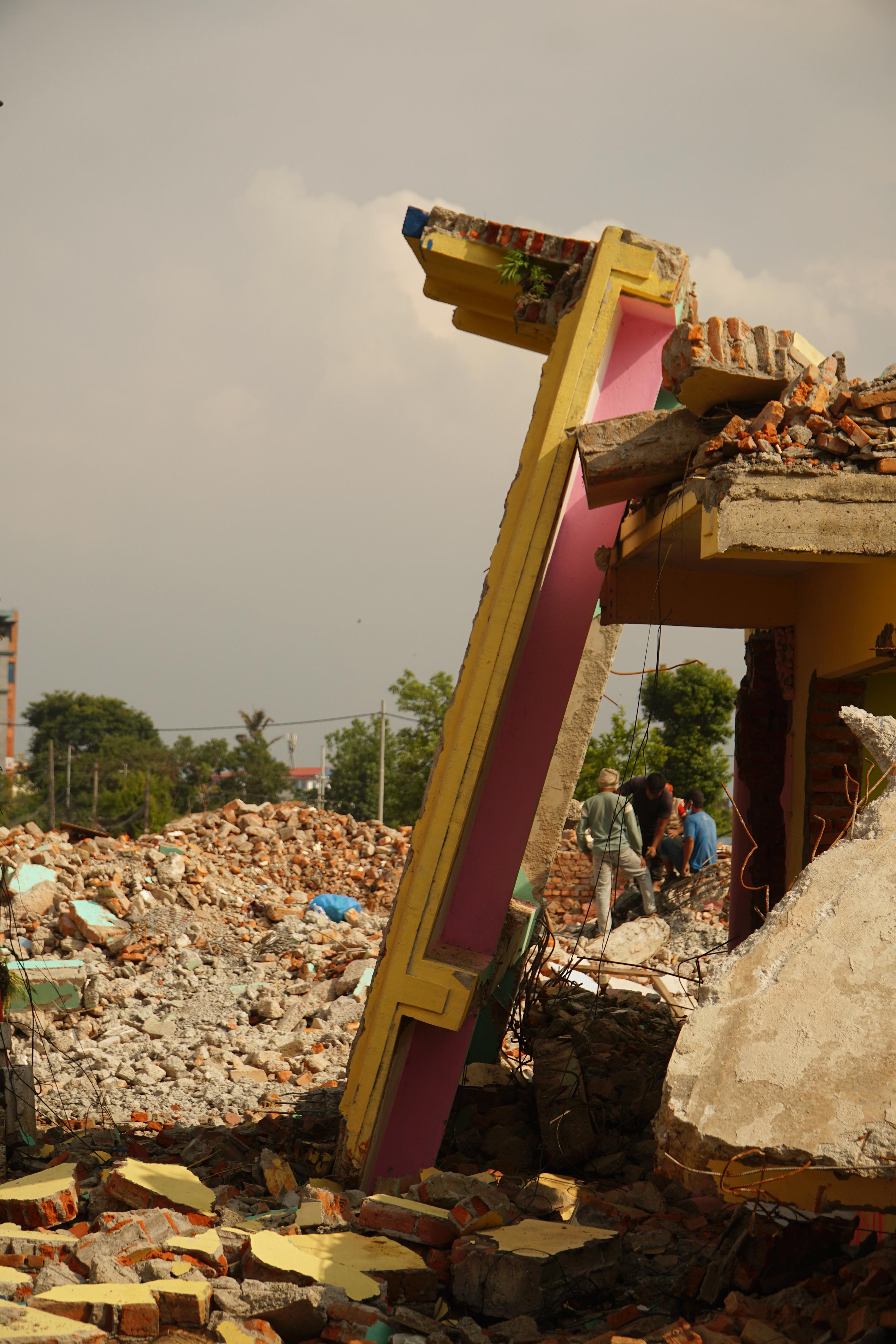
The skeletal remains of reinforced concrete pillars and slabs are all that remains in what looks like a bombed-out war zone. The government said it was sending heavy earth movers to clear the area to reclaim the river’s flood plain, but a diesel shortage means those plans have been shelved.
When asked about their neighbours who were settled in the areas allocated by the new government, those we interviewed claimed they were all well-connected families. There is no way to verify this, but their distress is real. Most are daily-wage earners and are resigned to their fate: they have no hope the government will ever resettle them and lack the connections and resources to fight the system.