
Photo: Bikram Rai
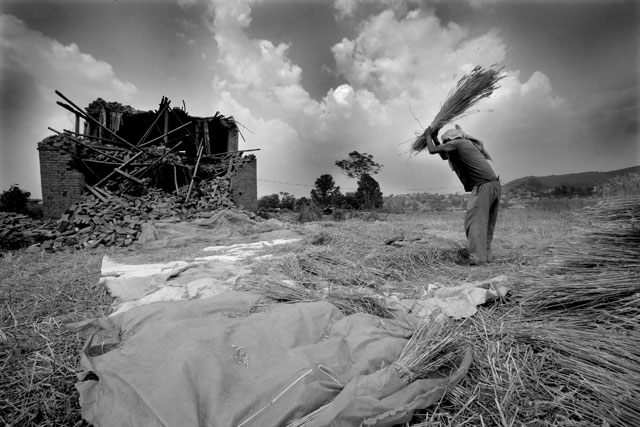
Amidst all the post-earthquake we-told-you-so of prophecies fulfilled, there is one stark and brutal truth: this country was already a disaster zone even before disaster struck last month. And nowhere was that more evident than in agriculture.
Eighty per cent of Nepal’s people rely primarily on farming for livelihood: agriculture contributes 40 per cent of the GDP, yet the farming sector had either been neglected, or ruined by flawed policies. Allocation for agriculture in the annual budget had fallen to less than 3.8 per cent – and most of that was not earmarked to boost production but to subsidise consumption.
Most alarmingly, the state’s investment in the Agricultural GDP (AGDP) has been consistently below 2 per cent since the end of the conflict, a period when farming should have sprung back to reap the peace dividend. Experts we consulted said a country needs an optimum of at least 10 per cent investment in AGDP in order to meet the demand of a growing population.
Agriculture in Nepal was already broken, it needed to be fixed even before the earthquake. Young people were moving out of the land, private and public investment in farming was falling, urban expansion was reducing the total cultivated area, there was fragmentation of landholdings, irrigation was never given the priority it needed, productivity was plummeting. And on top of all that, erratic monsoon and extreme weather events caused by global climate change was starting to make all those prevailing problems worse. In a country where 85 per cent of farmers still depend on subsistence rain-fed agriculture, Nepal was already in crisis.
Then came the earthquake. The government’s reaction in the past month has been marked by one dominant feature: a singular lack of a sense of urgency. For a calamity of this scale and scope, we needed leadership that would already be on its mark, getting set, and ready to go. Here, one month later, we are just beginning to see a creaky state machinery trying to organise itself for relief delivery. It’s like the PMO is swimming in honey, the bureaucracy camping out in tents take ages to decide anything and when it does the decisions are ill-considered and ad hoc. Instead of rushing relief supplies through customs, officials find excuses every step of the way to delay clearances. Most government pronouncements have been counterintuitive and counterproductive (Prime Minister Relief Fund asking rescuers to leave prematurely, customs duty on relief goods, a ban on new houses when shelter is the prime need) or have been deadly blunders (the Army brass refusing to allow RAF Chinook heavy-lift helicopters to punish the UK government for the arrest of Col Kumar Lama).
To be sure, we have seen some bright spots in the Ministry of Health, district hospitals, the role played by state broadcasters in disseminating accurate information and refuting rumours, the urgency displayed by security forces in search, rescue and relief.
However, just when it should have sprung into action, the Ministry of Agriculture is in deep slumber. Emergency food aid has been handled reasonably well by first responders, including some local administrations, UN agencies like the World Food Programme, charities, communities and individuals. But relief now needs to change gears from distributing food to rehabilitating agriculture.