

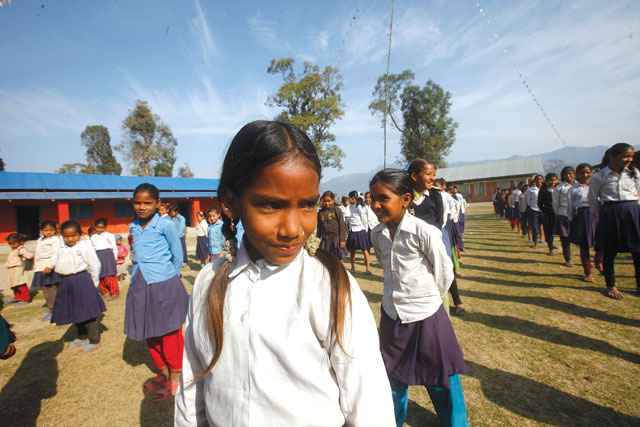
Nepal may be South Asia’s oldest nation state, but it is a young democracy with a youthful population. The share of population in the 15-49 age group is projected to increase to 55.5% by 2031 while that below 24 years will peak at 51.5% in 2018.
Nepal’s youth bulge (16-40 years) stood at 40.3% of the total in the 2011 census and is expected to expand to 43.3% in 2031 before the proportion of elderly will start growing. Countries like Japan, Greece and Finland are also ageing, which is causing an immediate economic imbalance.
Never before have there been so many young people in Nepal. And never before has there been such an easy flow of knowledge, skills and people across the world. These two facts put together produce immense potential for economic and social progress.
This demographic window of opportunity will only last a few more decades. And if something is not done urgently to take advantage of this, our one-time opportunity will be lost forever. For example, the GDP of many Southeast Asian countries increased seven-fold in the late 20th century, causing an economic boom described as the ‘Asian economic miracle’.
But in Latin America, education and health were neglected and a similar window was lost forever. The key to harnessing this dividend lies in education. Providing opportunities to the burgeoning young population to grow to its best potential should be the focus of all government policies, including local ones.
Our education system needs to be quickly steered towards providing interdisciplinary, analytical and creative skills to our children. Without this holistic transformation, we will continue to be the unskilled labour suppliers of the world. And that would be the greatest injustice to the future generation that present leaders could do.
A report, Education Redefined: The future is Now, published by The Economist Intelligence Unit, recently assessed the effectiveness of education systems in preparing students for the demands of work and life in a rapidly changing landscape. An ideal 21st-century education system is designed to impart interdisciplinary skills, creative and analytical talent, skills in entrepreneurship and leadership, in digital and technical areas, as well as global awareness and civic education. New Zealand, among the countries studied, scored highest in the report.