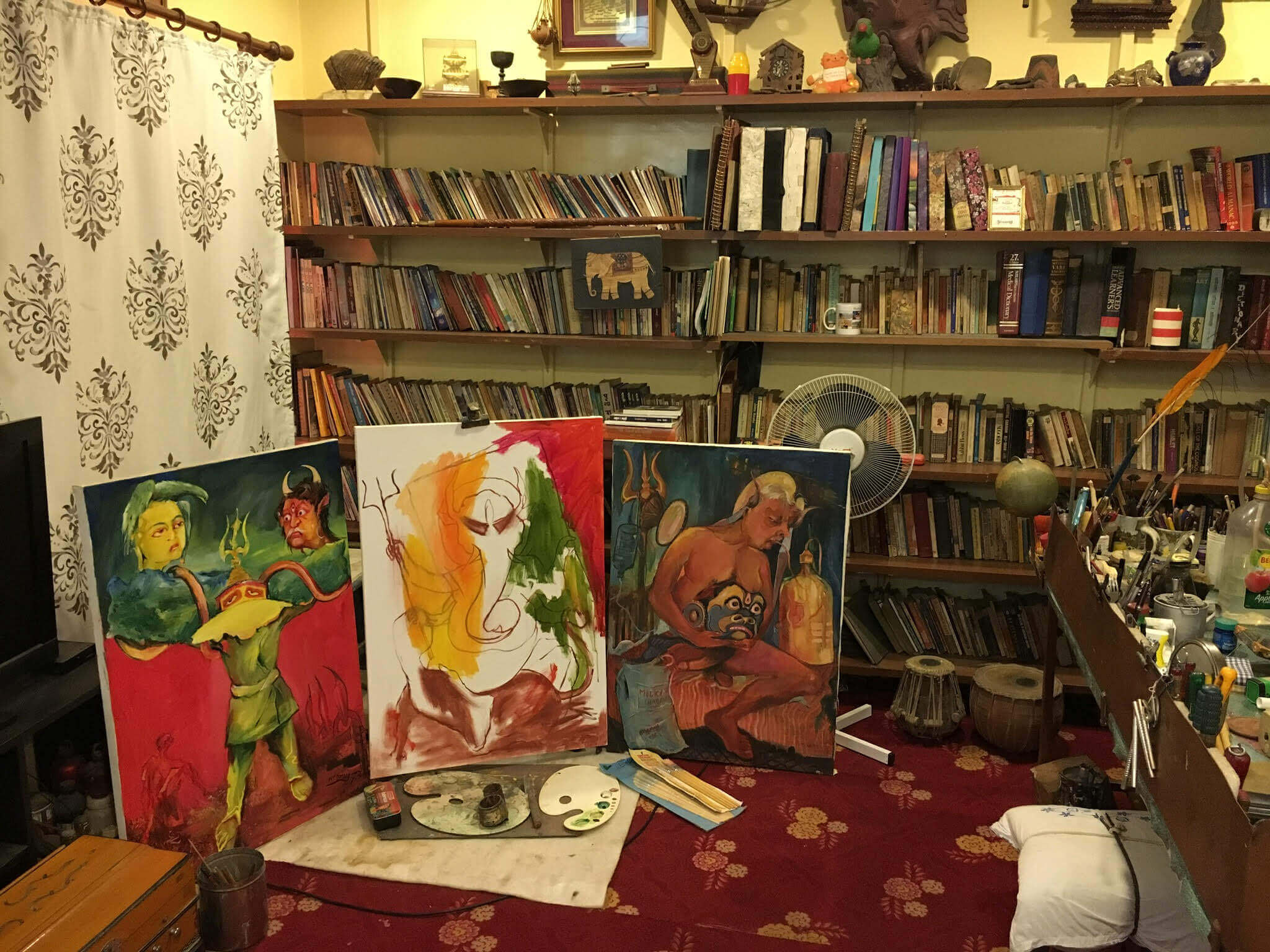
Manujbabu Mishra had lived the second half of his life in almost complete isolation, not going outsidehis leafy home on the outskirts of Kathmandu. His studio, cramped with books and painting equipment, suited his lifestyle and personality.
His large writing desk is lined with containers, each holding tools of an unimaginable variety: hammers, wrenches, screwdrivers, scissors, brushes. He was skilled with his hands, and made his own bamboo pens, a water cannister to sip from, and even crafted his own chairs, benches and easels when younger.
Before advancing age and ill health forced him indoors, Mishra lived a hermit's life in an outhouse while his family lived nearby. The fiercely self-sufficient artist,who preferred expression to aesthetics, passed away in his sleep at the age of 83 on 8 August.
Mishra's residence, fittingly called 'Hermitage,' reflected his artistic sensibilities: an old fashioned pulley bell instead of an electric one, sea shells adorned the slot for his letterbox, artistic pieces from all over the world litter his home.
He disliked uniformity and conformity, and this is reflected in the ambience of his studio decorated with multicolored warm rugs and a library beautifully age-worn. Everything is exactly where he left it, including a half-finished painting.
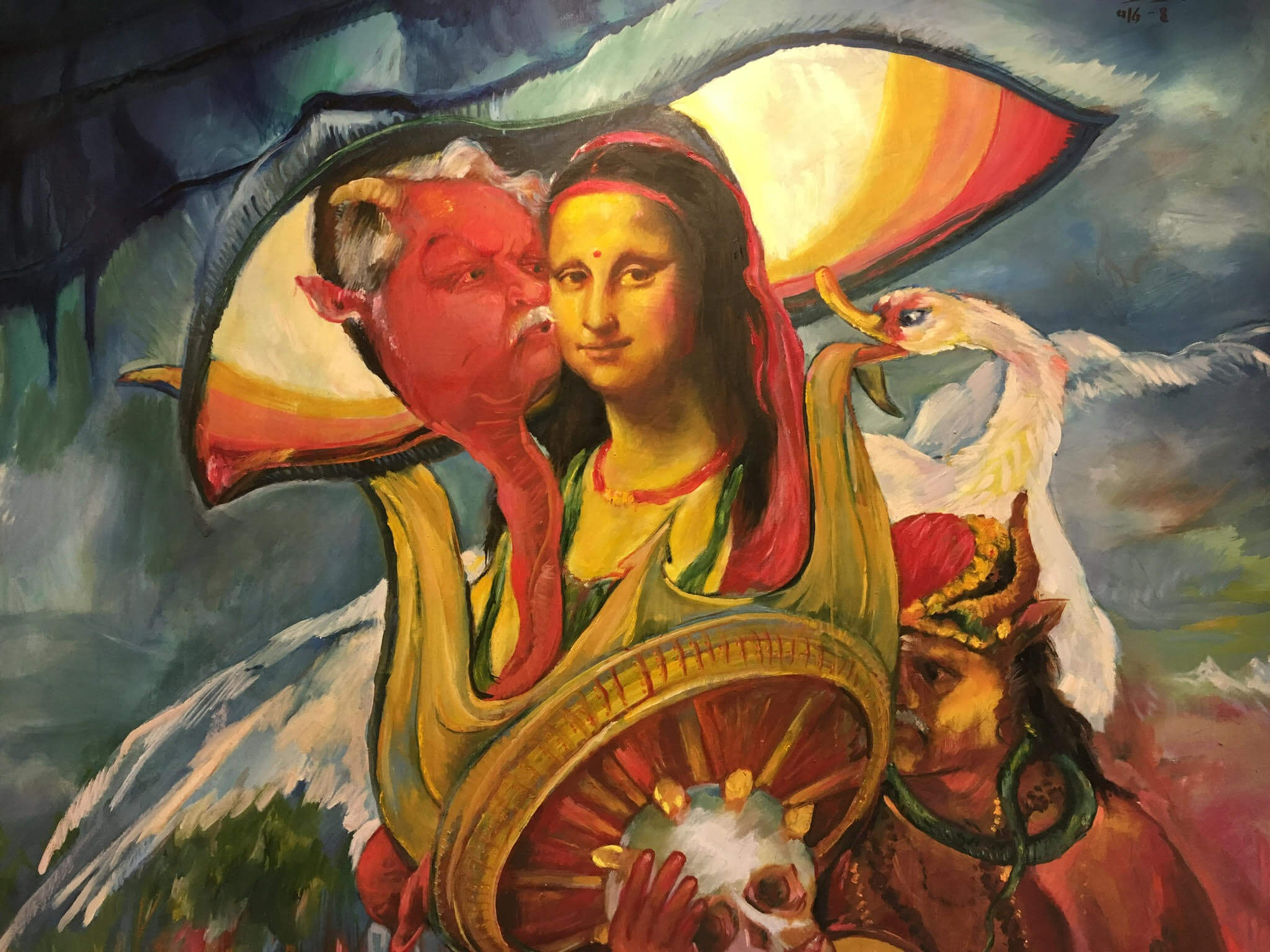
Mishra was known for a grotesque trademark style where his own face is seen in distorted forms, often accompanied by horns, tridents and rockets amidst tumultuous multi-coloured clouds swirling over transgenic animal forms. He imbued each of his symbols with meaning.
The trident is a symbol of power, of creation and destruction, which to him symbolised eastern philosophy. The horns are often seen growing out of his own self-portraits, and are emblematic of the beast in the man. He often bemoaned that modernity seemed to isolate people even further from each other, which was increasing these ghastly tendencies.
Even though he almost never left home, he painted portraits of our times with a deep understanding of the devastation outside: of nature, of humanity, of morality and goodness, of loneliness and the fear of isolation. There is a loneliness and isolation in Mishra’s studio, accentuated by his absence.