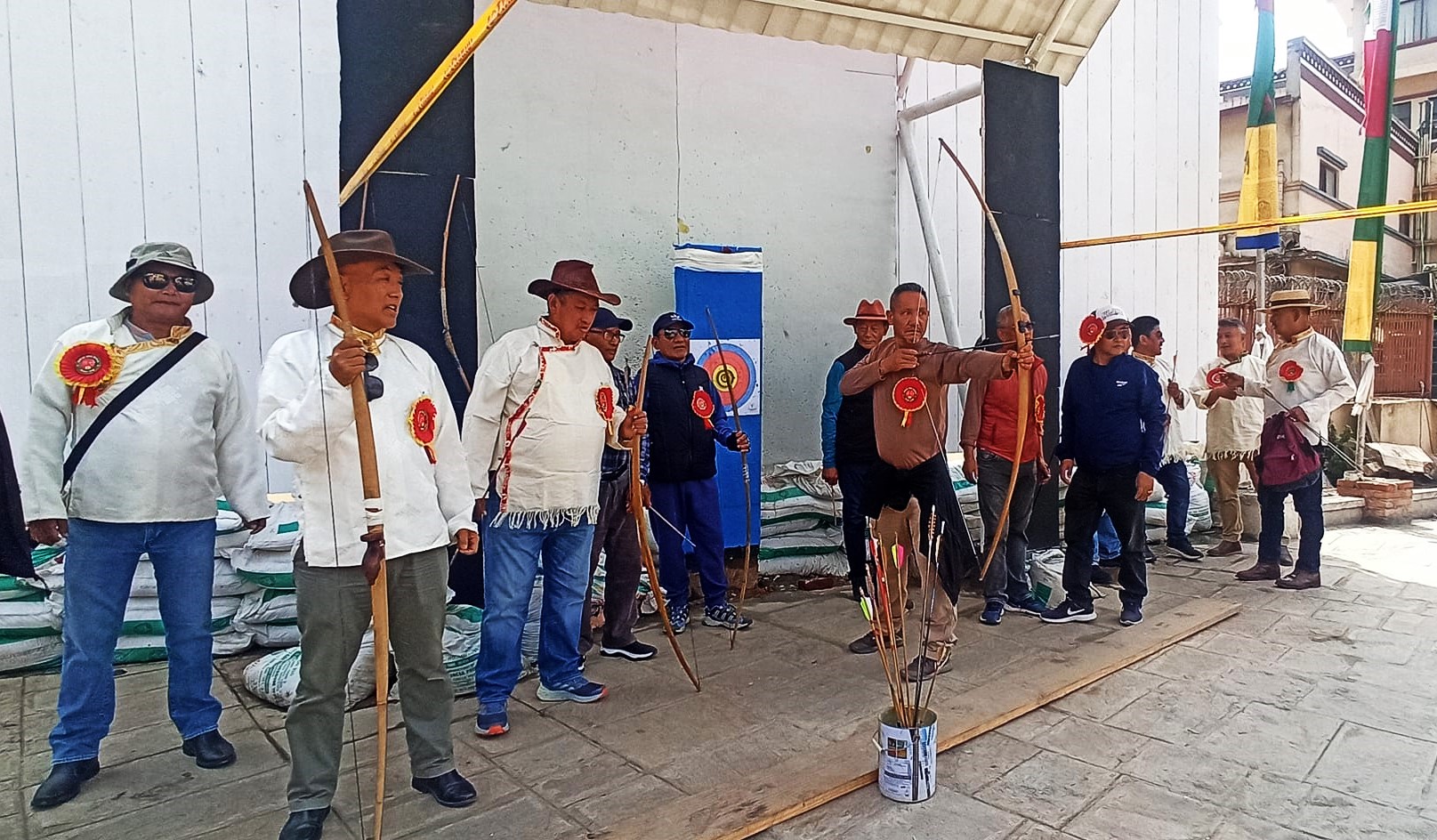
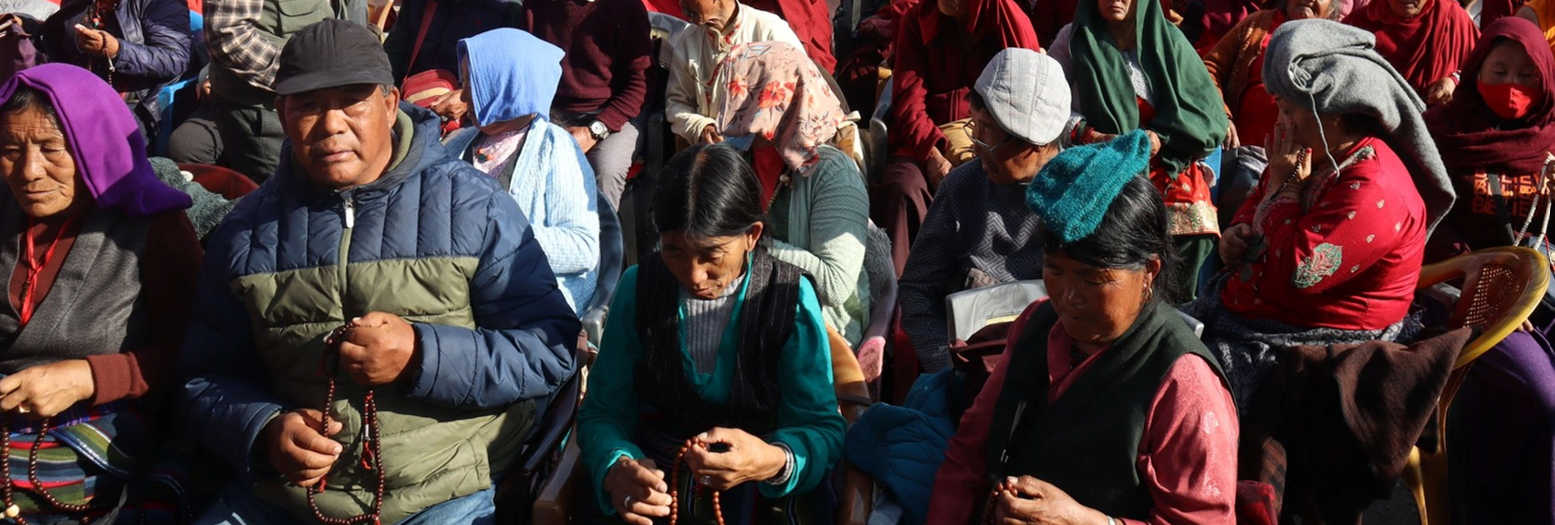
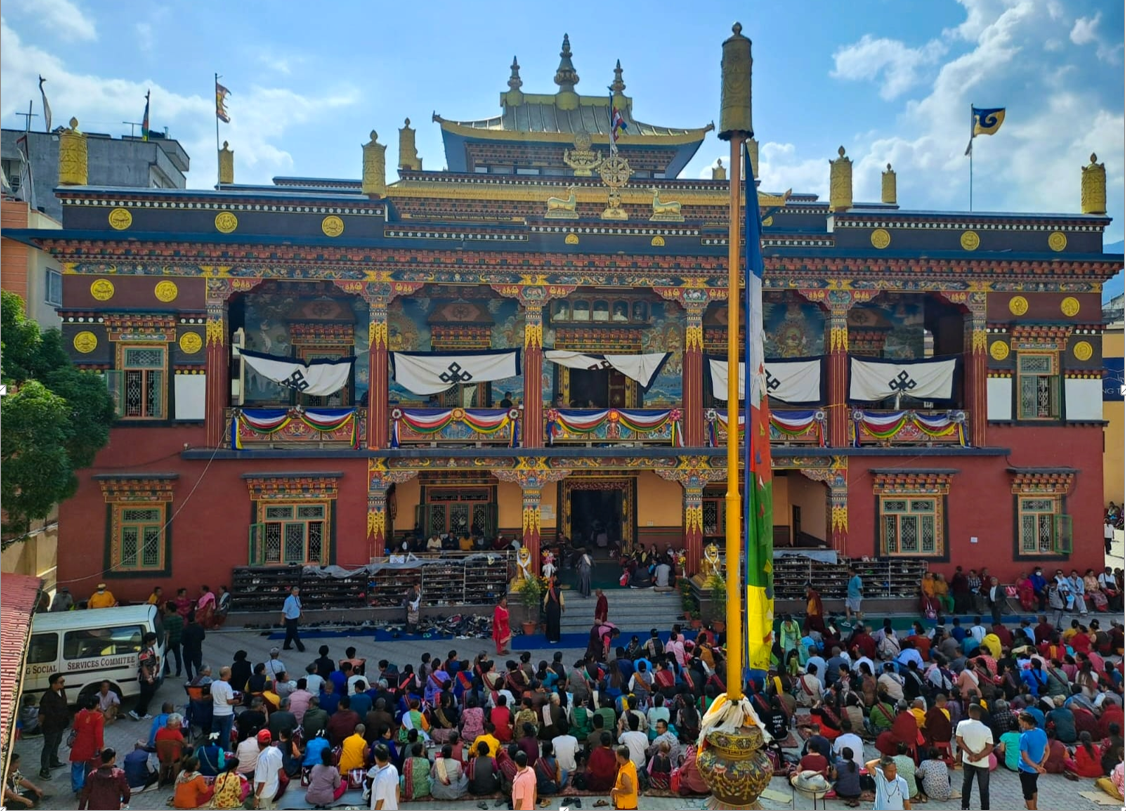
Every November, the Manangi community in Kathmandu pools social and material resources to organise a three-week-long fasting retreat in Swayambhu, where participants chant, prostrate, count prayer beads, and fast.
While the austerity of this retreat, known as Ngungne, reflects the Manangis’ commitment and devotion to their spiritual practice, a closer look at the organisation and investment of community resources involved also reveals an alternative and intriguing form of capitalism.
The history of capitalism has often been understood from the perspective of Western capitalism and the free-market economy. However, the ways in which the Manangi have produced, accumulated, redistributed, and reproduced capital in their society at the interface of spiritual commitment and kinship obligations open new ways to think about capitalism.
In Nepal, the Manangi community has been known more for the success of its trade than for its social and spiritual aspirations. Manangi trading goes back several centuries, predating the formation of modern nation-states. This trade connected societies of two distinct ecological regions separated by the Himalaya and connected the hinterland with the maritime commerce.
Manangi trading, along with trade by other Asian merchant diaspora, formed the backbone of trade in Asia until the arrival of Western trading empires, armed with gunpowder and large capital stocks. While the trade networks of most traditional merchant diaspora were disrupted, a few communities, such as the Manangi, have continued to thrive.
Although the Manangi are known to have received trade privileges from the Nepal government to conduct international trade, much less is known about the internal social institutions and cultural ideas that have enabled their society to thrive. The fact that their trade has continued to expand long after those privileges ended merits a sociological examination of their society.
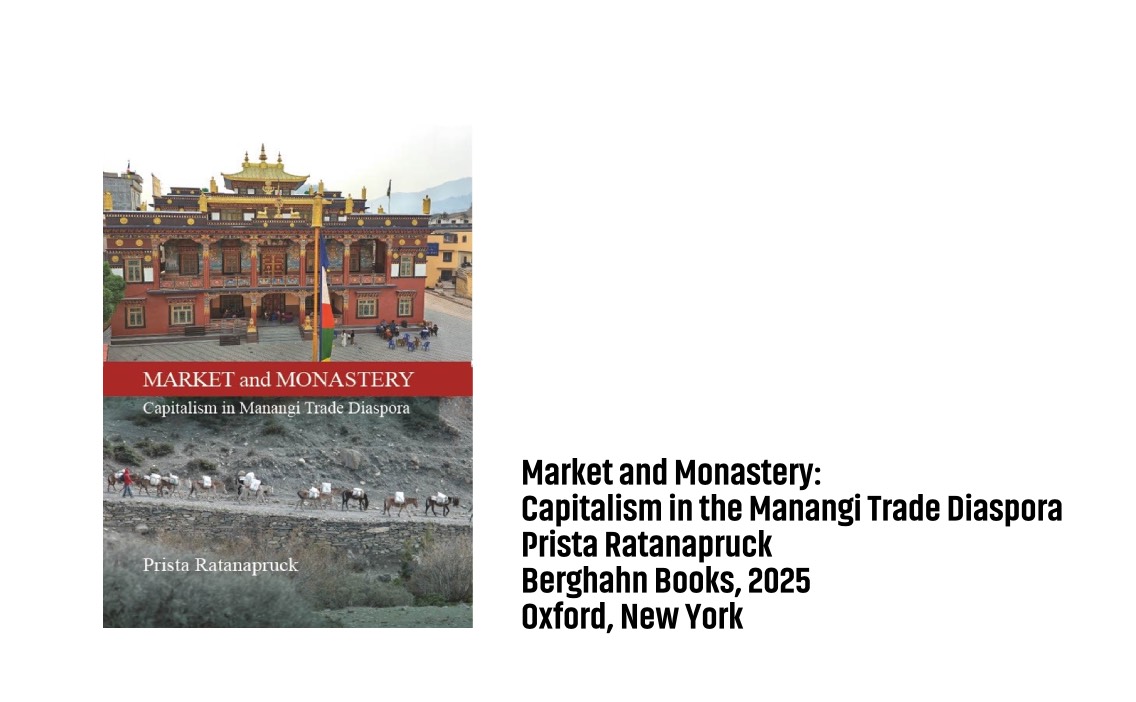
My book, Market and Monastery, highlights a specific cultural logic regarding partnership that has shaped relationships within the community, both in the pursuit of material wealth and the cultivation of shared social and spiritual aspirations. Not only has the Manangi transregional trade thrived and expanded in the last few hundred years, it has also generated sufficient surplus to finance ambitious social and religious projects.
They fund collective rituals, extensive family reunions, construction of schools, roads, health clinics, religious monuments, support for the underprivileged, and more recently, humanitarian initiatives that serve the broader Nepali society.
SELF-INTEREST
This logic of partnership that has shaped relationships among individuals in the Manangi community is a cultural premise that is not entirely different from the neoclassical economic assumption that humans are self-interested individuals whose social actions and underlying motives align with the maximisation of their individual interests, however broadly defined.
These cultural premises about individuals, however, are only two among many possibilities, and they vary across societies. In the Manangi community, I argue, this logic of partnership has enabled the creation of the social and material conditions that have sustained the community across vast geographical spaces and successive generations.
This is not a story of an ideal society. Rather, it is an account of how a society that thrives on cooperation and partnership has preempted and responded to conflicts that are bound to arise among individuals in any society. Collaboration is not an innate characteristic of the Manangi society, but the outcome of conscious efforts to create social institutions and cultural practices that foster and sustain forms of cooperation considered desirable and important to their society.
Cooperation and partnership have been formed despite the presence of conflicts and internal rifts. This is, indeed, a story of a society at work.
The book traces the Manangi’s engagements with societies across South and Southeast Asia to understand how they created the social and material conditions that enabled them to sustain their trade while also fulfilling social and spiritual aspirations.
Specifically, I examine key internal social institutions that have fostered cooperation and partnership within the Manangi community. Abroad, these social institutions have built trust, supported productive social relations, and enabled the pooling of trade knowledge among individuals.
At home, the Manangi have developed intricate systems for pooling social and material resources to organise religious rituals and social festivals vital to their collective life. Through these processes, they have been able to circulate funds for various personal and entrepreneurial projects while nurturing values important to the viability of their society.
The diversity of the religious rituals and festivals has endowed the Manangi with diverse social and financial capital involving different degrees of intimacy and under various terms and conditions. Their social and financial institutions, embedded in diverse social practices and social etiquette, have facilitated collective savings.
Capital production in the Manangi community has emerged contingently to align life projects towards different ends: for social, entrepreneurial, and spiritual aspirations. In that process, accumulation and redistribution of capital transpire alongside accrual of religious merit, social reputation and obligations.
Within the community, the Manangi also extend non-interest-bearing loans among one another to support and uplift community members in need of investment capital. Many Manangis have credited this form of loan as key to enabling them to establish and expand their businesses, allowing them to rise collectively and becoming well-off as a community.
Over the course of a few generations, the Manangi community has become both affluent and educated. Profits from international trade have also served as important seed money for new enterprises in the formal economies of Nepal and the Southeast Asia where many Manangis have married local women and settled abroad.
Their investments in the formal sector include tourism, hospitality, automobile import, pharmaceutical production, silver jewelry production, wineries, and agriculture. As of 2023, Manangi-owned registered enterprises are estimated to contribute to about 0.5% of Nepal’s GDP — not a small share given that roughly 7,000 Manangi constitute only 0.00025% of the total population.
Manangi transnational trade and enterprises have, in fact, supported multiple national economies. The Karma Group of Companies, for instance, is the largest taxpayer in Nepal’s agricultural sector.
As the Manangi community became more affluent and educated, those from the younger generation have become doctors, engineers, pilots, flight attendants, artists, biologists, BBC news staff, and UN officers. Nearly a thousand Manangi have traveled abroad to study and work, sending back remittances to support social and humanitarian projects initiated by the Manang Social Service Committee and the two women’s social service groups.
While the older generation has valued collective religious practice, younger Manangi have been less inclined to participate in religious rituals and are more involved in diverse social and humanitarian initiatives.