
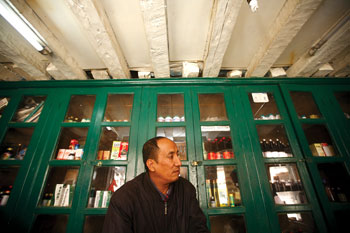
As a child, Vaidya often helped around at the clinic, stocking the shelves and rolling pills by hand. At that age, he never imagined following in his father’s and grandfather’s footsteps as a herbal healer. He would go on to study botany at university and briefly work as a local pottery glaze-maker. Now, Vaidya runs the clinic, administering unique herbal mixtures and healing practices that have been 23 generations in the making.
The practice of Ayurvedic medicine is over 3,000 years old and finds its roots in the Indian subcontinent. Abiding by eight core tenants from three ancient texts, Ayurvedic medicine uses holistic methods to treat ailments as varied as colds, indigestion, headaches, and rheumatism. Now, newly-opened schools in Ayurvedic practices dot the Kathmandu Valley. But Vaidya holds no degree or certificate.
Instead, he relies on a family formula, over 400 years old, that he continues to refine in a space behind his clinic. It is with these formulas that he heals scores of patients and by which he makes his living.
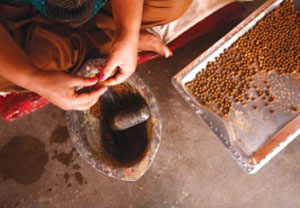
Vaidya points to patients’ belief in the effectiveness of the medicine over anything inherent in the ingredients. As society turns to nature in their food products and energy sources, Vaidya explains, they are likely to look to nature for their medicine as well. Business at the clinic is subject to these fluctuations in people’s beliefs. Now, with what the healer describes as an overall trend towards nature, business is doing well.
Vaidya returned to work at his father’s shop when it became apparent that his family’s traditional herbal formulas would otherwise go by the wayside. “I feared for my father’s formulas and recipes,” he says. “If I didn’t return to the clinic, his life’s work would disappear.” The fate is not an uncommon one in the largely hereditary practice. Vaidya recalls many of his father’s friends whose practices dissolved after their children left to pursue other fields. Of six brothers, only Yogendra now practices.
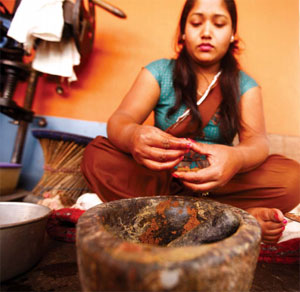
While Vaidya sees the importance of these kinds of regulations for maintaining safety standards, he wants to make sure they are instituted with the realities of the plants’ medicinal properties in mind. Many regulations on herbal medicine, if merely lifted from their Western medicine counterparts, would be “wasteful and unnecessary” when applied to Ayurvedic practices. The idea of an expiration date, for example, while necessary for a chemical compound, wouldn’t serve a purpose on a bottle of an oil reduction, which only gets more effective with age. The same goes for an in-house pharmacist. Many of these measures would do little to nothing for patient safety while contributing to driving someone like Yogendra out of business.
Vaidya plans to preserve his family’s formulas and safeguard his clinic against regulations by forming a co-operative with colleagues and potential family investors. The investments would provide necessary infrastructure improvements that could be shared among other practitioners. It would also provide a means to maintaining his family’s herbal legacy in case he can’t find a successor. “When thinking about the future,” he says, “you have to think openly.”
See also: