
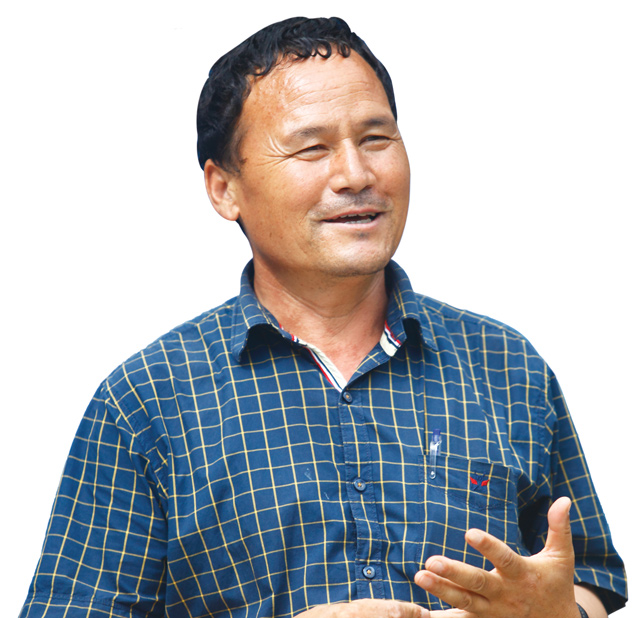
On a fine morning in 1989 a young boy of 14 entered a teacher’s room at a local school in Bungamati and said: “I want to study as well.”
That boy, Jivan Dangol was blind and the school had no provision to teach visually impaired students. But Dayaram Maharjan, one of the teachers couldn’t bring himself to reject a boy so determined to study. So, he taught himself Braille and started teaching Dangol.
“We didn’t have a typewriter, so we wrote with chalk on a slate,” recalls Maharjan, now 50. “But within a year Jivan was able to attend class like others.”
When people saw a blind boy going to the school like other children, parents started bringing their differently abled children to school, too, to enroll them. This posed a new challenge for Maharjan, since many of them weren’t blind, but deaf. So, he went to the Kathmandu Deaf Association and taught himself sign language.
A few years later, Maharjan was visiting the nearby town of Khokana where he saw a four-year old boy paralysed from the waist down crawling on the ground. “It just hurt my heart to see that. I talked with his parents and brought him with me,” recalls Maharjan who then got a tutor to teach him physiotherapy.