
Looking good by doing good
Nepali scientist takes her skincare brand global by blending Ayurveda and modern scientific knowhow
This is the first instalment of our new series Nepal Made, where we profile world-class Nepali products and the people behind them.
The Himalaya is the home to Ayurveda, the preventive and curative medicinal practice that relies on the tremendous diversity of plant life. This is where Hanuman is said to have come to find a specific rare herb when Ram was wounded in battle. When he could not find it, he tore off a whole mountain and hauled it down to Lanka.
Since then, herbal medicines and care products have been steadily modernised in India and Nepal. Now, one Kathmandu-based company, Herveda, is going global with an all-natural skincare brand that blends traditional knowledge of medicinal plants with modern technology.
Originally a Sanskrit word, Ayurveda literally means ‘the science of life’ and promotes physical and mental wellbeing through a holistic knowledge system that is 4,000 years old.
Ayurvedic products have gotten more popular as global demand rises for all-natural, chemical-free cosmetic and wellness products, instead of wasteful fast fashion and beauty trends.
Herveda was founded by Prativa Pandey, a scientist-entrepreneur and mother of two. She did her PhD in nanotechnology chemistry from Northwestern University in the United States and returned to Nepal in 2015 after the earthquake, staying back to explore the market and launch her brand.
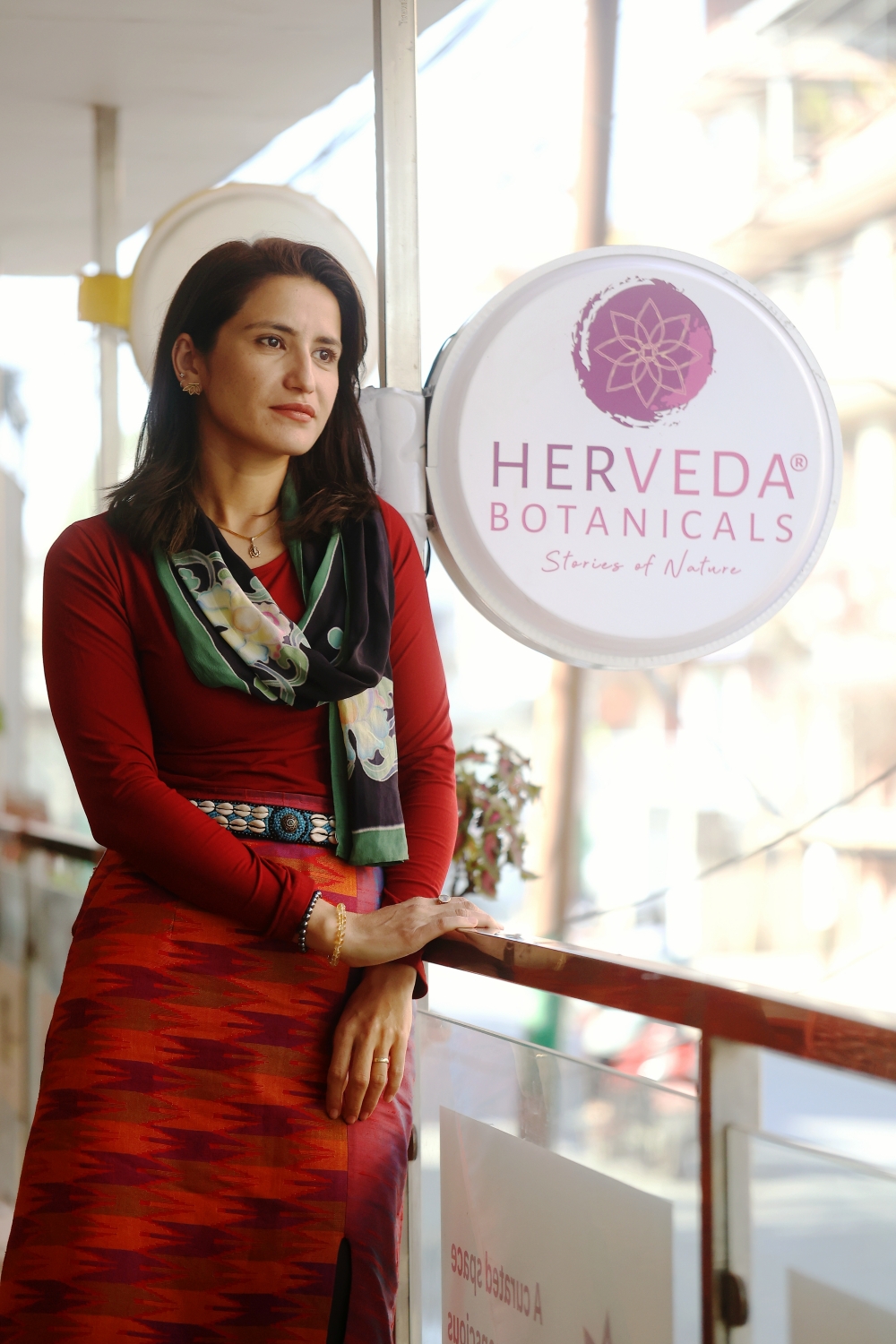
“I wanted to do something in Nepal, but didn’t want to be a doctor or engineer,” says Pandey at the elegant Herveda showroom in Jhamsikhel. “Whatever knowledge that I had gathered, I wanted to spread it in my own country.”
Nepal is rich in traditional medicinal herbs and Ayurvedic plants, but proper utilisation and mobilisation has always been lagging. Most of the benefits are reaped by large companies and not local farmers. Pandey wanted to change that.
To ensure that it gives back to the community, Herveda collaborates with farmers and local traders for fair trade.
“I have always been fascinated by the medicinal herbs found in Nepal, and wanted to create high value products with them. It was a way to combine valuable indigenous knowledge with my academic research background,” adds Pandey. “I did not require a huge investment, just a proper marketing strategy.”
According to the Trade and Promotion Center under the Ministry of Industry, Nepal’s import of cosmetic products is increasing every year, driven by demand from a younger population.
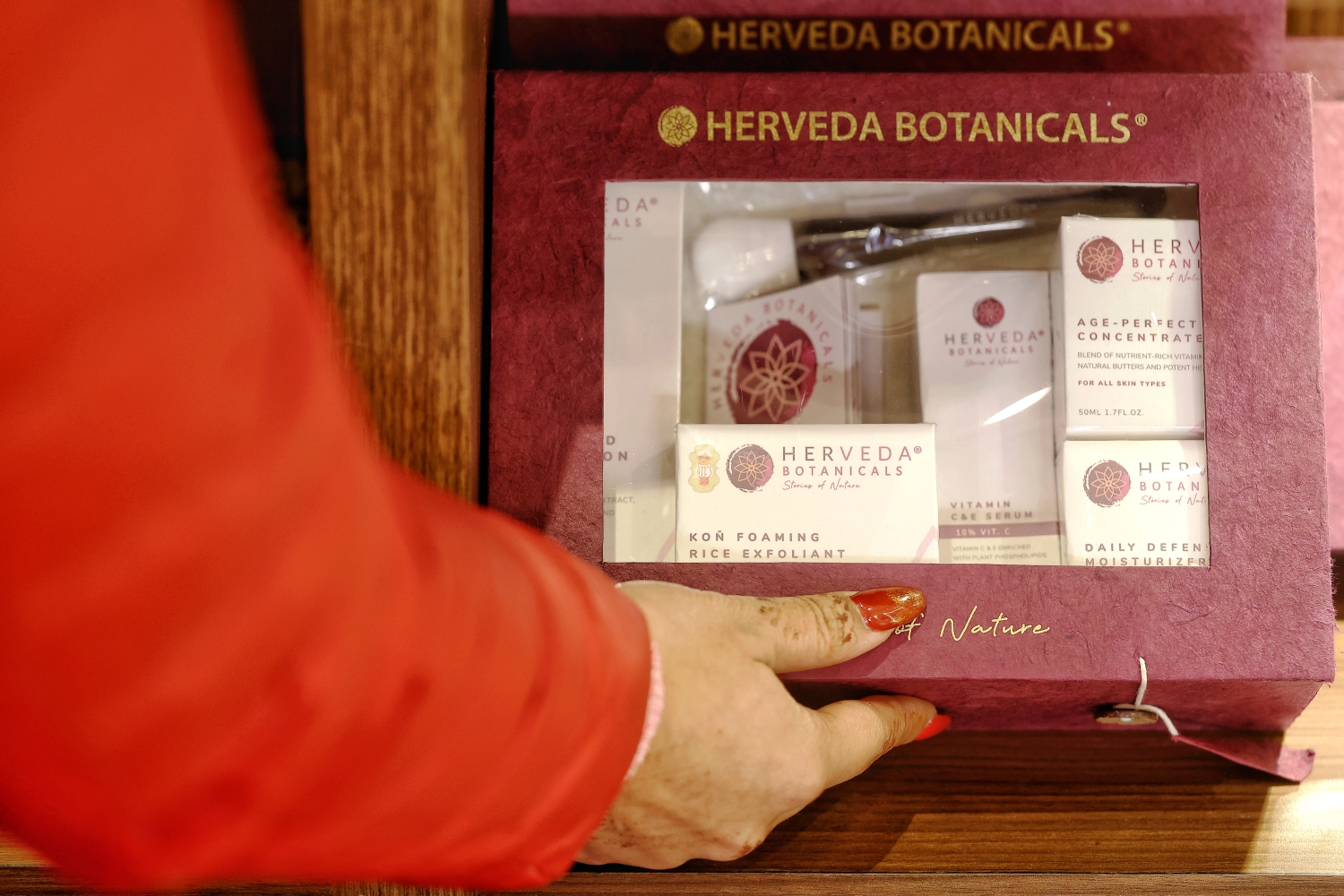
These younger customers are also more conscious about the products they use. For brands like Herveda, it is important that customers engage in wellness and skincare in an ethical and sustainable manner. Apart from being all natural, Herveda’s flagship store in Jhamsikhel has a reuse box where consumers can drop used bottles, which are then recycled.
The store also displays products from 35 local businesses. Pandey believes that Nepali brands should cross-promote and complement each other: “Rather than competing, I believe we should support each other. 1+1 can be 11, and not two.”
Effectiveness and functionality hold great importance for Herveda. which employs 25 scientists to develop and lab test its products at its research institute.
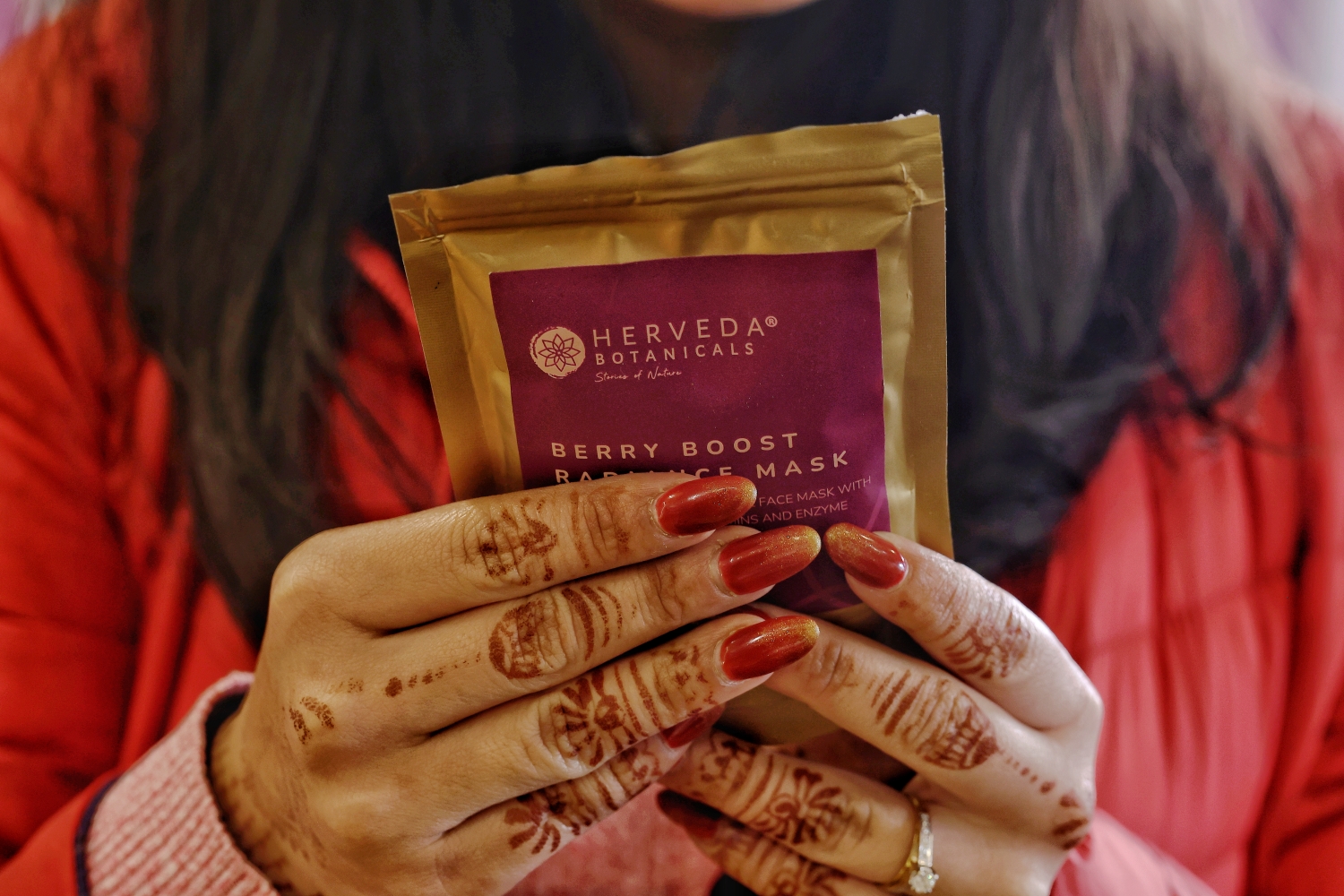
Currently, there are products ranging from Rs400-2,000, which include lip balms, serums, and essential oils. A signature product is the Berry Boost Radiance Mask, which contains Spikenard (Jatamansi), Ashwagandha, Orange Peel, and Rhododendron.
Herveda exports to the United States and plans to expand to China and Europe. The products get a 50-100% markup in the international market.
The company recently received a grant from UKAid to expand the market as well as build capacity to scale up. It has partnered with Agriplayer software to help to develop QR codes on its products, which consumers will be able to scan to track the product sources and evaluate pricing.
Nepal lags behind in rules and regulations, and the lack of monitoring has allowed low quality cosmetic products to penetrate into the market. Herveda has got an international certification from USFTA, which is important for its foray into the export market.
“For the cosmetic industry to scale up, there should be a central testing facility that is well equipped and meets international standards. Additionally, export should be made easy,” adds Pandey. “If there are too many barriers to entry, no one will be willing to invest.”