
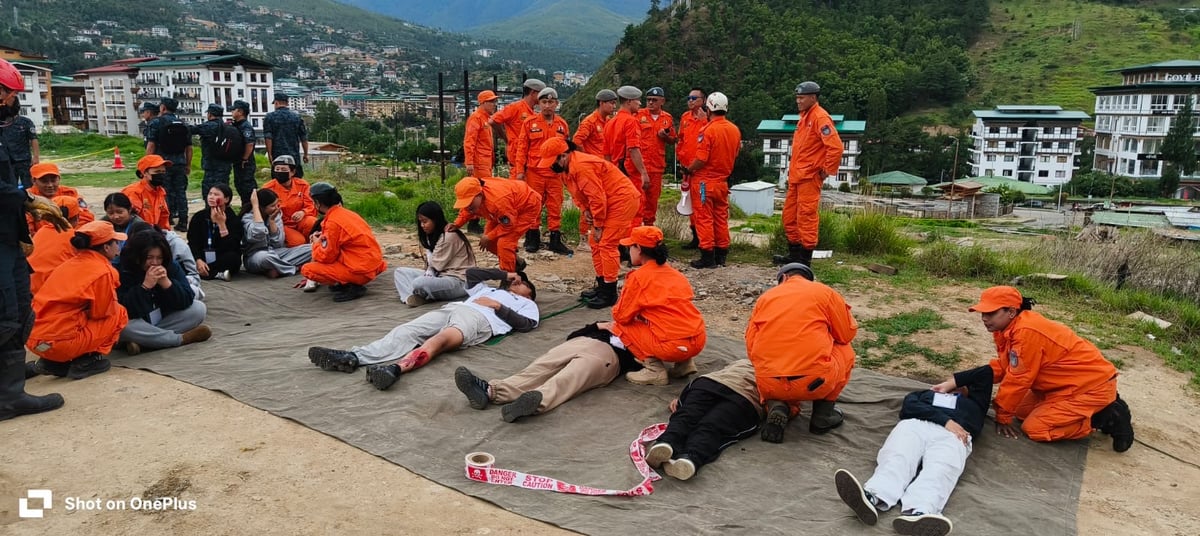
Residents of the Bhutan capital recently woke up to sirens blaring, roadblocks, all three of the city’s bridges across the Thimphu Chu closed, and ambulances and fire engines rushing about. Those who had not paid attention to notices by the authorities could be forgiven for thinking this was a real disaster.
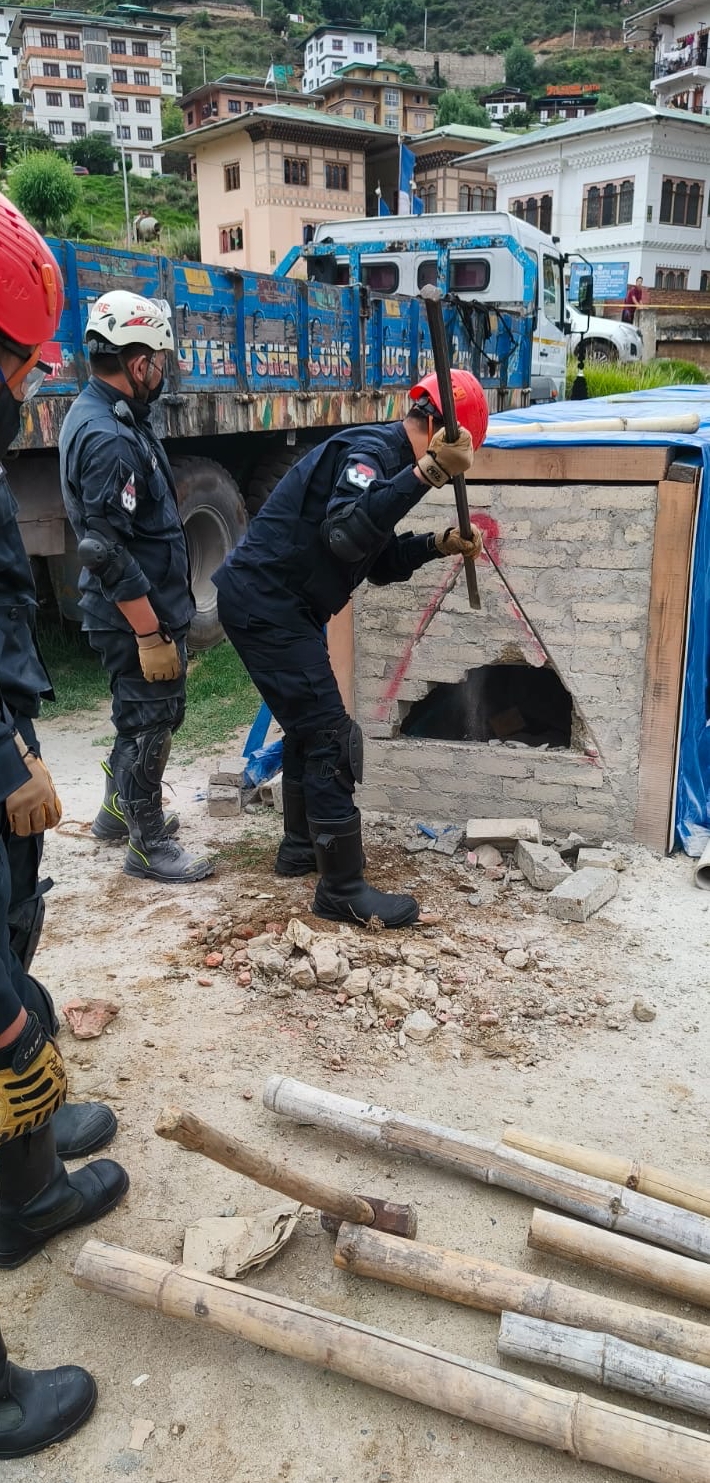
And that was the whole point of it. The mock exercises included simulated house collapses and building fires to test both information flow, coordination, and decision-making for search and rescue after a high-intensity earthquake.
On hand to design and conduct the simulations were engineers and seismic experts from the National Society for Earthquake Technology (NSET) – Nepal which has wide experience in disaster preparedness and retrofitting projects back home.
The simulation showed that Bhutan was sorely lacking in search and rescue equipment and contingency planning. But at least they now know what to do. Nepali experts say they have to work hard to get successive governments in their own country to listen.
Surya Narayan Shrestha of NSET was impressed with the receptiveness of Bhutan’s officials, right from the prime minister down. He recalls: “After the simulation, Prime Minister Tshering Tobgay told us Bhutan had to learn from Nepal because we are closest to their context, and no other country was in a better position to teach them.”
Such open-minded frankness is rare in the South Asian context where officials and experts often think they know best. The Nepal-Bhutan cooperation was supported by the New Delhi-based Coalition for Disaster Resilient Infrastructure (CDRI) of which Nepal is a member, and NSET was selected to support the Thimphu Earthquake Contingency Plan.
NSET helped Bhutan design the strategy in two phases: first to formulate decisions, information flow and coordination mechanisms before a disaster strikes. The second phase consisted of field-based exercises and simulations to analyse how those plans work in practice for search and rescue.
SEISMIC RISK
The 7.4M earthquake in Colombia this week, which followed another deadly temblor in Venezuela last month, was a wakeup call for both Nepal and Bhutan which share similar seismic risk. All four countries can learn from each other to be prepared with building code enforcement, national contingency plans, disaster drills, search and rescue experience.
At one point during the simulation in Thimphu, some sites had modern concrete cutters, while others did not. NSET’s Shrestha remembers the Bhutan search and rescue units wanted to know what they should do. “We asked them what they would do in a real disaster, and gave them a hint: perhaps call for urgent international assistance,” he said.
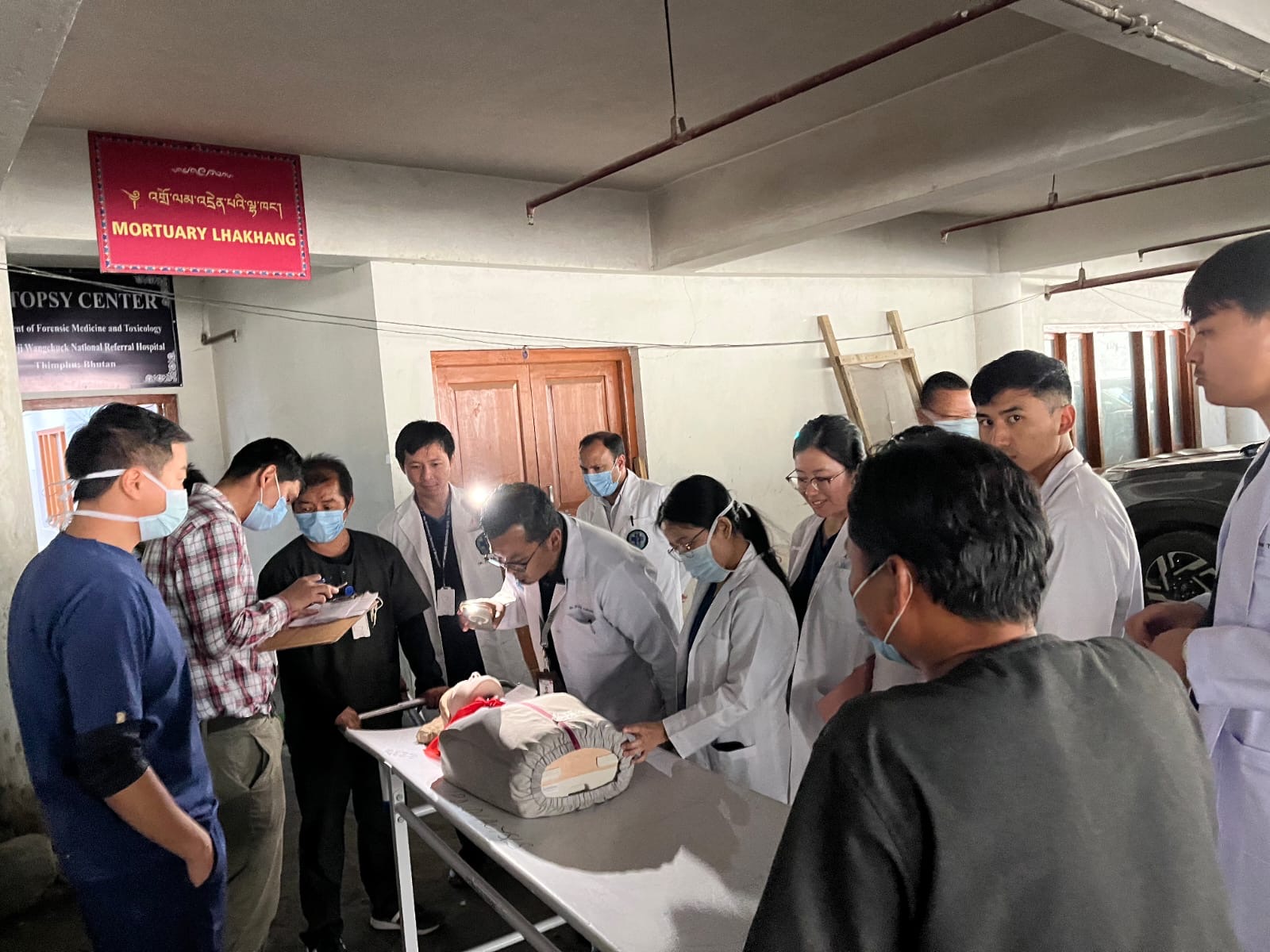
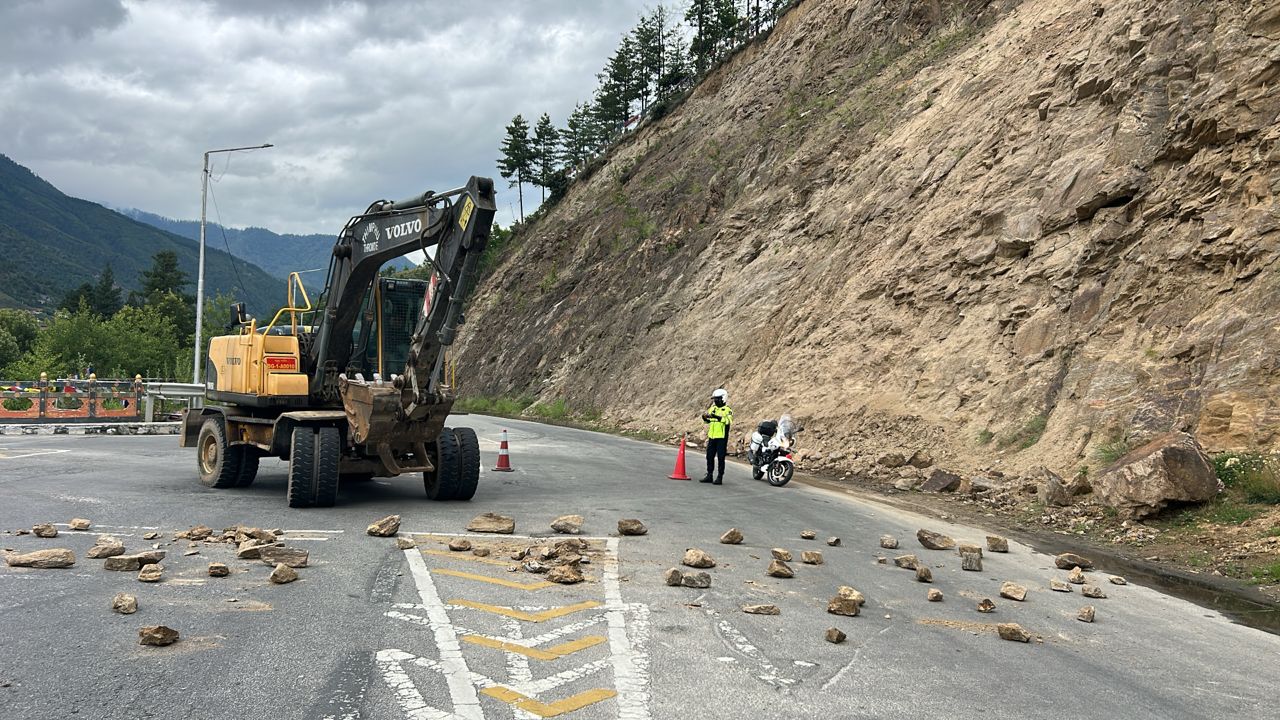
The authorities had chosen the largest referral hospital in Thimpu and two primary health care centres to create a mass casualty scenario. They factored in a sequence in which emergency medical staff could not reach the hospital either because they had their own family emergencies, or the roads were blocked by landslides, and the hospitals were themselves without power.
The simulation team also assessed the structural integrity of infrastructure, including 11 bridges, one hospital, an electricity terminal, the telecom network, and a food supply warehouse.
The entire simulation took four hours, involving 500 people in various roles, while the Nepali team spent nearly a year planning to execute the two simulation phases. Prime Minister Tobgay, officially the commander of the disaster response team, was also present and King Jigme was kept updated on the exercise.
The outcome of the simulations was analysed, and NSET made a series of recommendations, one of which proposed that Bhutan establish at least one six-person earthquake first responder rescue squad for every ward of 15,000–20,000 people.
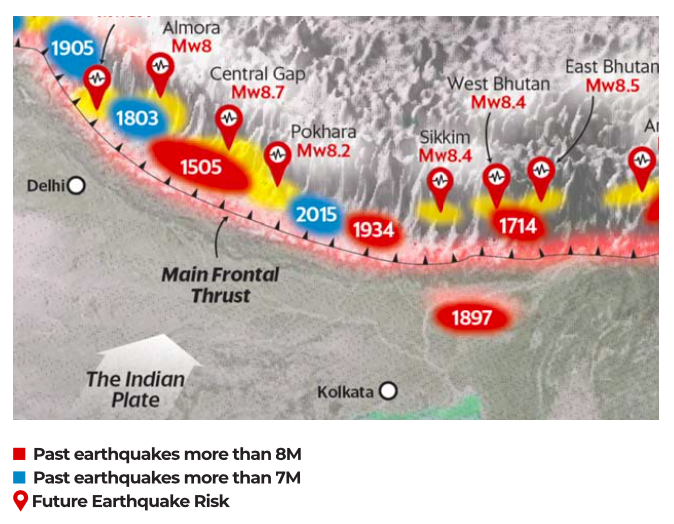
Bhutan hasn’t experienced a major earthquake in decades, and sits astride the eastern Himalaya seismic gap. This means tectonic stress has accumulated and could be released at any time. Thimphu has a population of 121,000, and the NSET estimates that 3,000 of the 13,700 houses will face severe damage in the event of a quake of more than 7 magnitude, resulting in 3,000 potential casualties if it hits at night.
Interestingly, NSET’s pre-2015 projection for Kathmandu Valley indicated it was even more vulnerable. The 2015 earthquake was 7.8 magnitude and killed nearly 10,000 people, but seismologists say it did not fully release tectonic tension in central Nepal.
Yet, the irony is that while Nepali experts guide other vulnerable countries, Nepal itself lacks a detailed contingency plan.
“Bhutan learned from us. But what can we learn from them?” asks Shrestha, adding that Nepal needs the same political commitment from the highest levels, rigorous planning and simulation that NSET helped carry out in Thimphu.
To be sure, NSET did help develop a National Disaster Response Framework before the 2015 earthquake that listed the responsibilities of different agencies. But it was only on paper, lacking a strategic implementation plan with sufficient political ownership.
“We have drills but they are more theoretical and do not answer vital questions such as open space, pre-positioned emergency supplies,” says NSET founder Amod Mani Dixit. “What sets Nepal apart from Bhutan is political commitment.” Nepal’s disaster preparedness has improved since 2015, there are more trained people within the security forces, and better equipment. But these are still inadequate to deal with a Himalayan-scale megaquake.
Thule Rai was Nepal’s seniormost search and rescue officer in the Nepal Police and was on NSET’s team in Bhutan. He says of Nepal’s lack of planning pre-2015: “The general thought at the time was why invest in something that is going to happen in the future. But Bhutan was the first to have a simulated contingency plan in the Subcontinent. In Nepal, our plans are on paper and we barely test them.”
That is where the simulation is important because it fills in gaps and sorts out problems in a real-life scenario, using designated officials to resolve them.
Back in 2002, the Japan International Cooperation Agency (JICA) conducted a study on earthquake mitigation in Kathmandu Valley, evaluating structural risks and projecting heavy casualties by using the 1934 8.3M eastern Nepal earthquake as a matrix.
It has been 25 years, and that report has just gathered dust despite being updated in 2018. The National Disaster Risk Reduction and Management Act 2017 did try to bring risk reduction, preparedness, response as well as search and rescue all under one umbrella, but coordination between line agencies remains the biggest hurdle.
Lack of political will for inter-agency contingency collaboration is possibly Nepal’s biggest problem. Says Surya Narayan Shrestha: “We have awareness and knowledge but no coordination. We have some of the best institutions working in disaster preparedness such as the Armed Police Force, Nepal Police, Red Cross but they are all scattered. That is what we could learn from Bhutan.”