
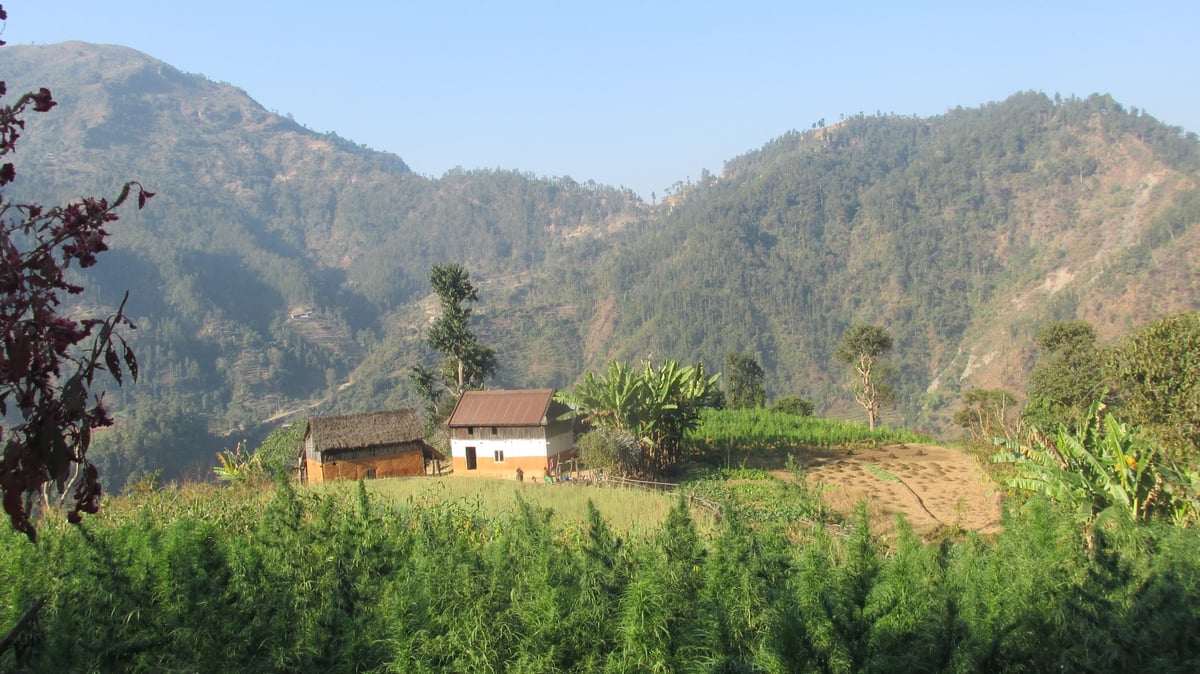
Last week, Gandaki Province Chief Dilliraj Bhatt pushed a law to allow regulated cultivation of cannabis for medicinal and industrial purposes.
This provincial legislation is the first major attempt to create a legal pathway for a crop that has long grown wild and free across Nepal, but has been restricted under federal narcotics law since 1973.
The law is intended to support pharmaceutical production, provide raw material for manufacturing (see adjoining article), supplement income of farmers, while notably still outlawing recreational use of cannabis.
The measure includes a three-step licensing process, mandates cultivation only in approved areas, and sets monitoring conditions for production, storage, processing and sale of cannabis. Cannabis grown grown for industrial use must contain less than 0.3% tetrahydrocannabinol (THC), its primary psychoactive compound.
Nepalis who have long advocated for the legalisation of cannabis have welcomed the provincial decision. Says Rajiv Kafle, one of Nepal’s leading legalisation activists: “Gandaki Province’s new cannabis law is a praiseworthy step in the right direction.”
But activists add that the Gandaki Province law must now be broadened nationwide to help Nepal transform a historically stigmatised plant into a regulated economic resource.
“Nepal should not view cannabis only through the lens of narcotics control, but also through the perspective of agriculture, medicine, industry, and local livelihoods,” adds Kafle.
AYURVEDIC
Cannabis grows wild across many parts of Nepal, and has been used traditionally for Ayurvedic medicine, fibre, and religious practice.
Nepal became internationally known for its open cannabis culture in the 1960s and early 1970s when international tourists in search of Shangri La travelled across the Hippie Trail overland from Istanbul to Kathmandu, ending up in Jhochhen Tole — later nicknamed ‘Freak Street’ — where marijuana was sold openly from government licensed shops.
Beginning in 1973, sustained pressure from the United States and the United Nations amid their global War on Drugs compelled Nepal to revoke cannabis production, buying, and selling licences. By 1976, Nepal passed the Narcotic Drugs (Control) Act of 1976, which criminalised the cultivation, production, sale and consumption of cannabis except for select religious purposes.
Since then, advocates have repeatedly called on successive Nepali governments to reconsider Nepal’s policies and laws on cannabis, arguing that prohibition has failed to eliminate cultivation while depriving farmers as well as the nation of potential income.
“The illegal cultivation of cannabis across Nepal is an open secret,” says Saurav Dhakal of the sustainable initiative Green Growth Nepal, noting that legalising cultivation will facilitate increased revenue as well as crop and product diversification for farmers and entrepreneurs.
“The crop is more beneficial than maize and does not face the same threat from monkeys and other wild animals,” Dhakal explains. “For farmers in the mountains where crop damage, labour migration and low agricultural returns remain persistent problems, cannabis could become an alternative cash crop if regulation, pricing and, market access are handled carefully.”
In 2020, former Minister and lawmaker Sher Bahadur Tamang registered a private Bill in Parliament to legalise cannabis, highlighting its medicinal and industrial values. But the Bill remained stalled through changes in leadership.
In 2024, Finance Minister Barshaman Pun announced that the government would legalise and commercialise medicinal marihuana cultivation and distribution, but that budget speech went nowhere.
For many Nepalis, the legalisation of cannabis is not just important legally or economically, but also socio-culturally. Seeds derived from the flowers, leaves, and stems of the female cannabis plant, called bhang, are a a protein-rich source of food. Across Nepal, bhang is made into achar, and also used during religious celebrations across Nepal.
“The seeds are commercially available even in leading supermarkets like Bhat-Bhateni,” says Kafle. “It is clear that is a huge domestic as well as international market for cannabis.”
Cannabis can be also be turned or added into a variety of processed products including powder, oil, and chocolate. Beyond food, industrial hemp can be used in textiles, cosmetics, construction materials, oils and other non-toxicant products.
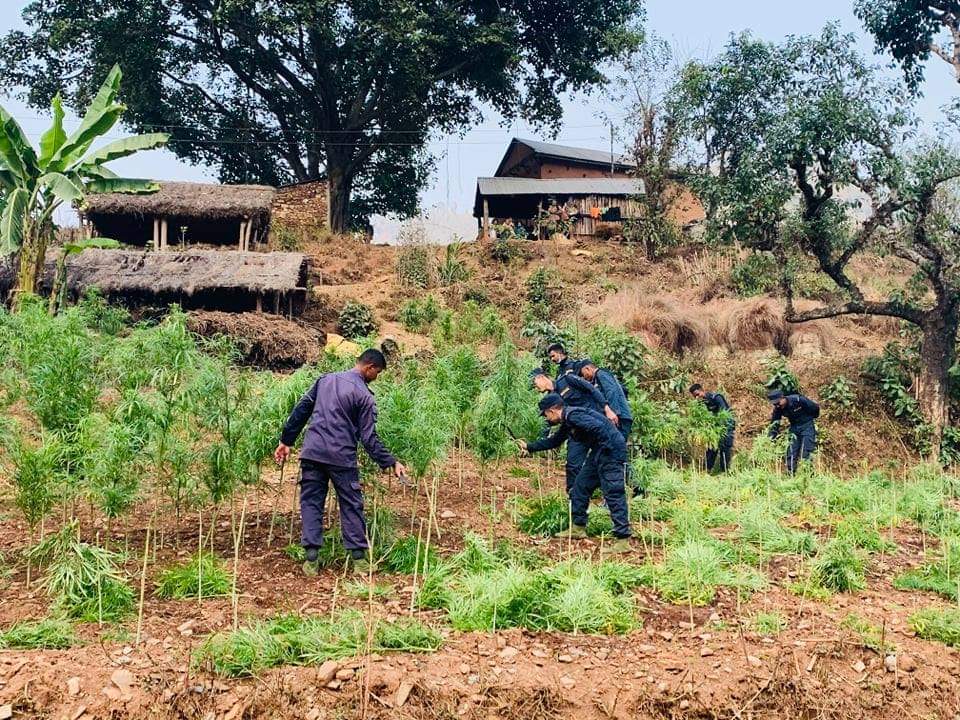
Nepal’s altitude, climate and existing traditional knowledge give the country a comparative advantage. Some studies suggest that large areas of land in Nepal may be suitable for cultivation, although more field-based research may be needed.
International experience also shows both opportunities and risks. Countries including India, Thailand, China, and the US have developed models for regulating hemp or medical cannabis. Most industrial hemp frameworks use a 0.3% THC threshold, similar to the standard adopted by Gandaki Province.
With Gandaki’s legislation, lawmakers in Nepal’s federal Parliament have once again called for a nationwide cannabis law to stimulate Nepal’s agriculture and economy. But questions have also been raised over will how Gandaki’s new law operate alongside federal restrictions on cannabis.
Says Dhakal: “As long as the crop remains illegal at the federal level, whether or not legislation can be implemented smoothly remains a pertinent question.”
There are already concerns over the implementation of the new law. A debated provision requires farmers or businesses to have at least two ropani (1,018 sq km) to apply for a licence to cultivate cannabis, which experts say will exclude smallholders, tenant farmers, and marginalised communities.
“Any regulation will only be meaningful only if it includes cooperatives, small growers, and local governments in the value chain,” adds Dhakal.
Experts caution that without reliable data, cannabis policy risks being driven either by fear or by exaggerated promises. A regulated approach, should begin with research, pilot cultivation, laboratory testing, farmer training and transparent coordination between provincial, federal, and local governments.
Global experience also shows that clear testing systems, traceability, public health safeguards and enforcement capacity are essential to prevent misuse and market confusion.
Rajiv Kafle is optimistic that Gandaki’s legislation has opened the door for a national conversation on cannabis: “If regulations are within the framework of Nepal’s Narcotics Act, then cannabis has a bright future in Nepal.”