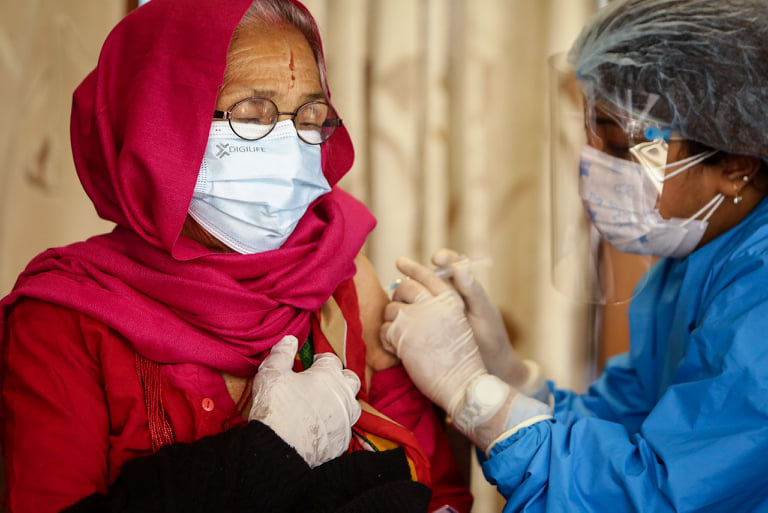
Nepal has a history with vaccination that goes back to 1816, after King Girvana Yuddha Bikram Shah died from exposure to smallpox. Desperate for help, Nepal’s ruling class lobbied the East India Company for vaccine doses, something it happily complied with as the British saw an opportunity to increase influence in the region.
In the 200 years that have passed since, Nepal’s youth and global diaspora have taken matters into their own hands. They have registered a desperate plea for vaccine aid from the US government, which has recently announced plans to share up to 80 million Covid-19 vaccines with countries across the world.
This is Nepal’s only opportunity for rapid and cost-free aid that can end the deadly waves of the virus that have destroyed the country’s economy and, in only one year, has resulted in nearly half as many deaths as the brutal ten-year conflict, or the devastating earthquakes in 2015. Nepal’s need for American aid is more acute today than possibly at any other point in our shared history.
The provision of immediate vaccine aid to Nepal will amplify the generous support already pledged for Covid-19 relief and ongoing development projects, increase US influence and relevance across the region, and -- most importantly -- save an untold number of lives.
It is often said that the greatest export from America is democracy. We have seen this play out in the past few weeks as this group of Nepali and American citizens penned an open letter to the US Ambassador to Nepal, Randy Berry. This letter spurred an online petition that has gathered nearly 40,000 signatures to date.
Another group of Nepalis living in America submitted a similar formal request directly to the Biden Administration which, in turn, inspired members of the diaspora across the country to call their elected representatives to advocate for Nepal. Thanks to even the potential of vaccine aid to Nepal, tens of thousands of citizens of Nepal and America have found one voice -- which is a desperate plea for help.
Through USAID’s critical support in immunisation, safe motherhood, community management of childhood illness and much more, Nepal has made remarkable strides in improving the lives of women and children in every corner of the country. The long-term support provided by the American people has been instrumental in reducing the number of maternal deaths by 75% since 1990.
Mortality for children under the age of five has also dropped more than 66% over the past 20 years. There have also been successful campaigns to control malaria, create better health infrastructure and mobilise community health workers in every single tole across the country. There is also the $130 million pledged after the 2015 earthquake, support for democracy and governance, improving the power grid, and bold programs that target conservation and mitigating the amplified impacts of climate change unique to the Himalayan region.
Altogether, USAID has empowered the Nepal Government to double life expectancy in the country since 1960. Current USAID programming, especially within the Suahaara II project, has also increased the already significant capacity of Nepal to effectively distribute vaccines to people across the country.