

The main streets of Kathmandu were surprisingly clear on the late April morning as we made our way to the office of the Minister of Urban Development in response to his urgent call.
Only a few days after the massive earthquake that had rocked Nepal in 2015, the debris of broken walls and fallen electricity lines littered the roadside, but most buildings were still intact.
A small aftershock, undetectable from the car, brought people hastening out of their homes, the fear and uncertainty of the past catastrophic days etched onto their faces. With me was a New Zealand government official who had just arrived from Wellington to join the consular team which had gathered from the High Commission in New Delhi and beyond to support the crisis response.
Minister Narayan Khadka, flushed from the stress of his role, rose from his chair as we were ushered into the Singha Darbar office, his desk backed by a limp Nepali flag. The Minister had missed the earthquake, having just returned from representing Nepal at the ANZAC centenary at Gallipoli in Turkey on the same day. (He was outraged that Prince Charles had allegedly forgotten to recognise the Gurkha sacrifice on that ill-fated peninsula, and I had trouble getting him back on topic).
“You need New Zealanders to help your Nepali engineers?” I prompted him. “Yes of course,” the Minister was impatient. “So many Nepalis were trained by your Kiwi guys, and they tell me that Richard Sharpe wrote our earthquake building code guidelines more than 20 years ago. We need to request your urgent help with earthquake expertise to support our Nepali seismic specialists to assess the structural safety of our buildings, both public and private. Our engineers need a team of experts from New Zealand, preferably including Richard, to come here as soon as possible.”
New Zealand’s location on the rim of the Pacific Ring of Fire ensures that the country is expert on earthquakes, constant seismic activity, mitigation techniques and geodetic disruption. Minister Khadka was referring to an influential UNDP project in the early 1990s led by Richard Sharpe that resulted in the creation of Nepal’s building code guidelines, educational exchanges with New Zealand universities, and eventually the formation of Kathmandu’s highly regarded core institution, the National Society for Earthquake Technology Nepal (NSET).
In Nepal, earthquake expertise today is rooted in the experience gained by this game-changing project. In much the same way that Edmund Hillary and Everest forever link Nepal and New Zealand, it is less well-known that earthquakes are another powerful strand of the relationship. This reputation rests firmly on the shoulders of one man, Richard Sharpe.
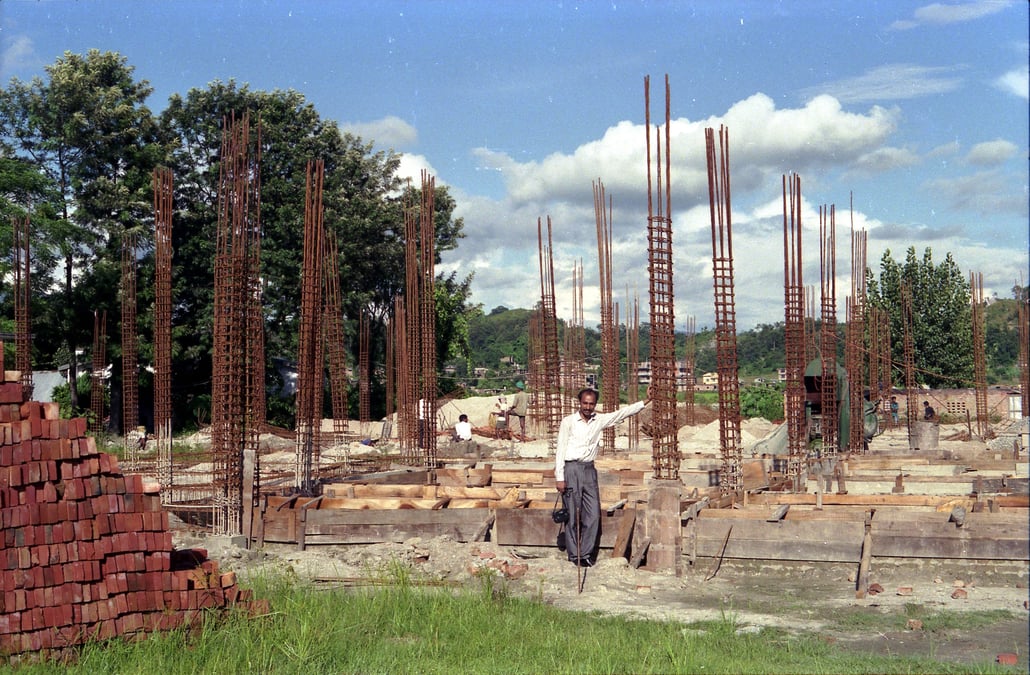
After some preparatory visits, in 1991 Richard settled into an office in Baber Mahal next to the Director General of Buildings. His not inconsiderable task was seismic hazard mapping and risk assessment in order to prepare and implement a National Building Code.
He writes: ‘We provided much more than just the design-for-earthquake aspects. The development of alternative building materials and technologies included an inventory of 55 typical houses throughout Nepal.'
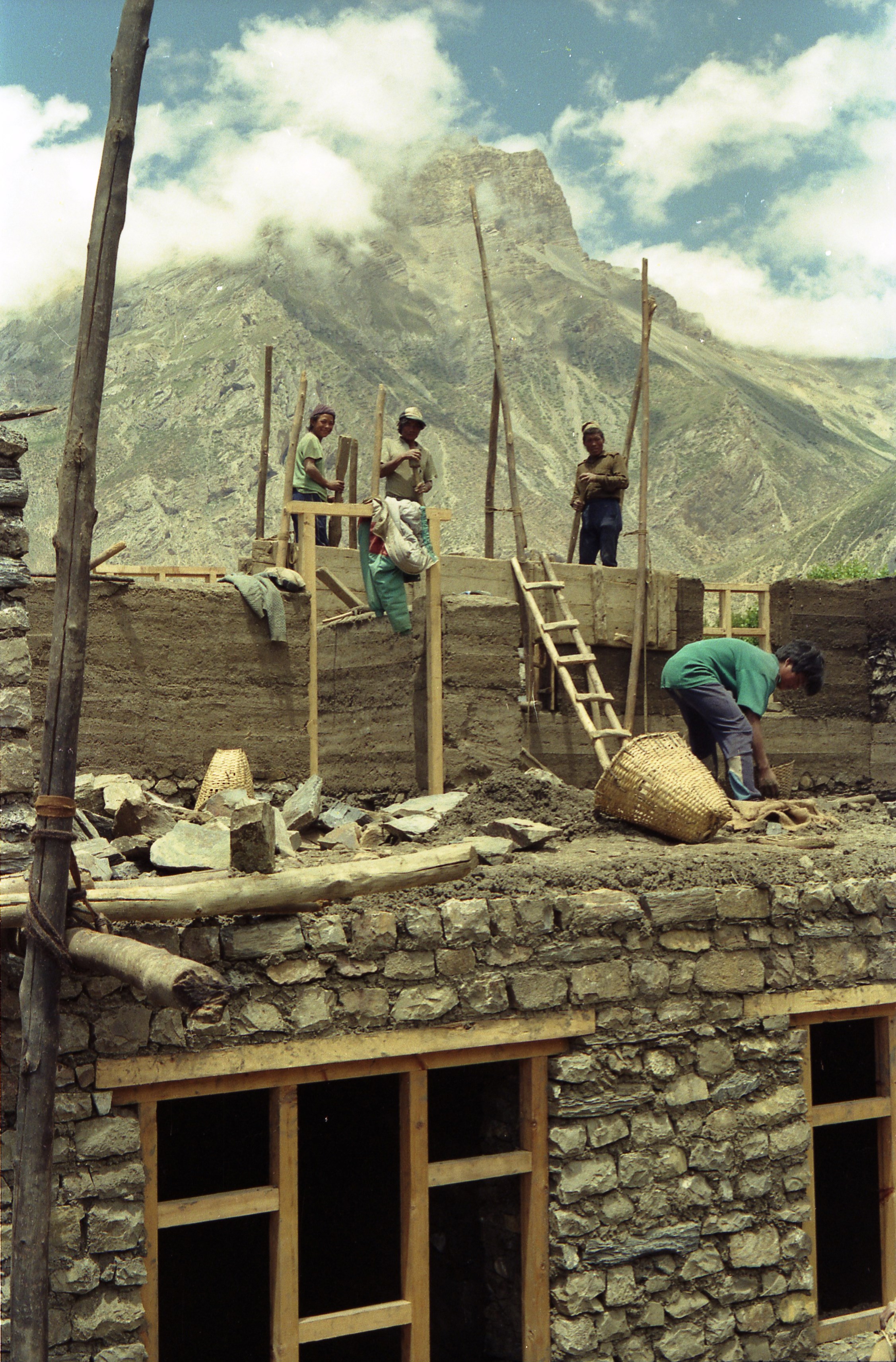
Richard’s team of Nepali specialists set to work on the building code, tailored to Nepal’s specific conditions. Most homes were self-built or locally constructed without masons or engineers, so the code included mandatory rules-of-thumb for common building types and detailed guidelines for less formal structures.
The code also had to have relevance for professionally designed modern buildings and new high rises. It soon became apparent that the bulk of government officials and inspectors lacked the capacity to effectively implement its recommendations, so the team went back to basics.
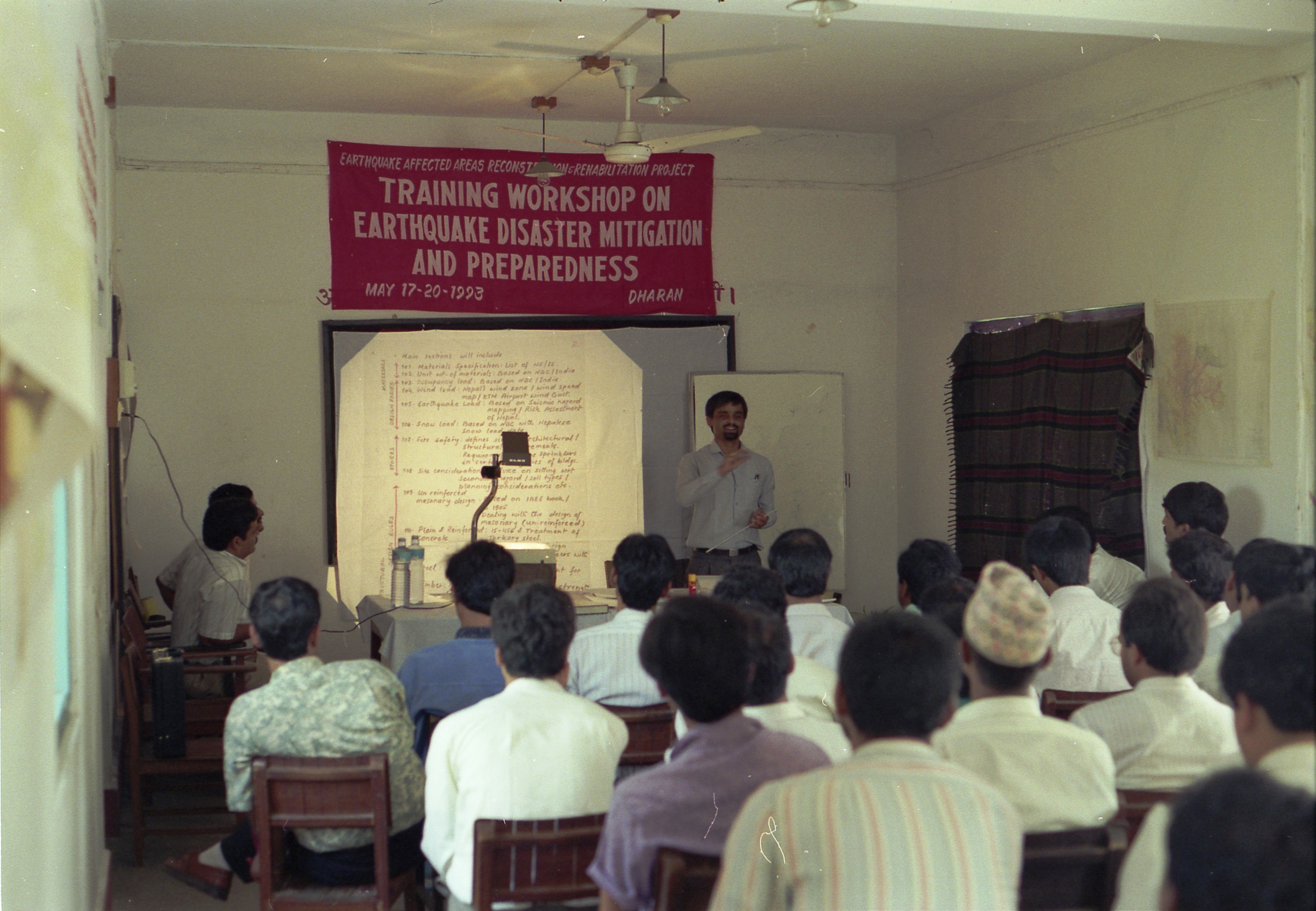
The first training program was held in Dharan in 1993. Amod Dixit, one of his team who went on to establish NSET, explained that a cultural sea-change was required in both government and local thought processes.
He said, “What was so inspirational about Richard Sharpe was that he encouraged us to work out the Nepal-specific solutions for ourselves, never dictating them to us. Under his leadership we grew in confidence, but without his insights and experience we would never have got there.”
MANTRA
Richard Sharpe’s mantra was the opposite to donor dependency and recognised his colleagues’ skill. “You Nepali engineers can do it yourself, and we will support and guide you,” he used to say.
In the final weeks of the building code project, Richard worked with the Nepal team to form a learned society to maintain the momentum, and they did. Funding was found and NSET was born, its statute based on that of the New Zealand Society for Earthquake Engineering.
In 2010, I was amongst the audience who attended a major conference with international earthquake specialists brought together by NSET and the United Nations beneath the chandeliers of the Yak & Yeti Hotel in Kathmandu. The Kiwi television personality Bob Parker, now Mayor of Christchurch, was invited as keynote speaker.
Dramatically retelling the city’s story of how they survived a recent Magnitude 7.1 earthquake with zero fatalities, the charismatic Mayor Bob electrified the gathering by banging his lectern for the 40 seconds of its duration. It seemed like forever. Not long after he returned home, Christchurch was not so lucky. A second major shock killed 185 people on 22 February 2011, devastating the city.
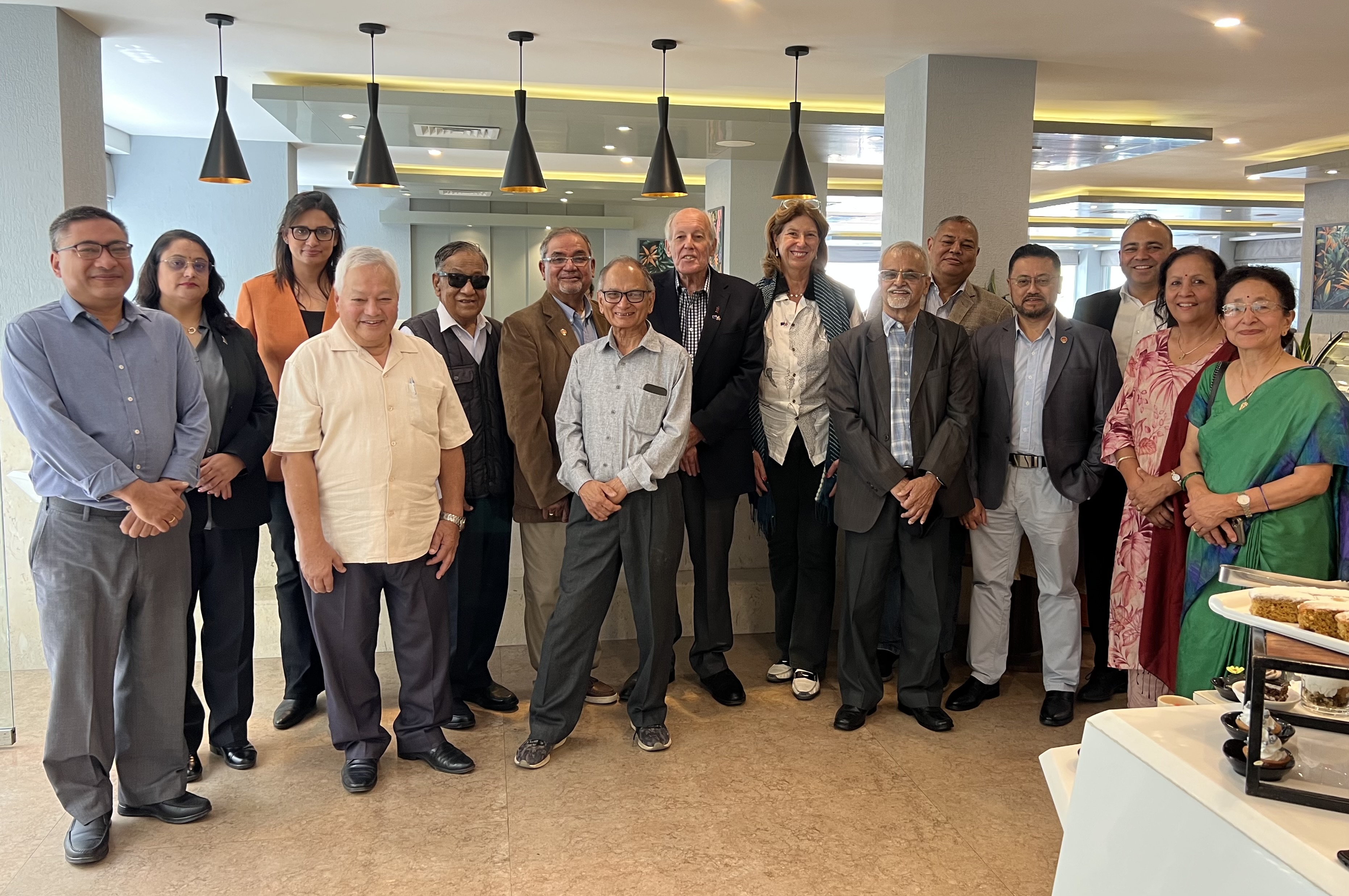
Richard Sharpe led the Kiwi structural engineering team which responded in 2015 to the Minister’s request. He was back in Kathmandu in May to speak at a seminar with support from the Asia New Zealand Foundation. I met him at a lunch hosted by his acolytes, engineers from government, academia and consultancy spheres, now distinguished grey old men who had shaped Nepal and who continue to hold him in the highest esteem.
In an elegant navy jacket, Richard blushed his way through the laudatory speeches as we helped ourselves to the buffet. Despite his embarrassment at the accolades, Richard’s passion and knowledge were irrepressible as we discussed various funding opportunities for NSET to retrofit and base isolate remote hospitals, schools and other public buildings such as the Supreme Court and Singha Darbar to withstand future hazards. NSET has recently been sharing its expertise in Bhutan and beyond.
“There is a very interesting situation right now whereby India has withdrawn the recent revision of its earthquake code because of a public outcry over perceived costs,” he said. “This update proposed to use the same techniques and approaches that Nepal adopted over thirty years ago in our project to set the design forces and seismic zoning. You could say that India is catching up to Nepal.”
Lisa Choegyal is New Zealand’s Honorary Consul in Nepal.