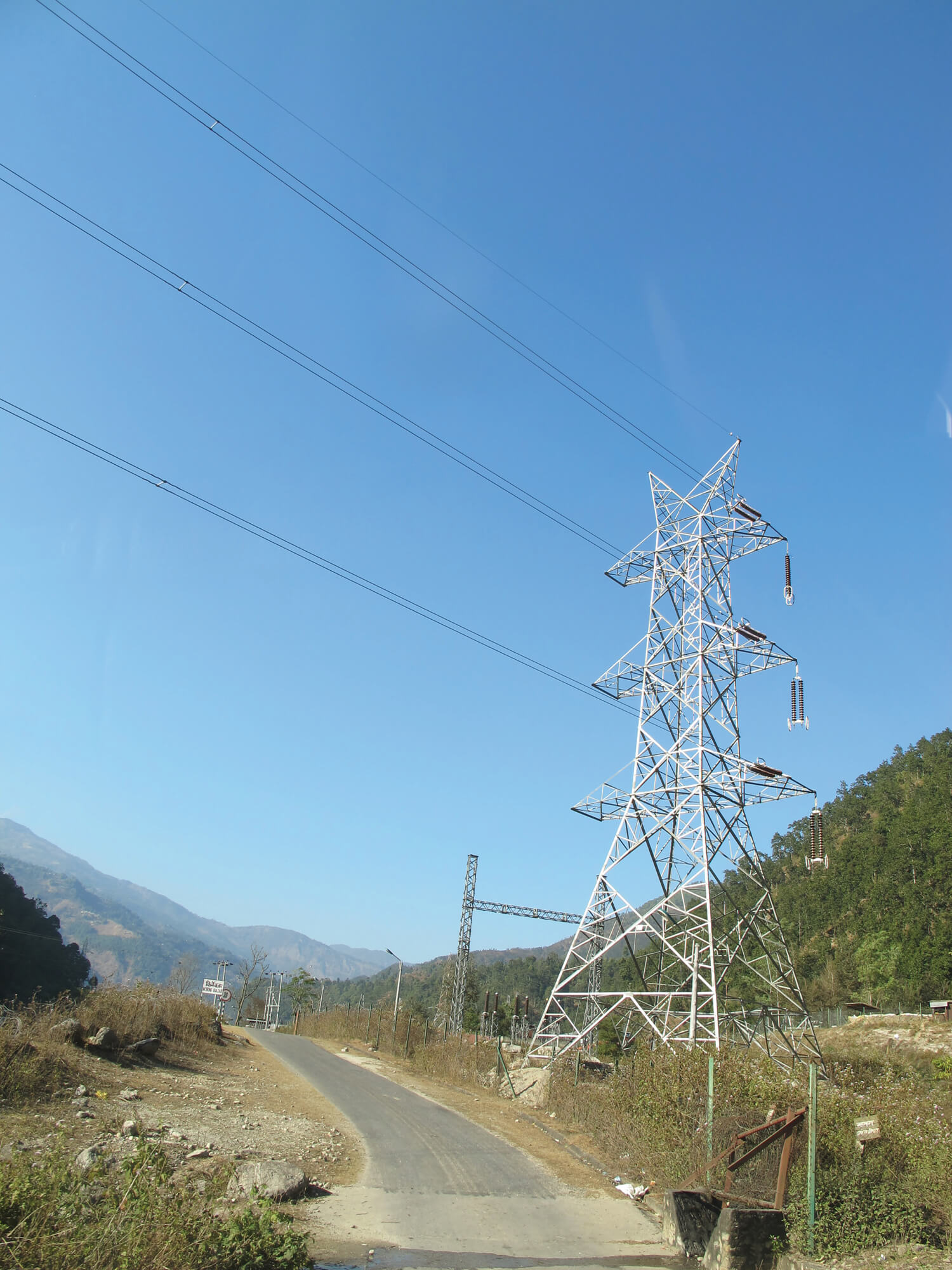
While almost 10% of the Nepali population continues to live without power, the Nepal Electricity Authority (NEA) has begun to export surplus electricity to India citing the absence of transmission lines to transport power to load centres.
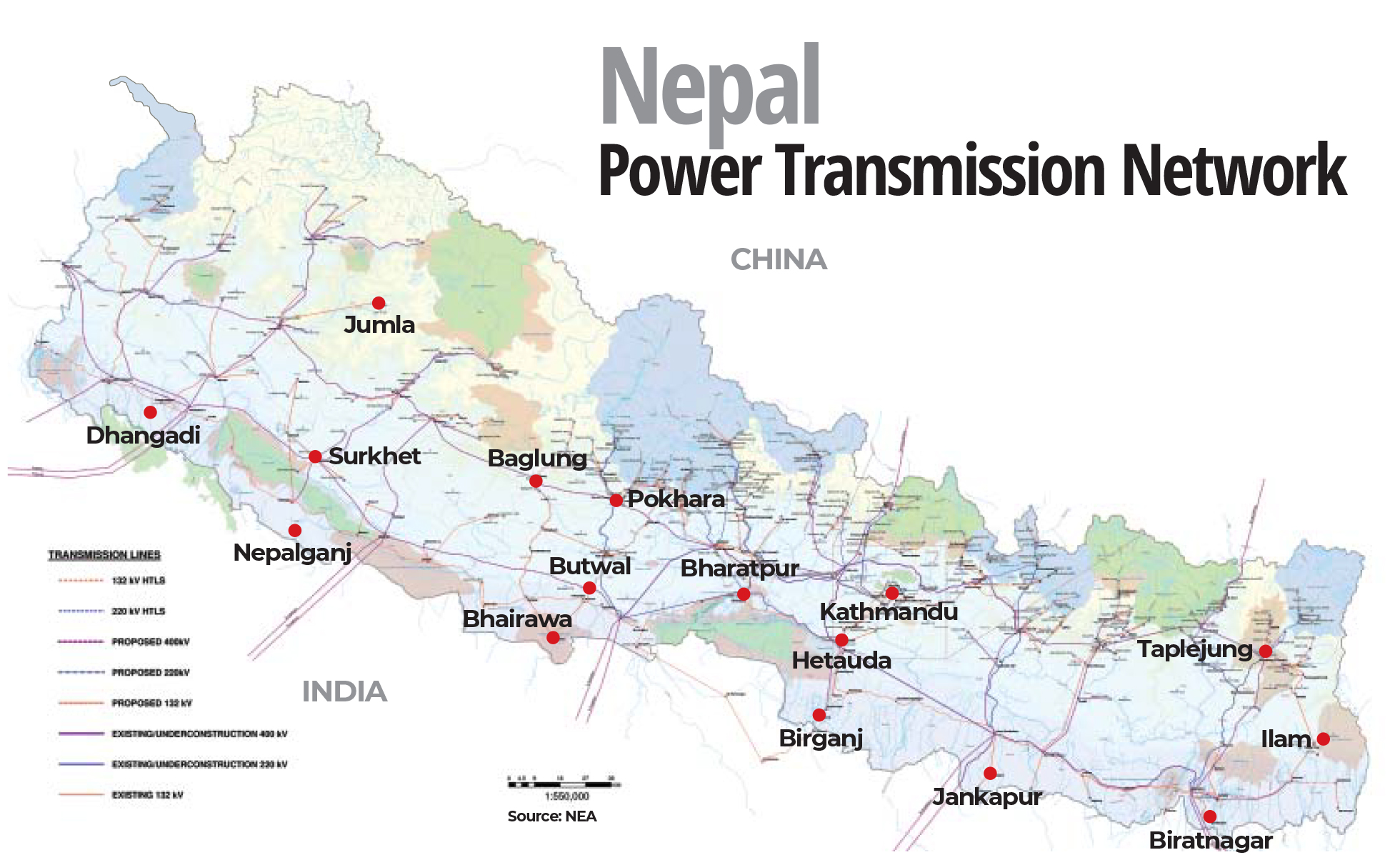
Nepal reached a deal with the Indian Energy Exchange (IEE) on 1 November and from the following day began exporting up to 39MW of surplus electricity to India as part of the first phase of the agreement. However, even while the country sold excess electricity across the border, many parts of the far western districts of Bajhang, Dolpa, Bajura, Jumla and Mugu are not yet connected to the national grid.
Three major transmission lines are in various stages of construction: the Butwal-Bhairawa double circuit which was started two years ago, the Biratnagar-Inaruwa 132KV line that began five years ago, and the Inaruwa-Dhalkewar-Hetauda 400KV transmission line which was started a decade ago.
Read also: India, Nepal sign power exchange deal
The market for electricity expands beyond the border, but industries at home, particularly cement and steel, are still unable to operate at full capacity due to the unavailability of required electricity.
The Sarvottam Cement factory in Sunwal of West Nawalparasi has been forced to reduce working hours and run on generators, as the NEA only supplies 8MW of electricity from the 20MW required for the factory to run at full capacity. Of that, only 6MW of the electricity is actually usable because of circuitry and voltage issues.
To make up for the shortage, Sarvottam Cement set up its own diesel-powered plant, but this only adds to the cost. NEA supplies electricity at Rs10 per unit, while a unit of electricity from a diesel-powered plant costs Rs27.
“The country and industry both would have prospered had the government prioritised transmission lines and increased electricity consumption within the country," says Surendra Mahaseth, manager of the electricity department at the factory. The government made a policy-level decision last year to extend the national grid, prioritising cement and agro-based industries. But delays in the construction of transmission lines have stymied progress.
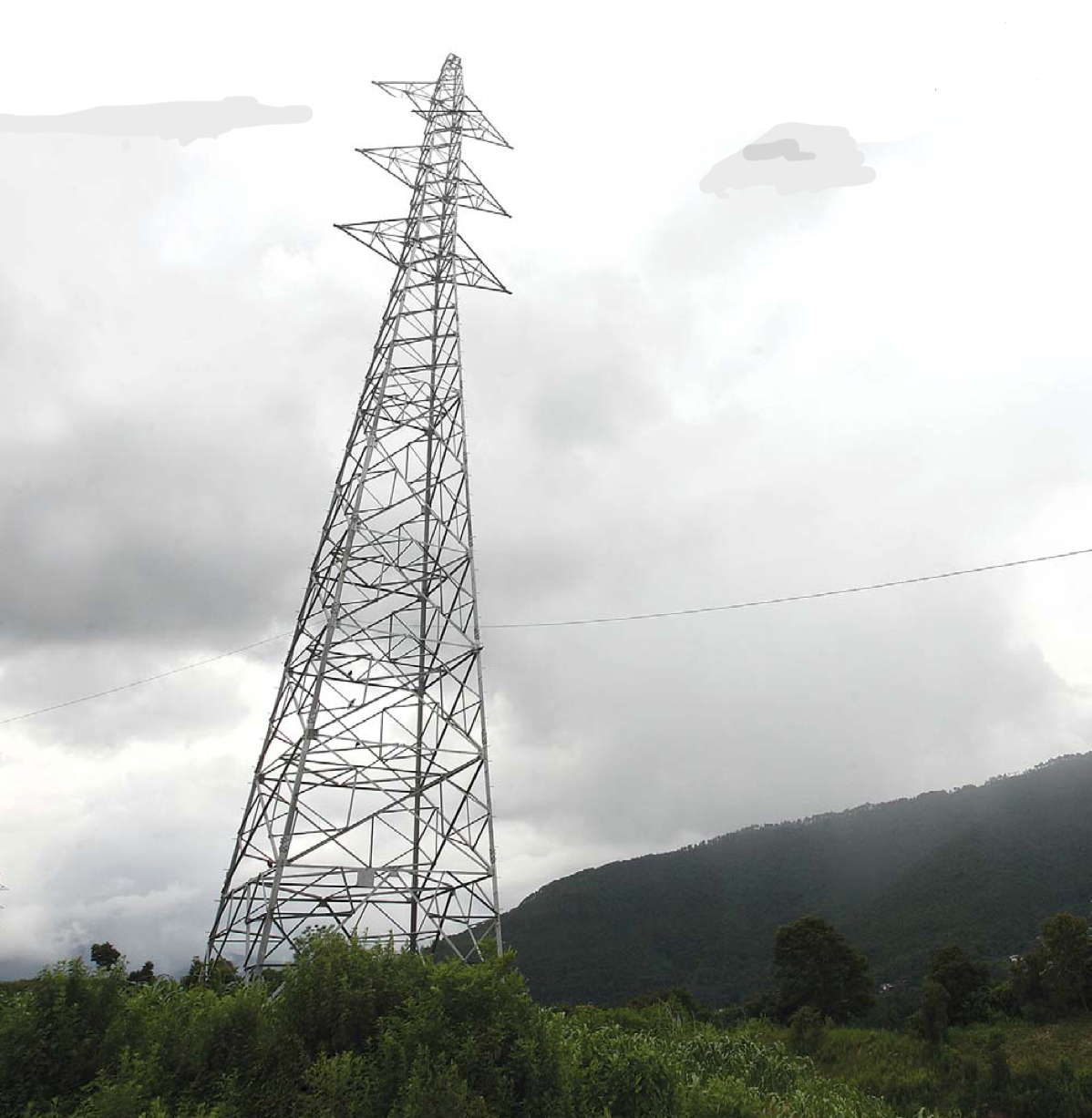
It is not just industries that are worried. Private power producers which have already started construction are worried that their power will have limited distribution because of the lack of adequate transmission lines. Adding to their doom and gloom is the protracted delay in ratifying the US-supported $500 million Millennium Challenge Corporation (MCC) project to build a 400kVA transmission line in Central Nepal to distribute power westwards as well as to India through the Butwal corridor.
Read also:
Missing links in Nepal’s MCC debate, Jeevan R Sharma and David Seddon
MCC: damned if we do, damned if we don’t
Meanwhile, the Argakhanchi Cement Industry requires a transformer with a capacity of 20 mega-volt ampere (MVA) for its operation, but is only supplied with one for 10 MVA. Like Sarvottam cement, it has set up its own diesel power plant that produces 2.5MVA current.