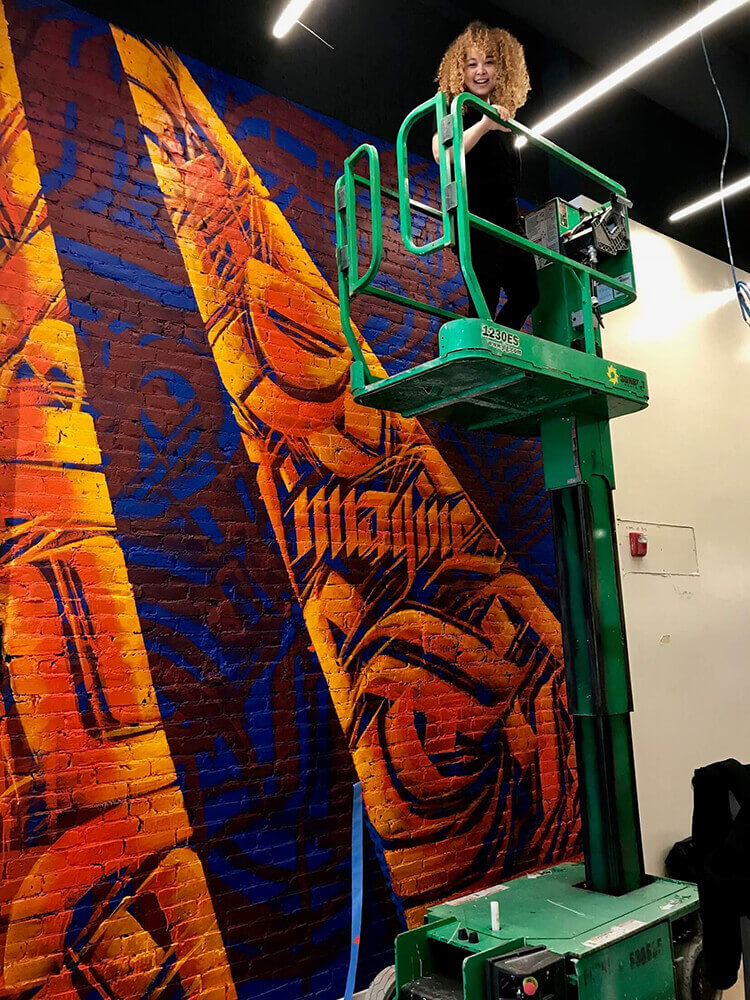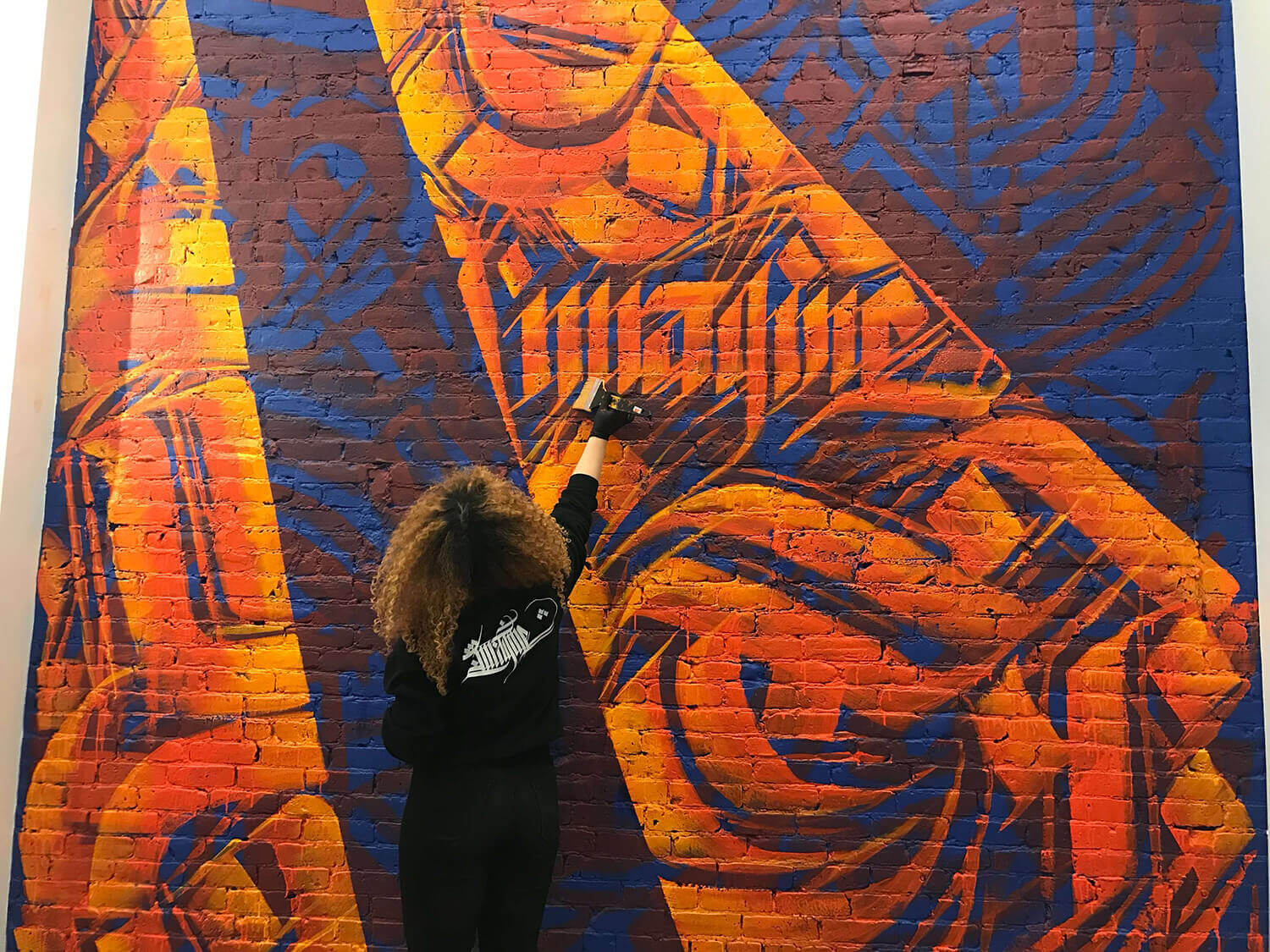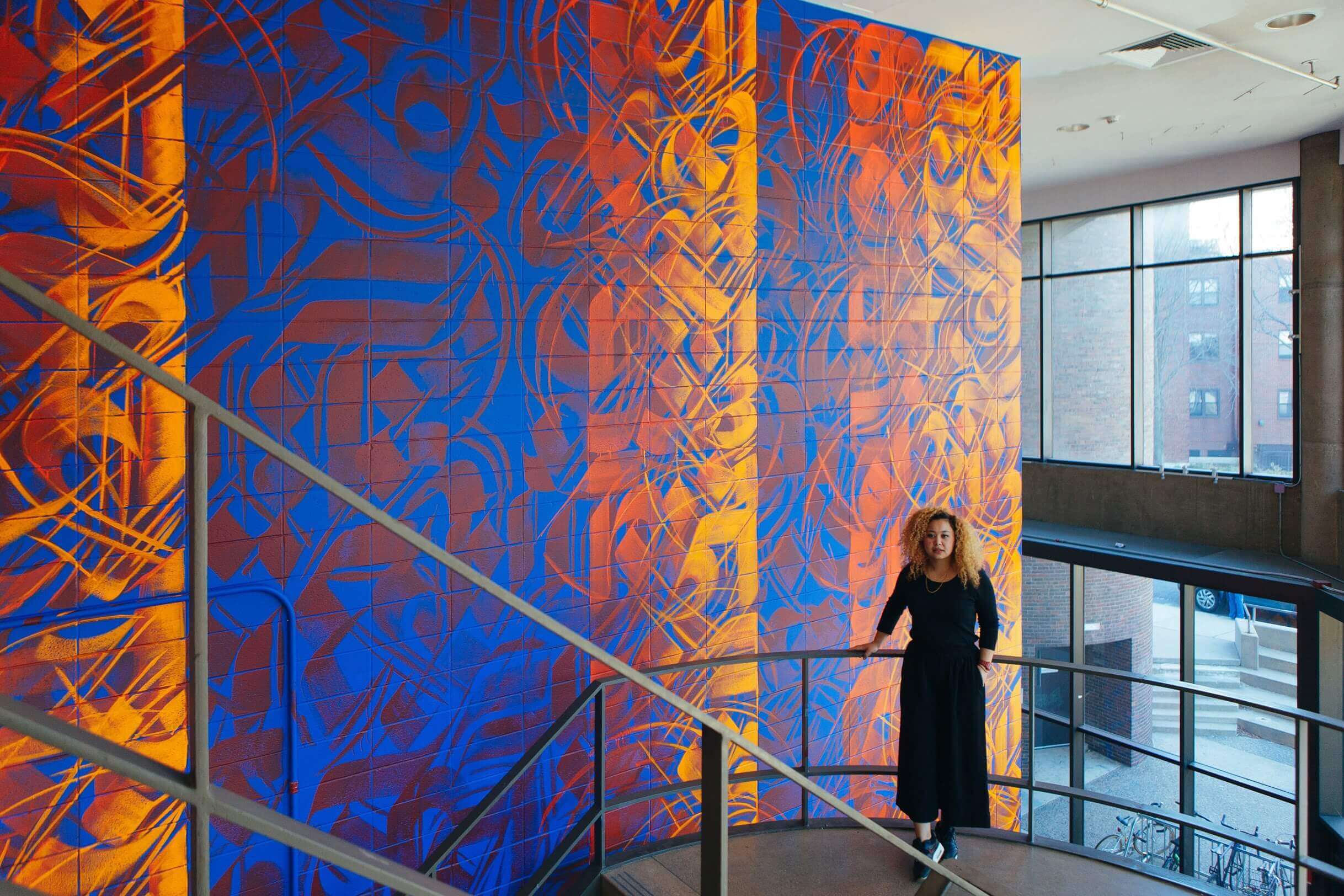
Boston-based Nepali artist Sneha Shrestha once laid out an installation on the floor so that people could walk all over it. She did not want her art to be unapproachable.
Now, she is taken on the most democratic art form of them all: graffiti, for which the whole city is a gallery, is free for everyone. What makes Shrestha's graffiti stand out is that she creates Devnagari calligraphy using the walls and sides of 10-storey buildings as her canvas.
Read also: Nepal Mandal in Manhattan, Kanak Mani Dixit
https://vimeo.com/274748954
During a summer break in Kathmandu this week, Shrestha admitted that she never intended to become an artist, but she grew up loving art. Her mother, an educator, used to convert English children's books into Nepali, and also illustrate them. Shrestha used to watch her mother enjoy that process of creation, and actively started sketching herself.
When she went to college in Gettysburg University, she studied humanities, but also took art classes and by the time she graduated she had taken enough art classes to be a double major. She then joined the non-profit Artists for Humanity, and did photography. Her principal subject was the work of her colleague and graffiti artist Rob Gibbs.
Shrestha saw Gibbs' work, and started experimenting with Devnagari calligraphy. "I liked that you don't have to pay to see graffiti. It's a public form of art which is available to anyone who wants to see it, unlike exclusive galleries. I realised that calligraphy in Nepali could be beautiful, and I started painting a Devanagari style which is completely my own."

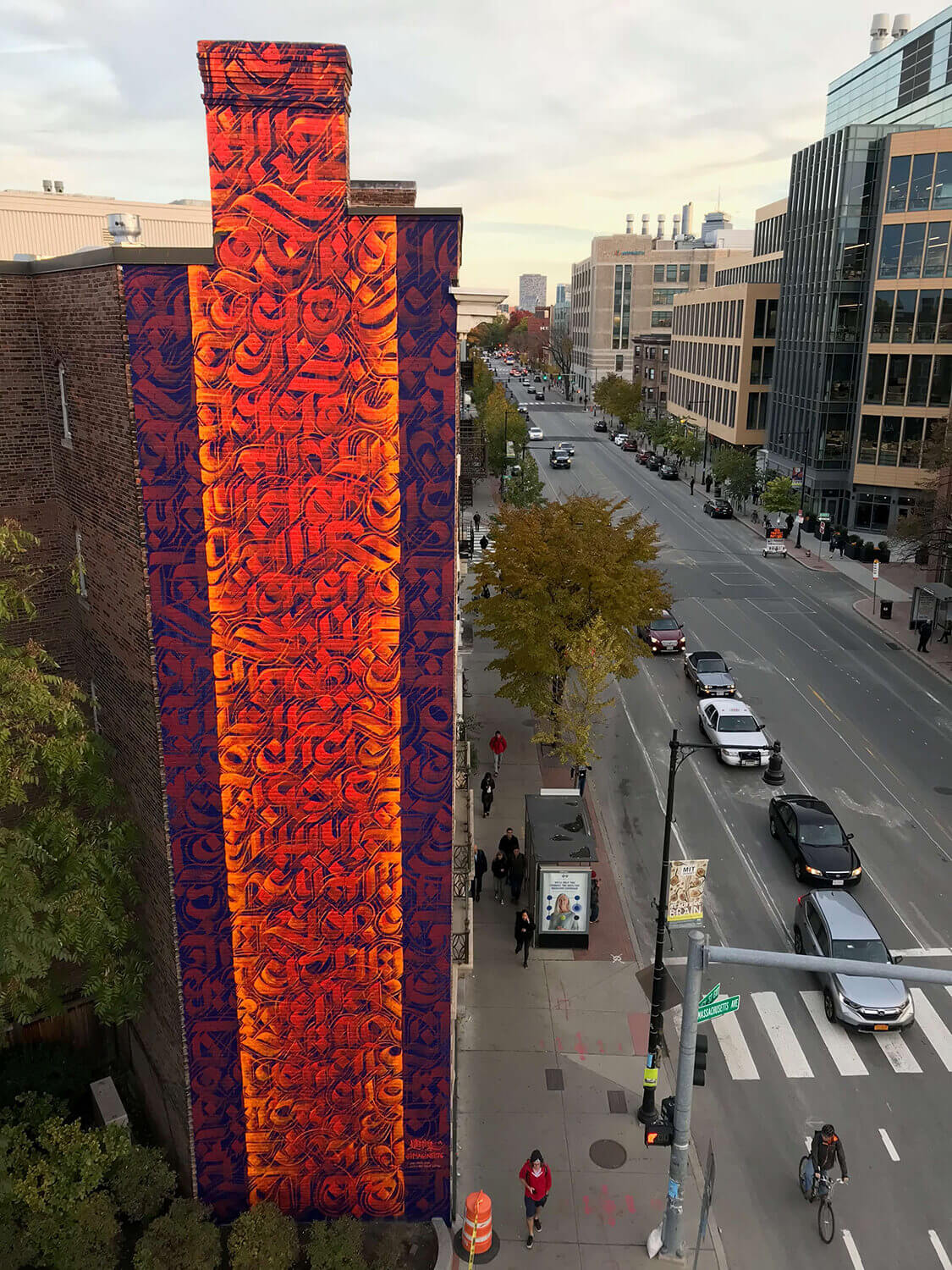
Shrestha's works now adorn walls and buildings in Boston, are currently being exhibited at Museum of Fine Arts there, and she has done work for Facebook and Reebok. She writes down letters, words, and poems in Nepali and Sanskrit, and her favourite one is a mural at an MIT (Massachusetts Institute of Technology) building where she quotes Laxmi Prasad Devkota: Manis thulo dilale hunchha, jatale hundaina (a person's greatness is defined by his heart, not by his caste.)
"There are so many ways I could relate to that line, and it was relevant at that particular space," explains Shrestha. "MIT is one of the most selective institutions in the whole world, who defines what success means in that context? In a meritocratic world that values high earning, what is the success rating of someone like me, an artist? I think you define your own success, and it is not defined by where you come from."