

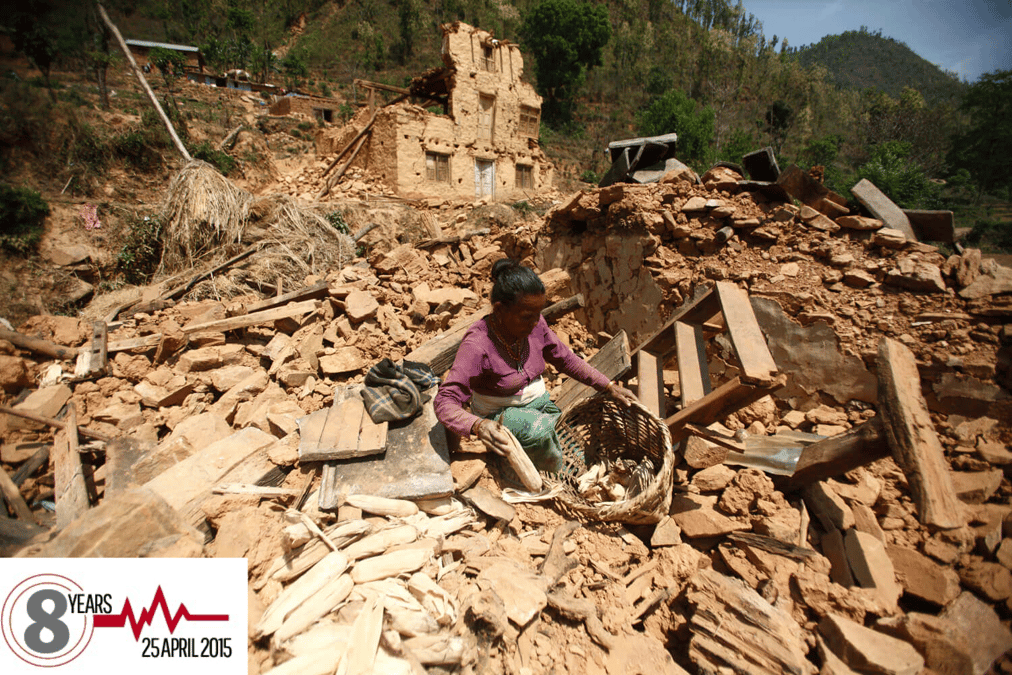
Commemorating the eighth anniversary of the 2015 earthquakes is a time to mourn the loss of lives, and recall the resolve of people and institutions who came together during that national calamity for reconstruction and recovery.
But most of all, it is a chance to make Nepal resilient and sustainable against similar future shocks in the coming decade of BS 2080s and beyond. Over the past decade, Nepal has been struck by one disaster after another: the 2015 earthquakes, the Covid-19 pandemic, the biggest dengue outbreak in 2022, unprecedented loss and damage from floods and landslides, fires, avalanches, Glacial Lake Outburst Floods, a rare tornado in the Tarai that levelled villages in 2019, locust infestation, highway fatalities, aviation disasters.
During the very first week into New Year BS 2080, we topped global charts for the worst air quality due to widespread wildfires across the country.
Just in 2021, three climate-related disasters brought heavy rains, floods, landslides, debris-flows and wildfires that claimed hundreds of lives, destroyed thousands of homes including schools, bridges, government buildings and hydropower stations. Other slow-onset disasters such as the aggradation of river bed and ‘flash’ droughts have led to the forced migration of hundreds of settlements.
Disasters and climate change-induced loss and damage in the last decade have stretched our idea of what these impacts can do and how we can cope.
Read also: Back to classroom for earthquake preparedness, Rachael Lau
After 2015, the National Reconstruction Authority (NRA) set an example of planned and systematic reconstruction within a tight deadline. Local governments in new federal structure performed well in Covid-19 recovery. The fast-paced reconstruction of the Bara-Parsa tornado helped people get shelter before the monsoon.
In 2017 Nepal’s Parliament endorsed the Disaster Risk Reduction and Management Act, which led to the creation of Nepal’s National Disaster Risk Reduction and Management Authority (NDRRMA). The Act and the establishment of NDRRMA in December 2019 signals a paradigm shift in Nepal's approach to disaster risk management: from being mostly response-centric to prioritisation of understanding risk, improved governance, financing, including preparedness for effective response, early warning system, recovery and reconstruction.
The NDRRMA has not only taken on the NRA's remaining task of reconstruction, but also has a responsibility to increase resilience during future disasters. In a short span of three years, it has collated nationwide multi-hazard risk information and made it available through the Bipad Portal. Municipal governments have been trained to enter risk and open space information (below).
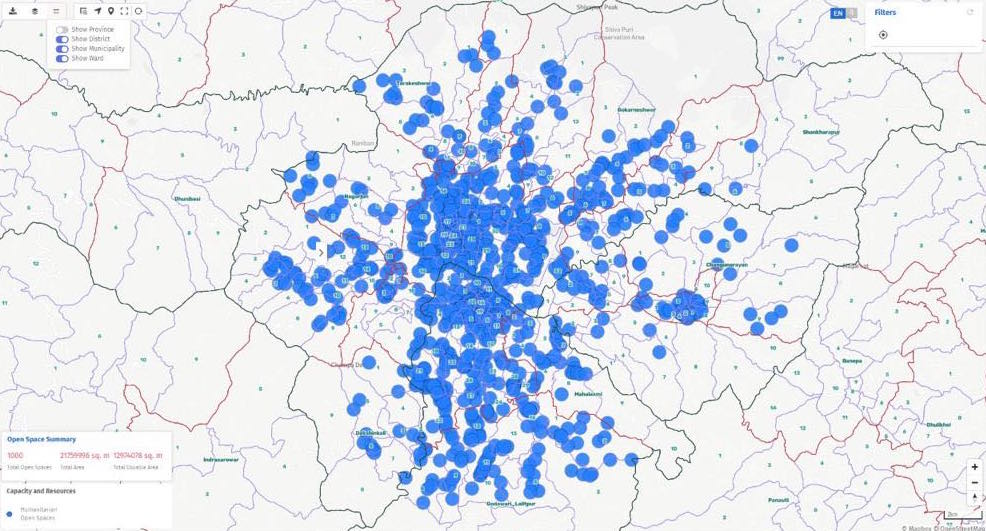
All 753 local governments contribute to the disaster risk, hazard, exposure and vulnerability information including the down-to-the-household information on disaggregated information by gender, age and disabilities. The technical teams have been deployed to undertake risk assessment in areas impacted by landslides and floods. The use of satellite imagery and drones including for land displacement to assess complex risks has begun.