
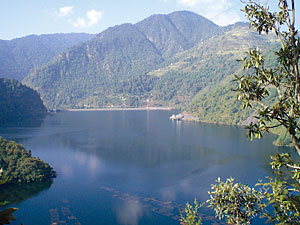
 KUNDA DIXIT BLUE POWER: The Kulekhani reservoir, Nepal's only big storage project so far. |
Whichever government comes to power, the first thing it will have to start working on will be energy.
In any other country, this would be considered an emergency: Nepal is going through its first-ever monsoon power cuts. This winter load-shedding will go up to 56 hours a week. The generation shortfall will be 35 per cent below demand this December.
Not just this year, Nepal will suffer an average of to 6-8 hours of power cuts a day till 2013 because no new major power generation schemes are coming on line till then except the 70MW Middle Marsyangdi.
The other emergency is Nepal's widening balance of payments gap with India, which reached Rs 96 billion this year because of the higher cost of petroleum imports and falling export. The trade imbalance is expected to grow, and the only way to narrow the gap in the medium term is by launching hydroelectricity export projects immediately.
There will be other benefits from aggressive investments in hydro infrastructure: it will generate tens of thousands of jobs. In their economic masterplan, the Maoists say they want to generate 10,000 megawatts in the next 10 years to meet domestic demand and to export to India. This would require investments at a time when most international companies are wary of doing business in Nepal because of political risk.
Nepal's electricity demand is rising at 10 per cent a year, but could increase if the peace dividend finally spurs economic growth. Domestic investors and community generation schemes could easily add up to 50MW a year. Industry analysts see a role for large foreign joint ventures in projects to export power to India.
They point to the Electricity Act of 1992 that allowed 300MW of power to be generated in six years in the mid-1990s, doubling generation capacity, and say Nepal's new government needs to make a similar breakthrough.
"Ten year ago, no one even wanted to hear about investment in hydropower but now we have investors lining up to put money into this sector," says Gyanendra Lal Pradhan of Butwal Power Company, one of Nepal's new breed of entrepreneurs with stakes in seven hydro projects worth 350MW in pipeline.