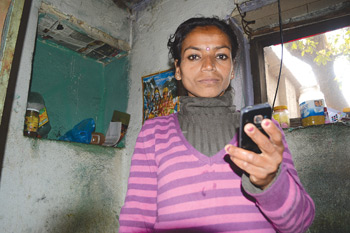
They also own mobile phones, a device that has transformed the lives of single mothers who are often ostracised by families and rejected by society.
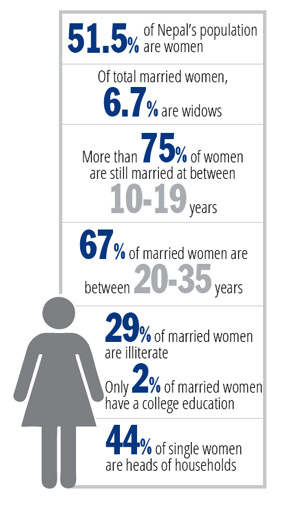
A woman may not have to jump into the funeral pyre when her husband dies anymore, but she is required to mourn her husband endlessly and never remarry. Many don’t have access to property, have difficulty obtaining birth certificates, citizenship cards, and proof of relationships for their children. Single women are vulnerable to abuse and sometimes denied access to their own children by the husband’s family.
Paru who is from remote Bajura district was married at 14. Her husband escaped to India to avoid forced recruitment into the Maoist army, but died two years after their marriage, leaving Paru to raise their son who is now 10 years old. After her husband died, her in-laws began to mistreat her. She couldn’t leave the house, attend religious functions, and was even banned to talk to anybody, especially men. “When people see a young widow they naturally assume that she will remarry and run away with the property with the new husband,” Paru told us over her mobile phone.
The 26-year-old says she now contacts other widows like her over the phone and provides them with counselling. By renting her phone to neighbours who pay per call, she has also been able to generate a small income. Her financial independence has earned her new respect in the community. Today Paru and many other widows like her have mobile phones donated by Women for Human Rights (WHR) which provides widows in districts like Bajura, Dadeldhura, Palpa, Sankhuwasabha, Saptari, Sindhuli and Kavre with mobiles.