
|
|
| Shechen's nurse Furgyalmu Sherpa and a French volunteer with a 71-year-old stomach cancer patient who passed away in October. |
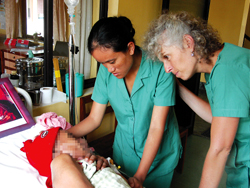
The walls of Hospice Nepal are a cheery yellow. It's clean, airy, and quiet, and a far cry from the chaos and sharp medical smells of most Nepali hospitals. A comforting sense of calm belies the stories of the occupants-a 21-year-old woman with an inoperable brain tumour, a 45-year-old with advanced cervical cancer, and a 51-year-old man dying of cancer of the liver.
Hospice Nepal is a leader in a new segment of Nepali healthcare, hospices and palliative care services that allow terminally ill patients to die painlessly and with dignity. Until less than a decade ago, dedicating resources to patients who couldn't be saved was an alien concept even to most medical personnel. The focus is on prevention and cure, so palliative care is low priority.
As death rates from problems like maternal mortality and TB decrease, predictions are that mortality rates from terminal illnesses like cancer, hepatitis B, and HIV/AIDS will rise. To address this shift, several new hospices have been set up in recent years.
Shechen Clinic in Boudha has been open for a year and, unlike Hospice Nepal in Lagankhel's focus on cancer patients, offers its seven beds to all types of cases.
They've had 15 patients pass away so far, but Shechen's general manager Dominique Marchal says proper care often means patients live longer and better, sometimes even going into remission and rejoining their communities.
Still, dealing with dying and death is hard on hospice staff. Since opening their nine-bed facility four years ago, Hospice Nepal has seen roughly a hundred deaths a year. "It's difficult, no matter how hard we care, we can't save patients. It's not like other medical fields, where you get to see them get better and leave," says Sanu Maiya Rana, head nurse at Hospice Nepal, which initially began as a few beds hired in HM Hospital six years ago.
Gently caring for an elderly stroke victim, Shechen nurse Furgyalmu Sherpa agrees, but adds that the work is rewarding. "Families are tired after months of caring for patients, so they get a rest too," she says.
Gyan Bhakta Shrestha, sitting by his brother Narayan, who was in Hospice Nepal with liver cancer, sang praises of the staff and talked of how they even arranged for him to go home for Dasain Tika.