
 KONG YEN LIN |
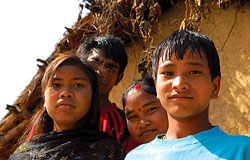
If one were to judge the age of Rima Chaudari by her hands, you could think she was four times older.
The 13-year-old kamalari was working in Nepalganj as an indentured domestic slave for six months before being sent to Surkhet by her landlord to toil in a bread factory. She worked 16 hours a day without wages until a Tharu child labour monitoring committee rescued her.
The committee was set up four months ago and consists of 11 Tharu villagers and has support from groups like the Active Forum for Human Rights Awareness (AFHA). Sixteen kamalaris from 6-14 years have been rescued so far. The children are sent to school where they pick up leadership and employment skills.
"The new constitution should provide opportunities for equal participation of Tharu communities in education," says activist Budghar Birshingh Tharu, "we should bridge the gap in education quality between government and private schools."
The new Tharu settlement of Loknagar near Kohalpur on the East-West Highway is where freed bonded labourers learn to be independent. There are schools and medical facilities catering for 600 households, and income-generation activities include farming, livestock rearing, construction and carpentry.
However, in another Tharu settlement 10km away the situation is much more haphazard, with some families living under flimsy wooden structures. Income generation is almost non-existent.
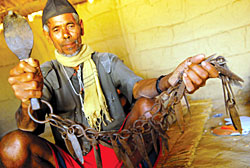 |
Ever since the official emancipation of kamaiyas in 2000, 18,400 Tharus were freed, half of them landless. Government rehabilitation programs were sporadic, and most kamaiyas still live in poverty and illiteracy, and continue to be exploited.