
 KIRAN PANDAY |
Sudeep Risal is the kind of guy who works hard six months of the year and lives one day at a time. Originally from Sindhupalchok, Risal has been a trekking guide for 13 years.
During the peak trekking seasons of March-May and September-November, Risal makes between Rs 550-700 a day leading groups through trails around the country, excluding tips and gifts.
While he finds the basic pay satisfactory, Risal feels it is the clients he makes friends with and their generosity that makes his vocation special - one of his two sons is currently in school, sponsored by a Swiss tourist Risal met on a trek.
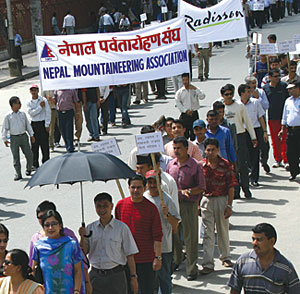
Stories like Risal's are in danger of becoming tales of the past, given the labour unions' heavy-handed approach in demanding more pay and benefits for their members. Just last Sunday, the Maoist-affiliated All Nepal Tourism Workers Union (ANTWU) called for trekking agencies to stop sending out guides, porters, cooks and helpers until the Travel and Trekking Regulations are implemented. The guidelines stipulate an average two-fold increase in wages and insurance coverage among other conditions.
The move could not have come at a worse time. A strike in the middle of trekking season places great pressure on trekking agencies to accede to ANTWU's demands. But it is the workers themselves who will bear the brunt in lost wages, which make up a large portion of their annual income.
While unions such as ANTWU have worked to improve the lot of tourism workers through the years, "what they are presently asking for is unrealistic", says Som Thapa, First Vice President of the Trekking Agencies' Association of Nepal (TAAN). "Trekking companies will have to charge customers much more in response."
Padam Ghale, founder of Mandala and Shambhala trekking agencies, which employ more than 300 staff during peak periods, concurs. "Times have changed. Thirty years ago, we only received 30 rupees a day," he says, adding, "these big unions are usually associated with political parties. When they fight for their members, they create goodwill among them and build political pressure at the same time. Until there is political stability in Nepal this will not change."