
 KIRAN PANDAY |
Kathmandu could be a whole lot cleaner if only we used a little ingenuity in solid waste management. Of the 500 tonnes of solid waste generated in the valley everyday, 66 per cent is biodegradable. That means 330 tonnes could be transformed into compost, with the remaining 170 tonnes easily managed by the municipality.
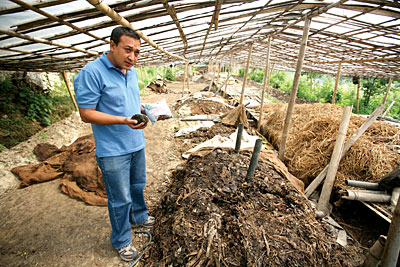
"The problem with solid waste management has more to do with a lack of awareness than inadequacy in systems of garbage collection and disposal," says Deepesh Budhathoki. He should know. He has been manufacturing compost from the solid waste of Kalimati Fruits and Vegetables Market for the last two years.
Budhathoki collects about 25 tonnes of waste from the market every day, separates degradable from non-degradable waste, and transports the former to his factory in Chobhar for further processing. His company, Nepal Kalpabriksha Management and Trading, employs 14 people and produces one tonne of compost a day. He aims to increase production to 8 to 10 tonnes a day. From this month on, he will also be collecting waste from New Baneswor. The municipality has offered help in transporting household wastes to his factory.
Budhathoki has made a profitable enterprise out of garbage. People come to his factory to buy compost by the packet, mostly for gardening and vegetable farming. Compost is considered a better fertiliser because unlike chemical fertilisers, which lead to a gradual decline in soil quality, compost maintains the fertility of the soil, prevents diseases and is not hazardous to health. Bio-controls inoculated into compost also reduce fungal disease and work as a nitrogen fixer.