
 |
The first day of 2010 was bright and crystal clear and I felt as if everything was moving smoothly. The birds were perched on treetops, chirping their morning songs, and a brand new sun was rising, almost as if from the gorge of Sanga.
The day was bright in so many ways – we were looking forward to 2010 with great hope. The country's New Year's resolution to its people was a new constitution that would protect the rights of all castes and creeds in Nepal.
GP Koirala, the former Nepali Congress president, was active in leading a high-level taskforce that was supposed to settle the disputes that had arisen in the committees drafting the constitution. Disagreements on certain major issues were anticipated, but there was also a general belief that the leaders would agree to move this process towards a definite end.
Nepalis were engaged in the debate of how the state should be restructured too (and which federal province they would end up in), and there was a real feeling that things would change soon. In the last week of January, I travelled to Gorkha, where I found people in teashops and marketplaces discussing the proposed new maps of a federal Nepal. It was exciting to see ordinary people debating their future and taking part in the new constitution drafting process at the local level.
Shortly after this, 4000 disqualifed Maoist combatants left the cantonments. It was one of the most significant steps in the peace process, and made many people feel optimistic about the successful conclusion of a just and non-violent settlement.
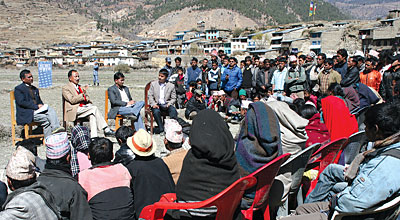
In March, the Sajha Sawal team and myself travelled to some of the more remote parts of the country to gauge how people really felt about the peace process and the drafting of the new constitution. I was curious to know whether people in far-flung parts felt any tangible changes in their lives. Did they have confidence in the entire process? Did they believe that their leaders and a handful of intellectual elites in the capital, hundreds of miles away, were really looking out for them?
Sadly the answer was no. The harvest had just concluded in Jumla and people were enjoying some well-deserved downtime, but their lands were almost barren. The Tila River flowed through their grassy pasture lands, but to Jumlis, it was an untapped resource. No one here knew how to make the best use of the water to boost agricultural production, and food scarcity continues to haunt the region. In Jumla, it was as if time had stood still. People here had no sense of change, nor did they have any hope that their situation would improve. The promises that were being made far away in the capital had no impact on these people's lives.