
 |
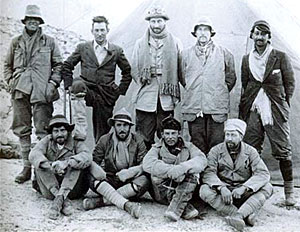
The unresolved debate about whether George Mallory (standing, second from right) climbed Mt Everest continues nearly a century after he disappeared on the north side of the world's highest mountain. For three reasons (dehydration, hypoxia, and hypothermia) there are doubts about whether he made it to the summit. Clearly Mallory was an extremely motivated and wildly talented climber of his day. He represented the British generation post World War I greatly affected by the horrors of the war as Mallory himself wrote eloquently about the devastation wrought by the Battle of Somme . It was time to rescue the British psyche from this mental slump, and his successful bid to the summit in 1924 would certainly have achieved that purpose.
However, Mt Everest had other plans. At 7,000m, the climber is breathing so hard (hyperventilating) that the body loses a lot of moisture, in addition to loss from sweating. Snow needs to be painstakingly melted with a stove for drinking water. In all likelihood Mallory and his climbing campanion Irvine were unable to melt water for drinking leaving them severely dehydrated. Compare this with the successful climb of Hillary and Tenzing almost three decades later who drank plenty of lemonade and actually peed copiously on the summit.