
Newly appointed Finance Minister Swarnim Wagle’s first order of business immediately after assuming office last month was to repeal 15 laws that restricted business and investment. But since then, his colleague Home Minister Sudan Gurung has been busy rounding up businessmen.
This is not to pass judgement on which captain of industry is clean, and who is not. But it does look like one arm of the government doesn’t know what the other is doing.
The RSP’s 100-point governance roadmap is ambitious, some would even say unrealistic, but at least it is a time-bound blueprint to double Nepal's economcy to $100 billion by 2031 with 7% annual growth and massive job creation.
But even with the friendliest investment climate for domestic and international companies, that would be fanciful. But factoring in ministers working at cross-purposes, making ad hoc ill-thought out decisions, and the threat of an international recession due to the war in West Asia, the roadmap looks even more iffy. The World Bank has projected the growth rate to slow to 2.3% this year amidst the conflict and the lingering effects of the 8-9 Septemebr 2025 unrest.
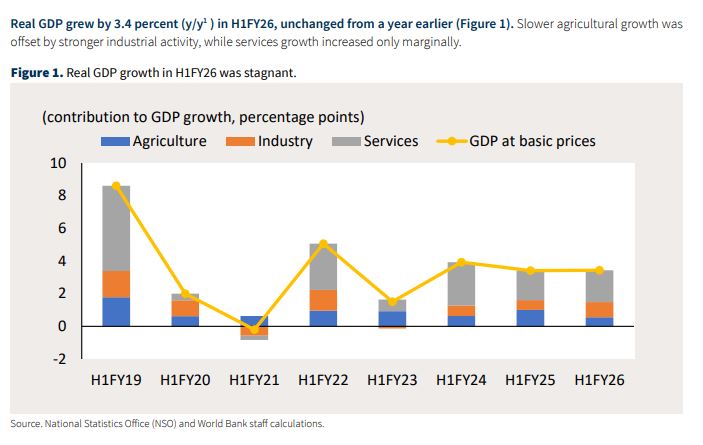
“We have achieved 7% growth post-2015 earthquake, but closing in on that now would require massive investments, domestic and foreign, dismantling the cartels, eliminating rent-seeking,” says economist Kalpana Khanal at the Policy Research Institute.
She adds: “Politically, there is now some stability so this is feasible. The ease of doing business will improve with the government repealing those outdated laws. We need more policies to make the private sector a facilitator in job creation and innovation.”
Some of the laws that Wagle revoked are not new. The dismantling of the Department of Revenue Investigation was recommended by the High-Level Economic Reforms Suggestion Commission and the $100 billion economy target was set in a National Planning Commission report back in 2015 when Wagle was vice-chair.
Sujeev Shakya of the Nepal Economic Forum says a $100 billion economy is within reach: “Look at all the small and medium enterprises, the market size. If we can get overseas Nepalis to invest in ventures back home, or simply convert informal remittances to official channels, this alone could amount to $5 billion a year."
Half of the $11 billion Nepal officially received last year in remittances came just from West Asia. But Nepal’s economy is already suffering the fallout of the US-Israeli war on Iran as the Hormuz blockade threatens further escalation.