
Amidst the euphoria in Nepal about the RSP’s landslide victory, the party’s future government, possibly led by Balendra Shah will plunge headlong into an energy and economic crisis sparked by the war in West Asia.
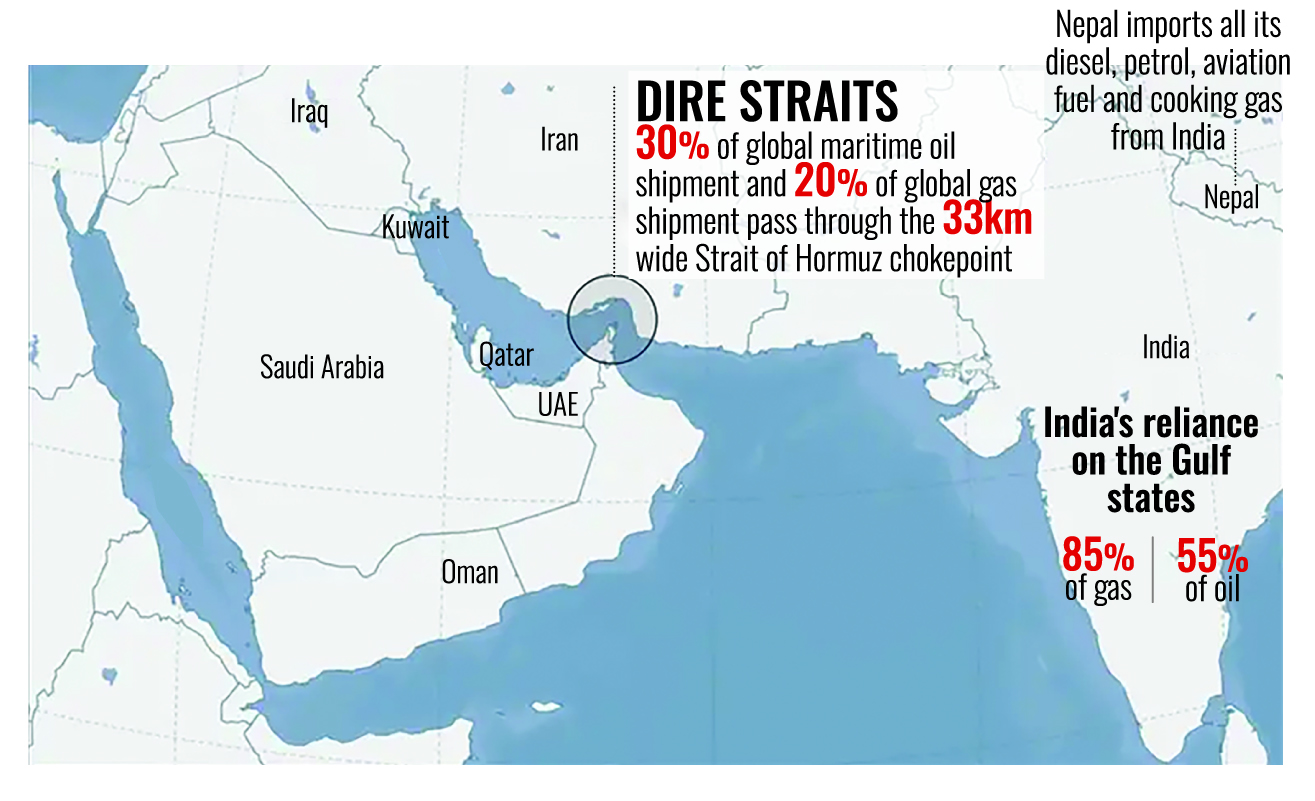
Nepal gets all its diesel, petrol, gas and aviation fuel from India and lacks a strategic stockpile to buffer against shortages. The United States has unsanctioned Russian crude oil to India for one month, but India will only export refined petroleum products to Nepal after meeting its own domestic demand. As it is, India has only 10 days of stockpile of cooking gas and it is giving preference to household use. Energy experts say new oil and gas supplies from Russia and elsewhere will take another month to arrive at Indian ports.
“This conflict didn’t develop overnight, yet we did nothing to augment our reserves. Clearly, we didn’t manage procurement anticipating supply disruptions,” says economist Pushkar Bajracharya.
The conflict has escalated, seriously disrupting global petroleum supplies. Nearly 20% of the world’s oil and gas moves out of the Strait of Hormuz which is now blocked. The Persian Gulf makes up most of the oil and liquified natural gas supplied to Japan (75%), India (50%) and China (38%). Crude oil prices have nearly doubled to $100 a barrel this week.
“This crisis is only going to intensify, so in the short term, it means fuel prices will increase as will the cost of goods and services,” adds Bajracharya. “This doesn’t bode well for the new government, especially when people have such high expectations from it.”
Fuel stoppages from India have happened before, notably during the 2015 Blockade. But Nepal could be better placed this time to cushion the shock because of the proliferation of battery-operated vehicles, and electrification of household cooking to some extent.
“The increase in electric vehicles provides some relief, but it is not enough,” says energy economist and former Water Resources Minister Dipak Gyawali. “Most critical services still run on diesel, and they cannot be replaced overnight.”
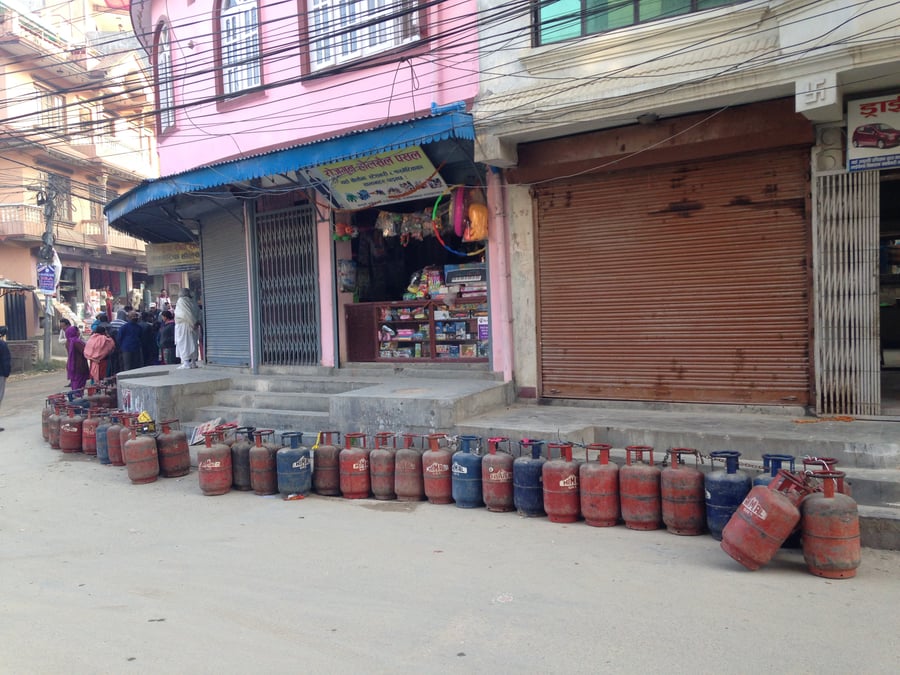
Nepal’s expanding road network means diesel and petrol consumption is also increasing. If the war drags on, there will be a critical shortage of aviation fuel that could also hurt tourism at the start of the trekking and mountaineering season. There is already a nationwide shortage of cooking gas which is used by 62% of Nepali households.
The fuel crisis will have a knock-on effect on the economy which the RSP government will have to tackle on an emergency footing as soon as it comes into office.
The priority would be to cap fuel prices with subsidies, control hoarding, and in the longer term expedite the switch to electricity for transportation and cooking.
MONEY IN
The other impact will be on jobs in West Asia and remittances. Nearly half the $11 billion a year Nepalis send home every year comes from West Asian countries. Nepal’s hard currency reserves have hit a record high $21.09 billion, but that cash will be of no use if there is no fuel to buy.
A sharp drop in remittances due to the collapse of the economies of the Gulf states if the war is prolonged will have a multiplier impact particularly on Nepalis' household expenses and the country’s economy in general. This in turn will have a knock-on effect on investment, and affect the RSP government’s main agenda which is to create jobs at home.
The vicious cycle will then mean that more Nepalis will want to migrate for overseas jobs, but options in the Gulf may not be available.
The RSP’s ministers in government will have to come up with innovative ways to re-integrate Nepalis forced to return because they lose their jobs, or for safety reasons. There are nearly 2 million Nepalis across the UAE, Qatar, Kuwait and Saudi Arabia, and another 7,000 mainly women caregivers in Israel.
“Other than the impact on remittances and the economy, there could be the additional challenge of rescuing over 2 million Nepalis in West Asia if it comes to that,” says Bajracharya. “We don’t have the resources, and we will have to rely on India’s logistical help.”
The RSP’s main vote bank was among global Nepalis, who could not cast ballots themselves but influenced families and friends back home to choose the party. Social media was abuzz with slogans that promoted how choosing the RSP would bring their children back home from the Gulf.
“The RSP got a majority, and that’s a good thing but voters came together to oppose UML, NC and the Maoists. But there is no clear ideology or philosophy, so while their slogan to bring Nepalis back from the Gulf sounds nice, what would they come back to?” asks Gyawali.
The Nepali diaspora in the Gulf that influenced the electorate so effectively will now be looking at how the government it helped get to power in Kathmandu will help as war engulfs the region.
There is an almost unrealistically high expectation of the RSP, and the party may not even get the customary 100-day honeymoon period. The cabinet could be put together easily enough, but the bureaucracy, judiciary, police, and the Upper House are all populated by loyalists of the old parties.
Despite bad blood, the RSP will have to work together with all parties in the face of the crisis unleashed by the war. And Nepal’s politicised foreign policy must be galvanised to deal with the crisis.