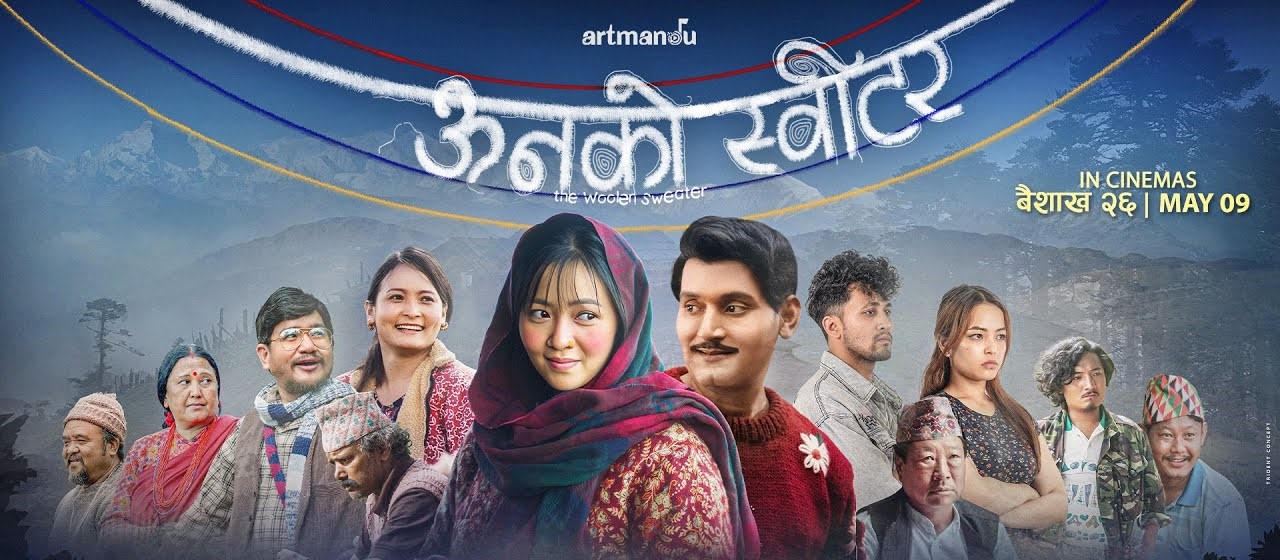
If you did not watch the understated movie उनको स्विटर / (The Woolen Sweater) after it was released in May last year, you missed a major turning point in Nepali cinema. Much-hyped films fall short of expectations, but here is an exquisitely acted and directed production with a strong underlying message of tolerance.
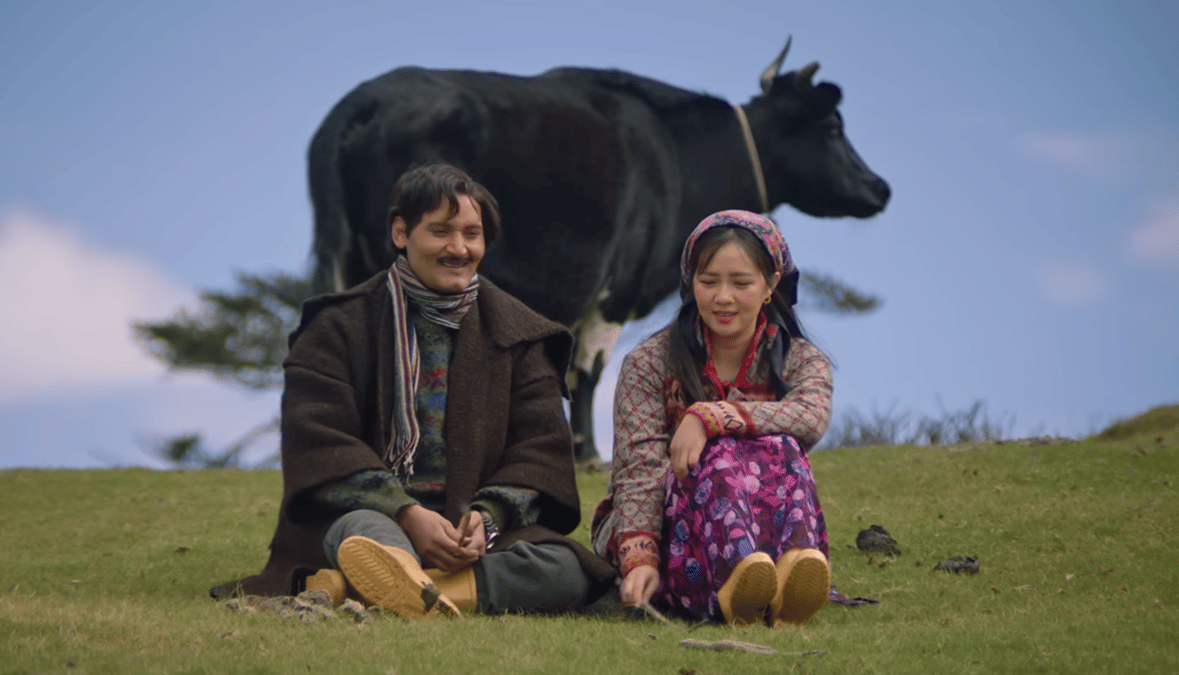
What a contrast from formulaic melodramatic Kollywood fare — a love story so simple, cinematography so subtle in capturing the beauty of the monsoon on mountain pastures, and a background folk song accompaniment that evokes the flavour and tenor of multi-ethnic eastern Nepal.
Since its release, Unko Sweater received praise in Nepal, but it was in multiplexes across Nepaliphone India where the movie became a rage. Positive reviews spread by word of mouth on social media, where the script, performance and camera work were praised for reflecting a genuine and unsullied rural Nepal.
The movie is a layered portrayal of caste, ethnicity, gender and culture with the tender romance between the shy Dharanidhar Kafle (Bipin Karki) and Phool Gurung (Miruna Magar) in which the two, despite being soulmates, have to deal with societal norms and gossip. They do this without rebelling, in their own quiet way.
In the first scene in a crowded jeep, people are seen discussing an election. An elderly greying Kafle is headed home, and the rest of the movie has back and forth flashbacks revealing the story of his unspoken affection for Phool. But there is an undercurrent of ethnic rigidity.
When Kafle’s brother Dambar elopes with Iksha Limbu, the repercussions are borne by both families. Then Kafle’s uncle is banished for being an outcast.
Miruna Magar as Phool, as an ebullient woman, is in contrast to the introverted Kafle, who does not say much but has a melodious singing voice. As the plot thickens, Kafle is shown to be bound by circumstances that pose obstacles to his love for Phool.
The storyline delicately shows how life and situations constantly force people to shift direction. Despite underlying differences, the various castes and ethnicities in this fictitious village near the Sikkim border get along because they have to. There is an interdependence between highland farmers and other ethnicities living down the valley that is at the heart of Nepal’s ethnic harmony.