
 NEIL DIXIT |
There are now 800 electric-powered three wheel public transports in Kathmandu Valley. Few remember what a big leap forward it was in the mid-1990s to replace the polluting diesel tempos with electric ones.
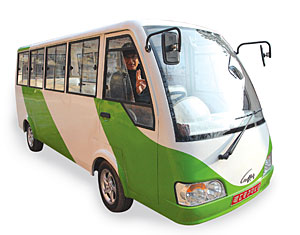
Now, NEVI Tradelink which was involved in the Safa Tempo campaign, is taking green transportation initiative further by importing 100 per cent electric, ready-made buses from China. These 16-seater "Safa Buses" will be an ideal replacement for the three-wheelers which are too small for the Valley's commuting population. NEVI plans to also import an "open-air" model of the bus and an electric four-door sedan.
"It was designed for the Beijing Olympics but we think it could be suitable for schools in Kathmandu too," says NEVI's Kiran Raj Joshi.
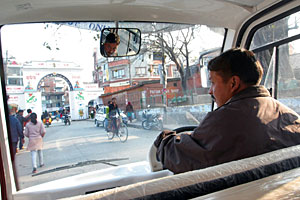 |
All of these features add up to a vehicle that is all work and no play, a quintessential people mover, and perhaps a perfect environment-friendly addition to Kathmandu's roads. With a price tag of Rs 1.65 million the Safa Bus may be an idea whose time has come for Kathmandu's choked roads.