I had heard so many stories of multi-coloured rhododendrons along the mountain trails near Bhojpur that I was determined to see it for myself.
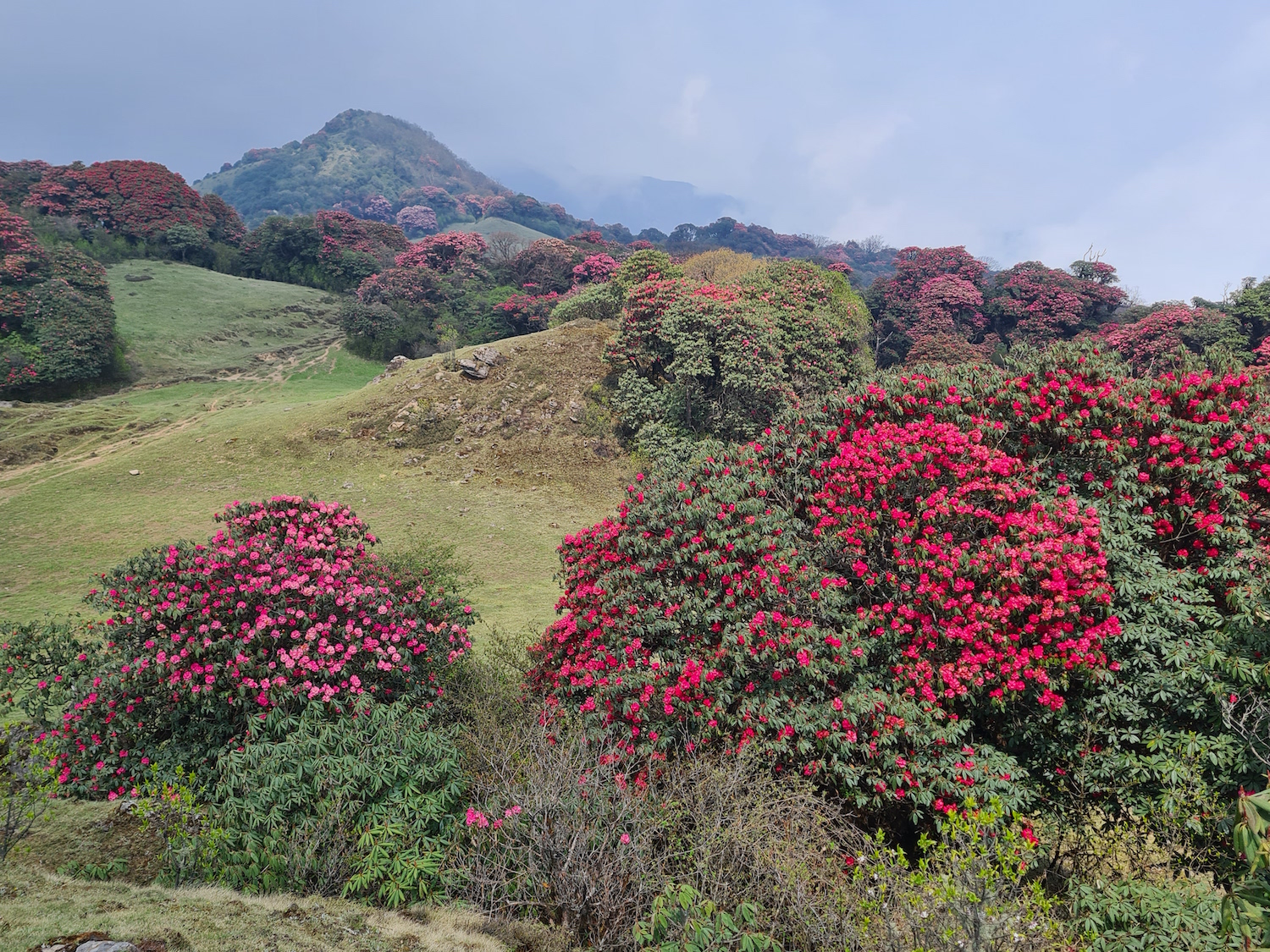
So, in April my wife Tan hiked Nepal’s famous rhododendron trail at peak flowering season to see forests ablaze with red, pink, shocking pink and even purple flowers.
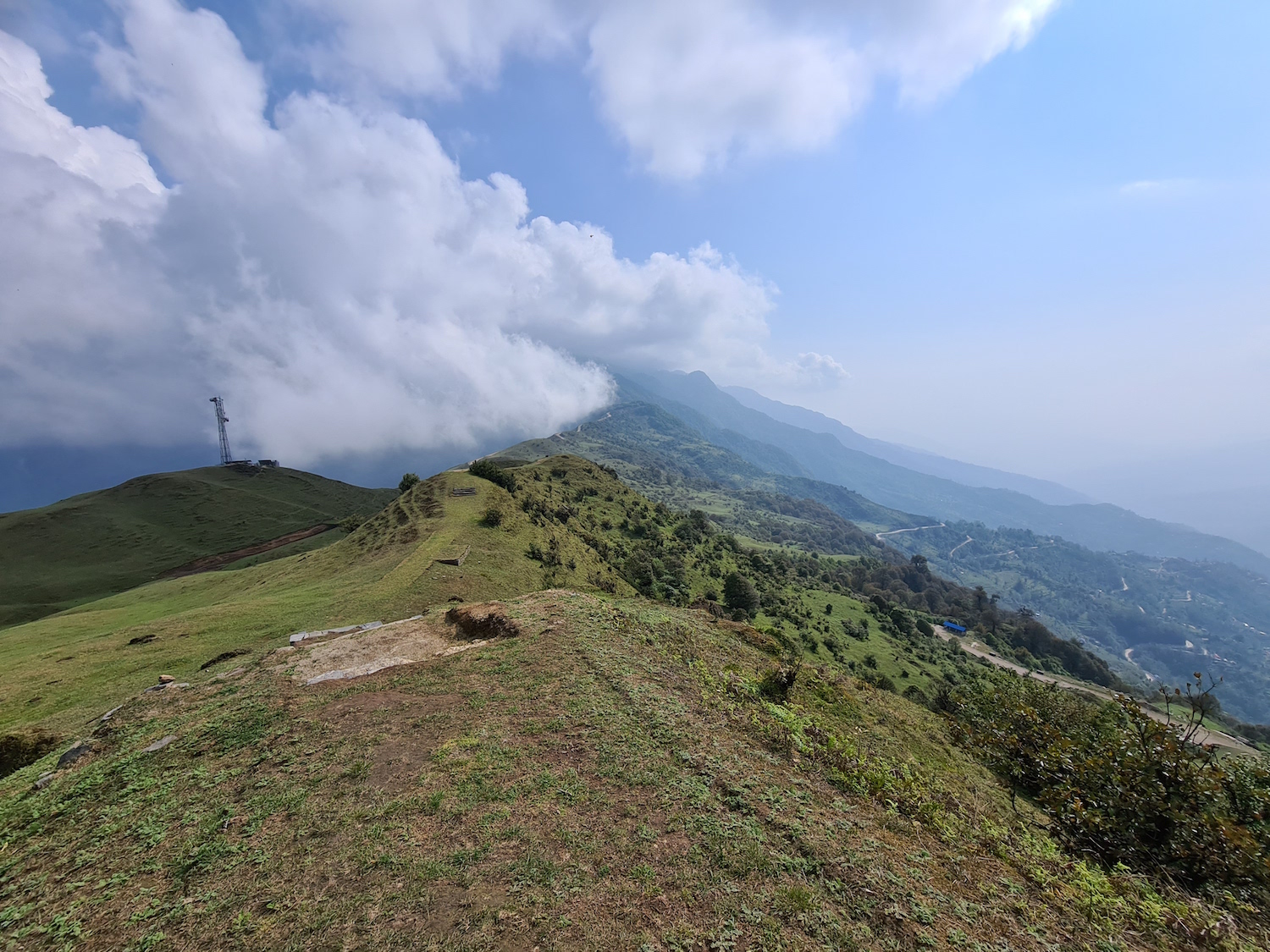
The Himalayan foothills have at least 30 varieties of Nepal’s national flower, and there is nowhere better to observe them than the TMJ Trail (Tinjure, Milke, Jaljhale) that follows a ridgeline at elevations of 1,500-4,000m here in eastern Nepal.
TMJ’s rhododendrons are so famous that there is a rural municipality here named Laligurans, and despite new roads and transmission lines the forests are still an explosion of colour in spring.
Bhojpur is now accessible by road from Kathmandu, but the 300km journey would have been too arduous so we plucked some courage to take the Nepal Airlines flight. And although the company website claimed there were flights 6 days a week, the reality was different: only three flights a week and no online booking.
So we headed to the Nepal Airlines building near New Road to book a flight for mid-April, since we had missed the peak blooming week lower down. The airline makes it so difficult to buy tickets that it is only the really determined passengers who are rewarded with them.
As a Nepali and a senior citizen, I was charged only Rs4,162 -- only slightly more than it had cost us to take a taxi from Dhulikhel to Kathmandu that morning. My wife Tan, who is Thai, had to pay nearly four times more, thanks to the Nepali scourge of differential pricing for foreigners.
Read also: Eastern Nepal’s Mundum landscape, Achyut Tiwari and Ramesh Kumar Rai
Then we found out that flights cannot be booked more than a week in advance so we could only book one-way tickets. Even weirder: since the airline has so few planes and the weather is so uncertain at Bhojpur’s small airfield, passengers are lucky to fly even if they have tickets. The clerk at the desk advised us to tune into the Radio Nepal bulletin on the evening before the flight to find out if the next morning’s flight would take off or not.
After jumping through many hoops, we finally had our tickets in hand and eagerly awaited the flight date. Arriving at the domestic terminal bright and early, we lined up at the desk with a Bhojpur sign. Check-in was surprisingly smooth.
Also waiting to checkin was another Ramesh, a Peace Corps volunteer who had served in Deurali village near Bhojpur Bazar. His real name was Richard and he had just retired from the College of Agriculture at California State University. He was on a trip to relive the memories of his youth in Bhojpur decades ago.
The flight was bumpy, and a fellow passenger barfed most of the way. The air was fresh and cool, and Ramesh/Richard joined us on the ten-minute drive on a surprisingly smooth road to Bhojpur Bazar. We stayed at the Bal Guest House run by Surendra Bal, who worked in Japan and Korea and was using the skills learnt there to run a clean and efficient hotel.
Despite years of being away, Ramesh/Richard spoke Nepali well and had phenomenal memories of old Bhojpur. He could still do the dhan nach paddy-planting dance, and sing a few folk songs. The first thing he did that morning was to take a solitary walk to Duerali to find his old agriculture office, where he said a former colleague recognised him, and even called him Ramesh.
Bhojpur’s Saturday market was in full swing, and compared to the open haat bazar of my childhood, this was a much improved version. The tables were overflowing with potatos and vegetables from the surrounding hills, baby pigs, dried fish from Pikhuwa Khola, apples and even grapes imported from Sunsari in the southern plains.
Sadly, the one memory from my youth that was missing were the Sherpani wearing their thick wool tongkok, angi or ratuk blouses selling my favourite yak milk sargam.
Read also: The Other ABC Trek, Bimal Kadel
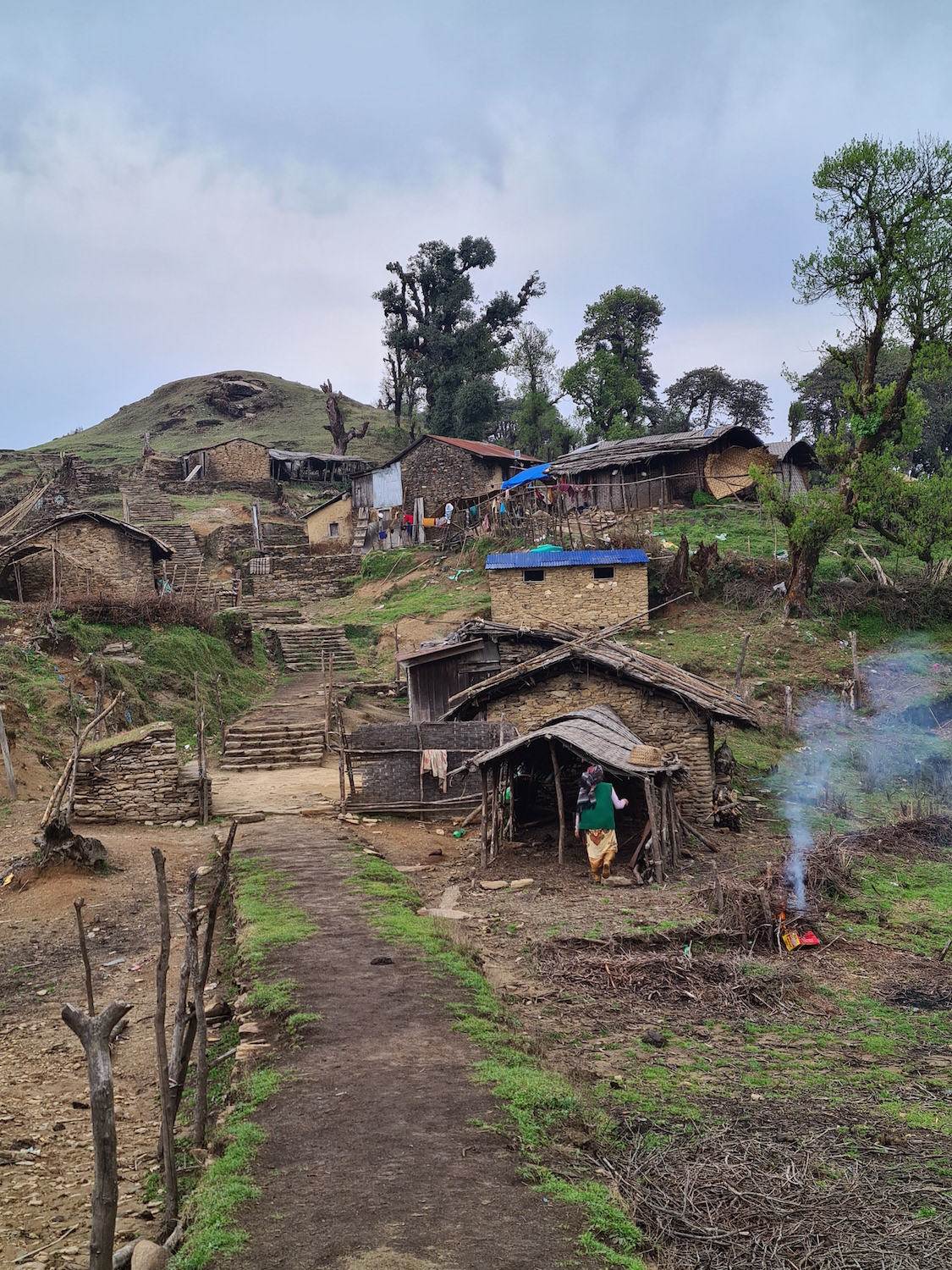
Bhojpur Bazar is not the sleepy backwater it once was. The boom is ascribed to the district’s recent connection to the national Mid-hill Highway linking it to Kathmandu and the Tarai. Traditional mud, brick, stone and timber buildings are being replaced by concrete, cement and glass structures.
The town has turned into a regional shopping hub, with pharmacies, mobile phone shops, grocery stores, restaurants stocked with beer and liquor and guest houses sporting local names such as Sumnima, Tyamke and Kiranti. There is even a six-storey shopping complex with a hardware store on the ground floor and fully air-conditioned hotel rooms upstairs.
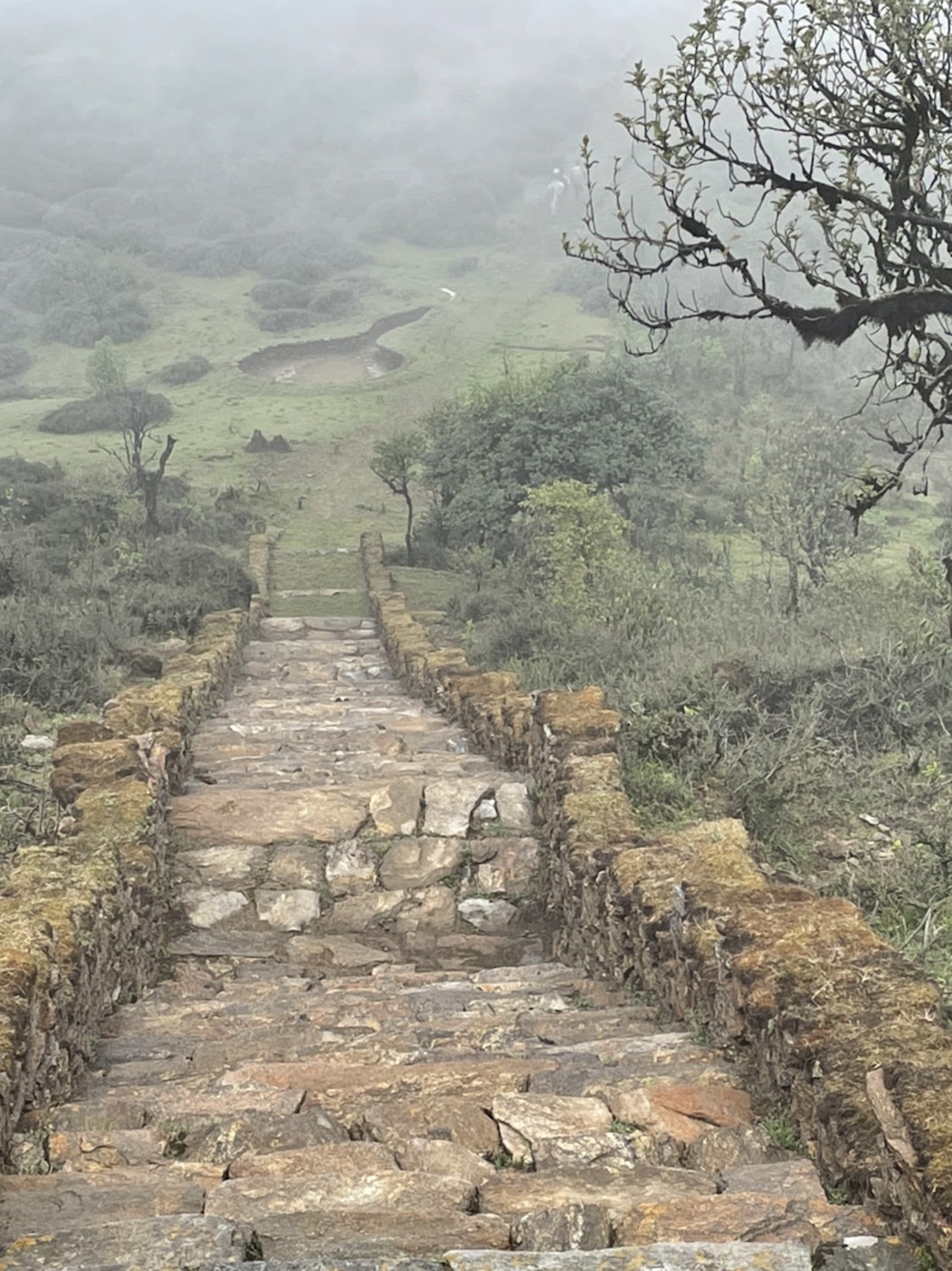
The Way to Mundum
Early Sunday morning our guide Mohan Rai and helper Shiba Hang Rai came to the guest house and we all piled into one of Nepal’s ubiquitous workhorses: the Bolero jeep. The 30-minute drive north to Bagkhor was even bumpier than the one on the Twin Otter from Kathmandu. Baghkhor got its name from traps villagers used to catch leopards, and it is now on a strategic junction of roads to Dingla in the west and Khotang in the west.
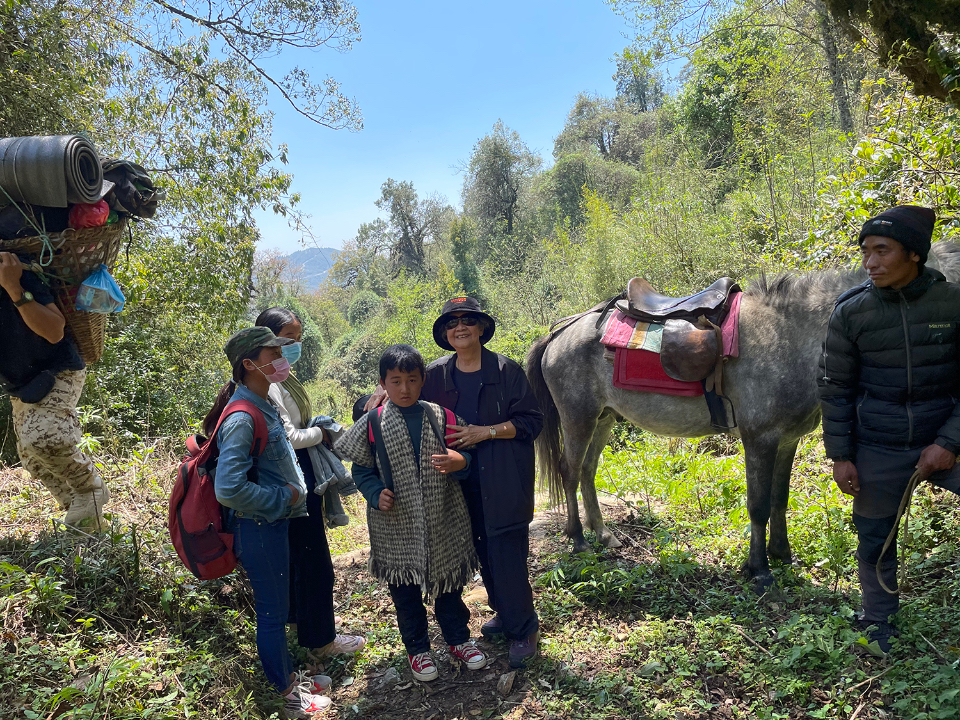
We rendezvoused with the third member of our team, Ganesh Lama, with his aptly named horse Lambu (the tall one). Ganesh has his own homestay near the trailhead. Mohan and Shiba Hang were delighted that the tourism along the newly developed Mundum Trail was giving them a new income source.
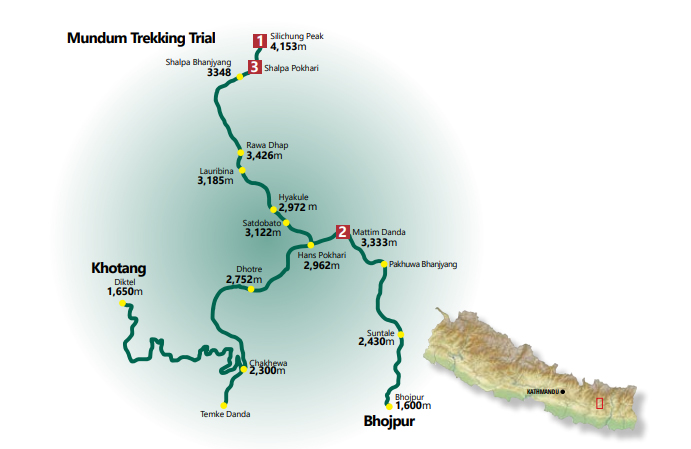
The trail was formally opened in 2018, and runs 100km from Sampang just outside Bhojpur Bazar to Salpa Pokhari past Maiyung and then back to Chakhewa and Tyamke.
It strides high ridges, winds through forested slopes and along gurgling streams. Unlike other treks in Nepal, it does not have too much up and down. The name Mundum itself represents the indigenous shamanistic and animistic beliefs of the indigenous Kirat people who populate these mountains. Once completed, the trail will be one of the longest ridge walks in Nepal connecting Makalu-Barun National Park to the Sagarmatha National Park.
Read also: Lifetime experience on Pikey Peak, Shusma Barali
All the dozen or so homestays in Bagkhor had been fully occupied during the previous week’s Nepali New Year holidays. He had to cook five local chicken to feed his own guests, who also rode on his horse and took a seemingly infinite number of selfies.
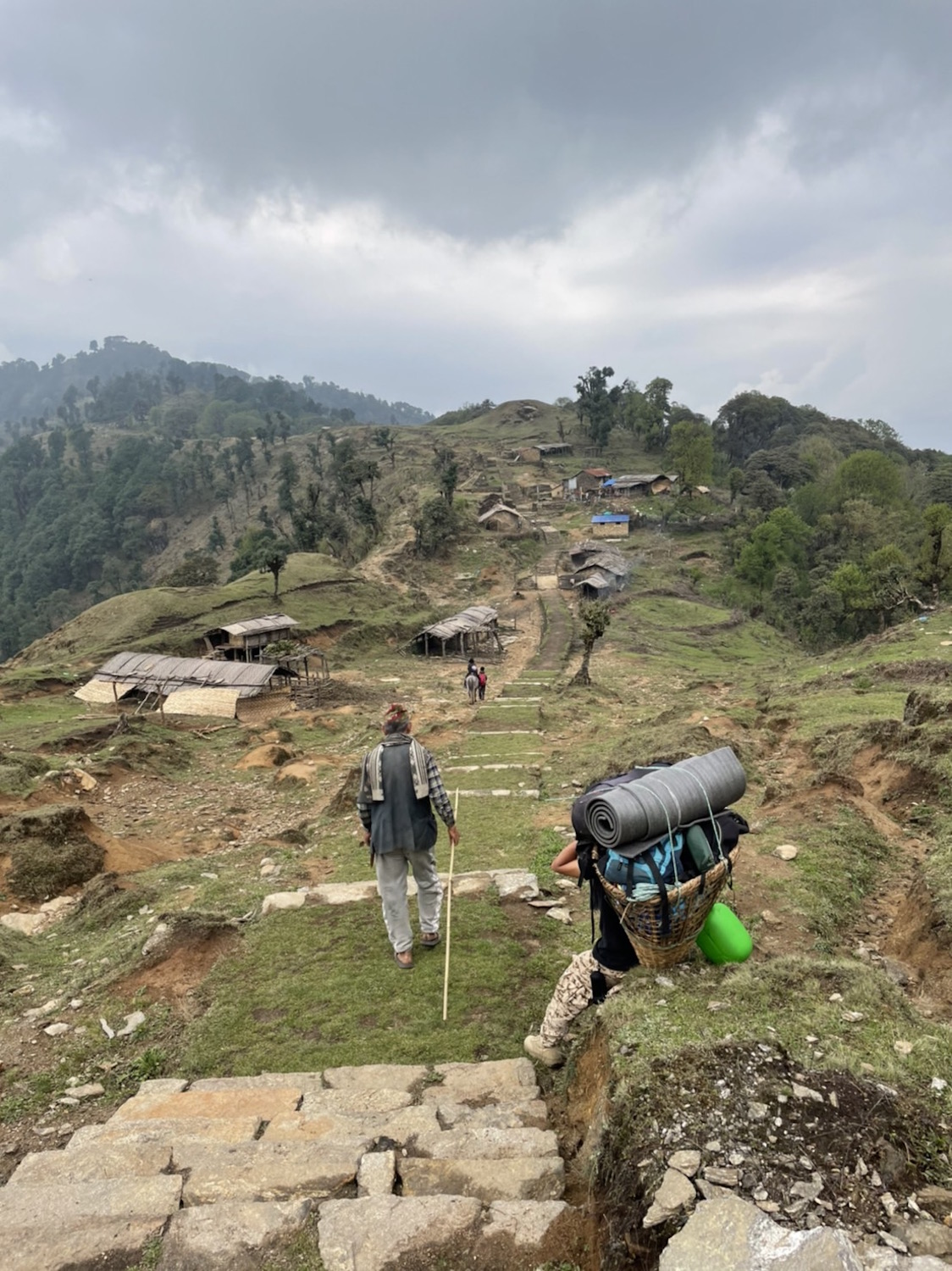
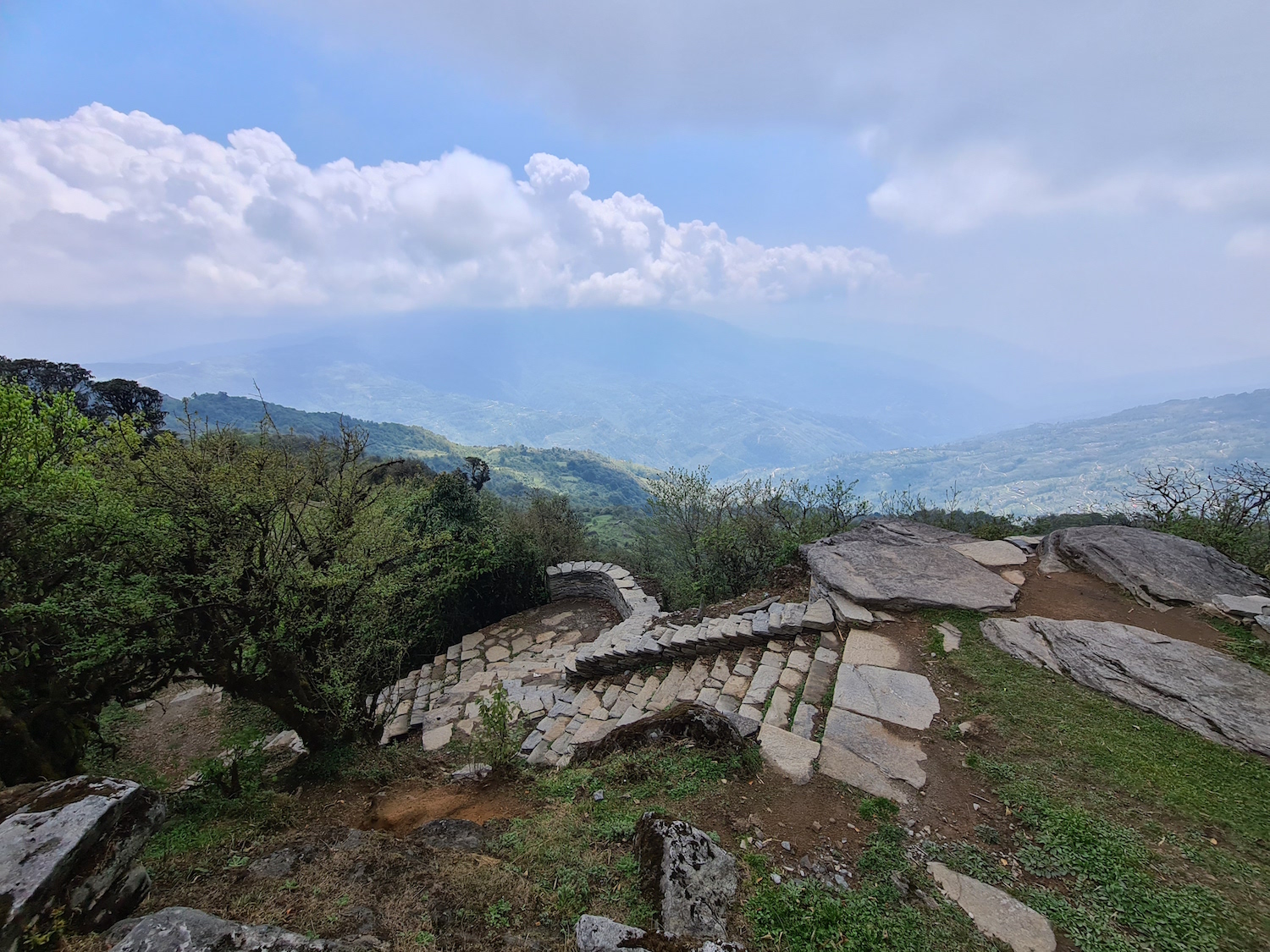
The trail is mostly level, and there are well maintained stone steps in places where therea re inclines. Mohan was involved in designing and laying these trails for four years and pointed out the new and old paths.
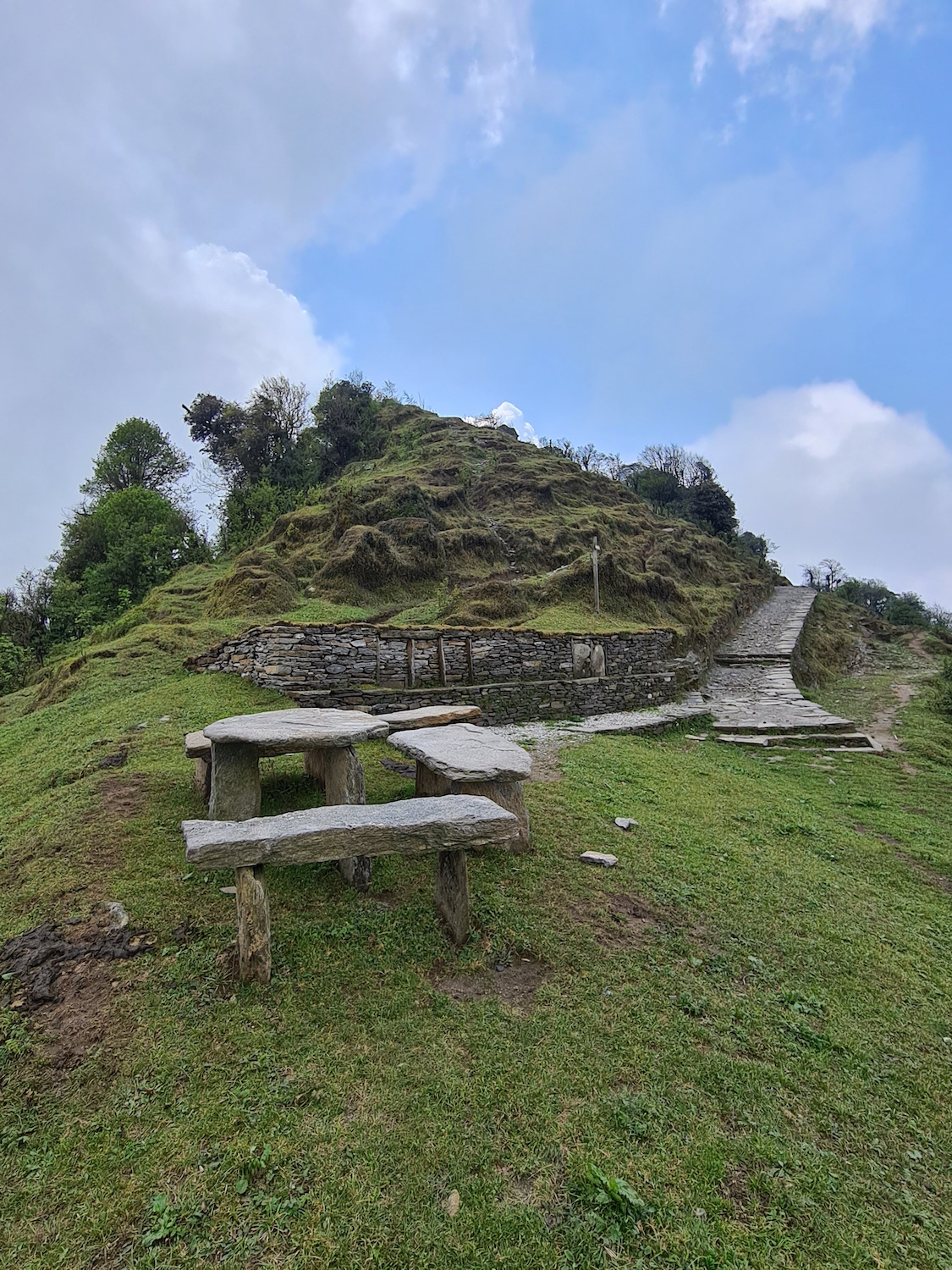
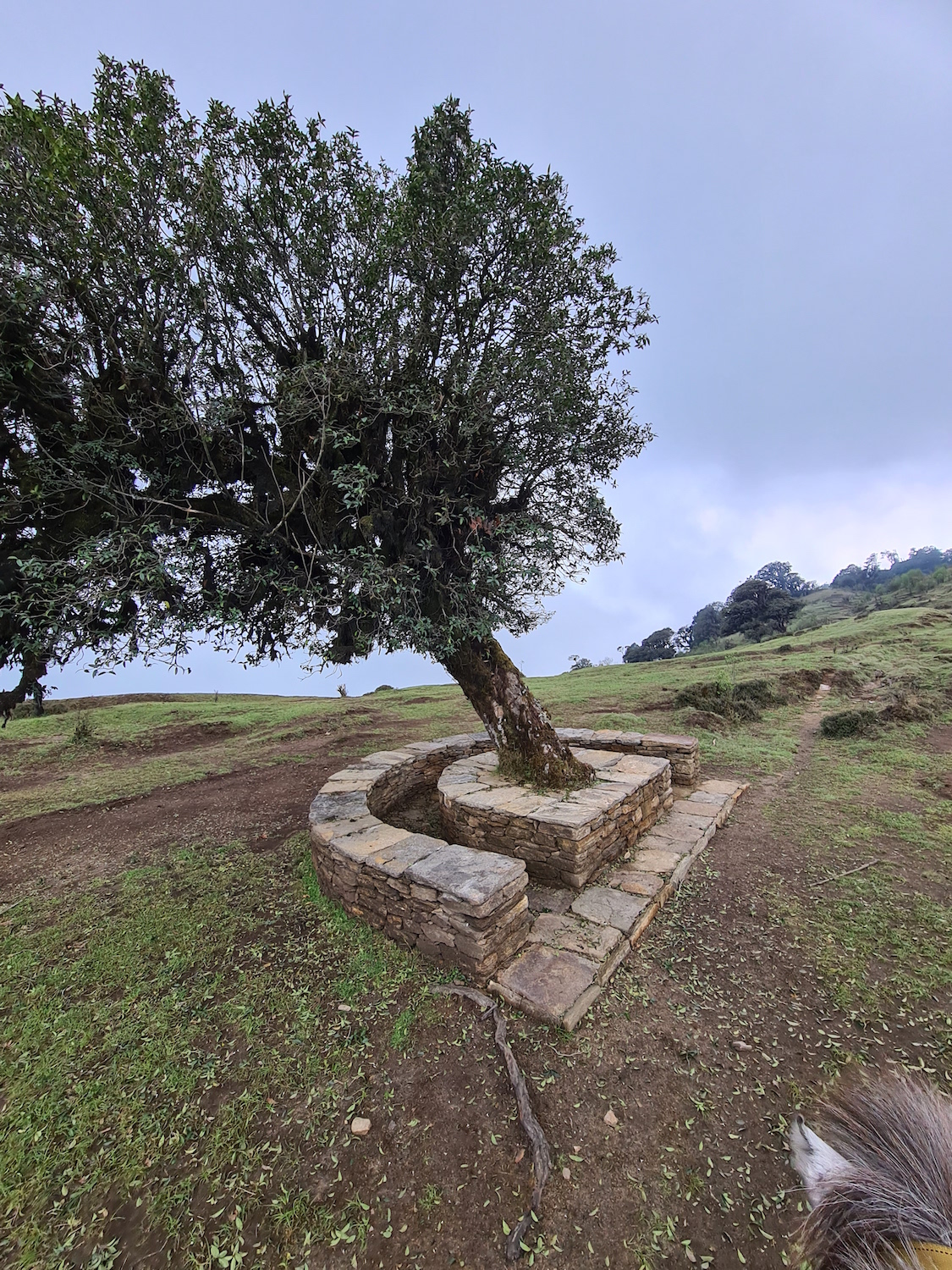
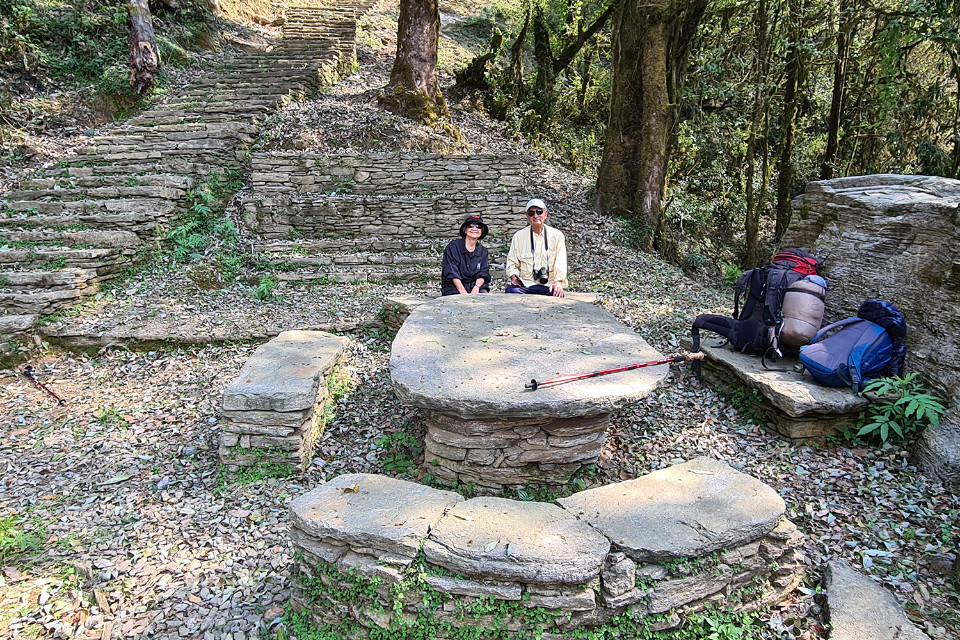
The trail was a pleasant surprise with pristine paths through the wilderness with well-designed rest areas with wooden benches, stone tables and water flowing out of stone spouts nearby. Some rest stops even featured such local cultural items as chindo and tandhunga, together with ditches for plastic bottles and other trash.
Some spots the trail was marked with mane stones etched with Om Mani Padme Hum prayer letters dedicated to the gods of Lama Buddhism. Some of these inscriptions looked ancient. There are also new chautara rest stops below trees providing shade for the weary traveller.
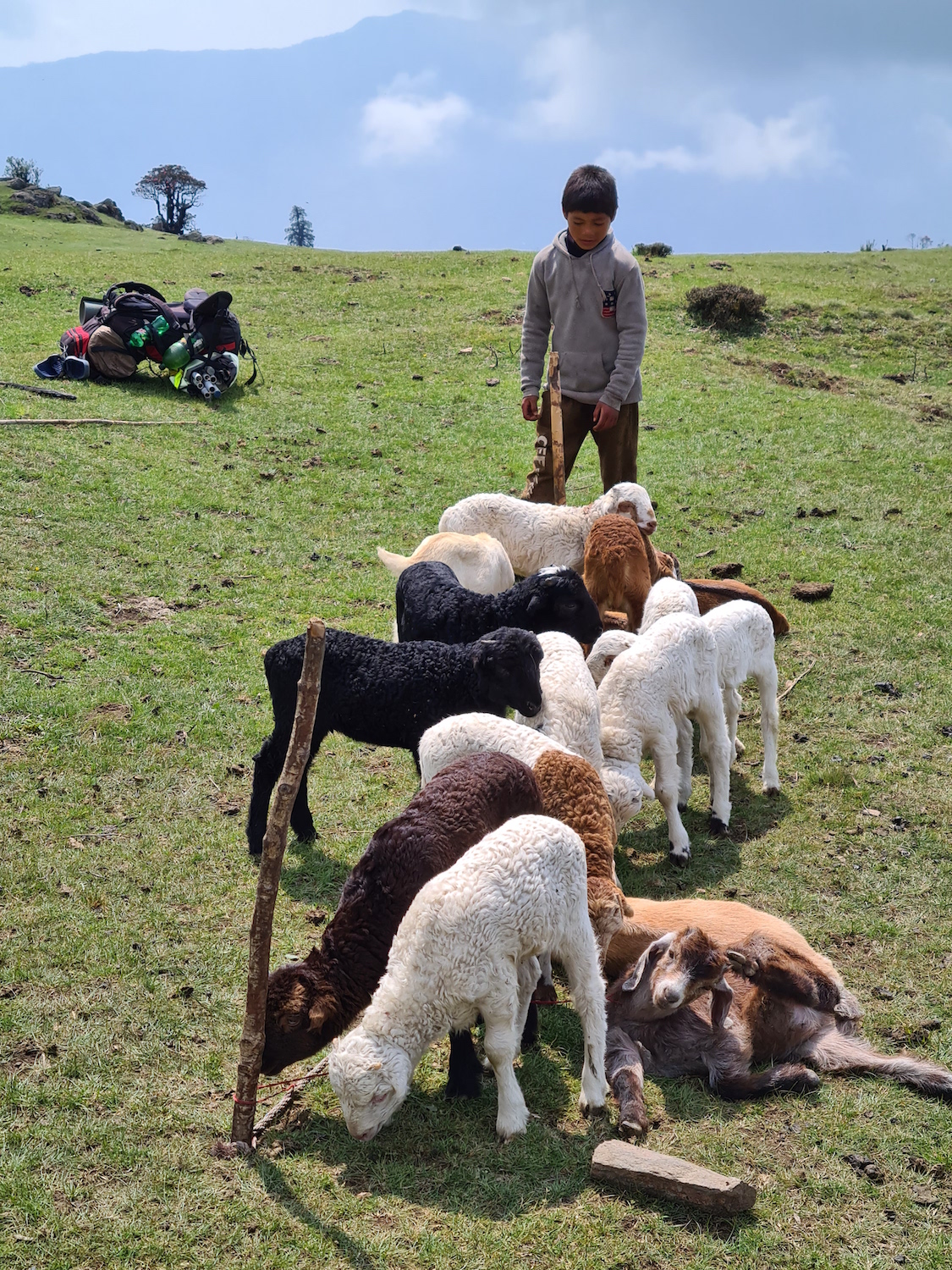
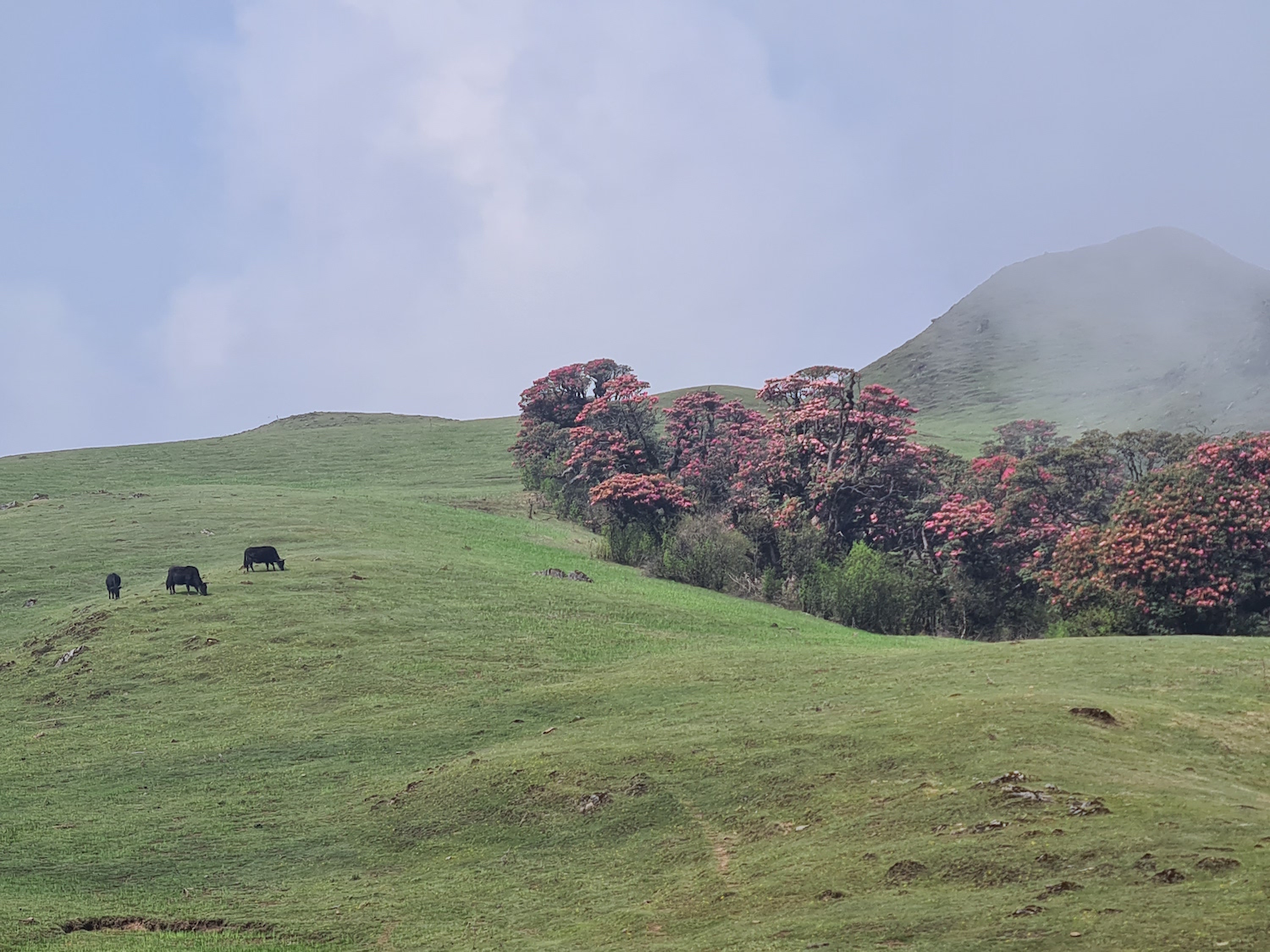
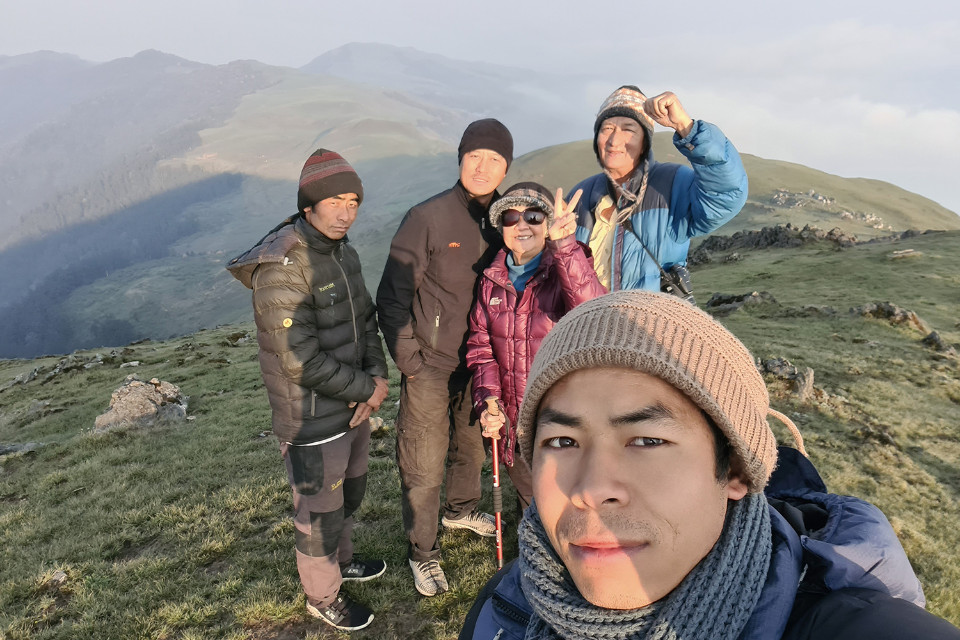
The higher we got the more picturesque the scenery was. It was almost Tolkien-like amidst huge outcrops and ancient trees. Yaks, cows, sheep and ponies grazed in the high meadows, amidst a backdrop of forested ridgelines and the snow mountains beyond.
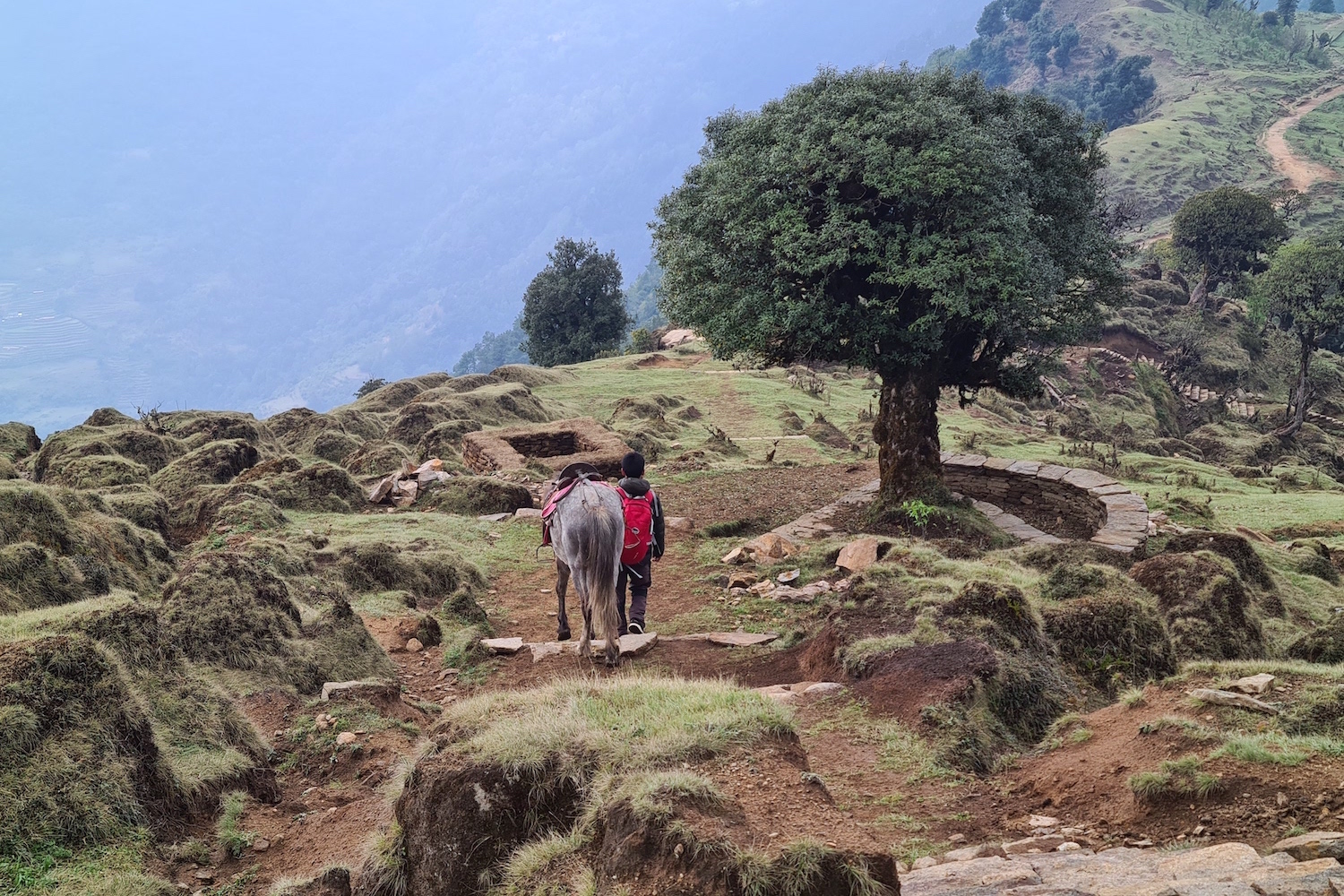
We stopped for lunch at Pakhua Bhanjyang, a picturesque rest area sprinkled with stone monoliths, some recently installed and some there for aeons, and a babbling stream of clear, cool water nearby. We ate dal bhat tarkari with a bit of pork prepared by Ganesh the master chef and his assistant Shiba Hang. Our horse Lambu concentrated on his own lunch, munching grass just below the trail.