
 |
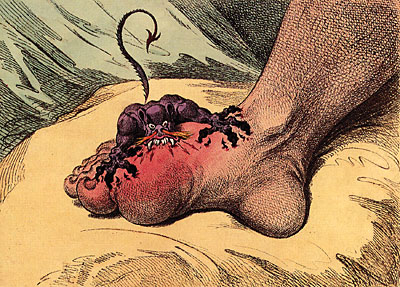
Thirty-eight-year old Ram Bahadur woke to find his big toe red, tender, swollen and excruciatingly painful. Even the weight of the sheet covering his foot seemed intolerable. Thinking he might have stubbed it somewhere, he tried to ignore it and left for the hotel where he worked. As the day progressed, so did the throbbing pain in his foot, so much so that by lunchtime he was hobbling in agony and had to go see a doctor. The doctor examined his foot, ordered some blood tests and declared that Ram Bahadur in all likelihood had gout.
This vignette happens all too regularly here. Gout (sometimes non-specifically called 'baath' in Nepali) is a very painful type of arthritis which often starts at night, probably due to a lower body temperature, and is caused by high levels of uric acid in the blood that crystallise and are deposited in the joints, tendons, and surrounding tissues. Although not always a reliable test, uric acid in the blood is often checked to diagnose gout. Certain foods such as red and organ meat, fish, 'geda gudis', alcohol and sugary soft drinks increase the risk of gout and eliminating most high-protein food from the diet usually helps. But this is not always practical. Many gout sufferers also avoid tomatoes and spinach, but science has dismissed this belief as baseless.