
|
|
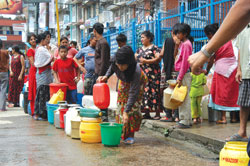
| THE MORE THINGS CHANGE: Pulchok residents queued for hours on Thursday morning for water, as the city faces another water shortage. |
The parties are finally moving. There seems to be a recognition that an election-conducive environment must be created relatively quickly. A constant reminder from the parties and civil society is that "no election in Nepal has ever been held under ideal conditions."
The UML started planning its campaign strategy at its central working committee meeting two weeks ago. The two Congresses are intensifying their unification drive. The Maoists, busy with their verification troubles, are second-guessing the elections based on the ongoing violence in the tarai. But even they are expected to chart out a plan for the elections at their meeting next week of high level party workers and 'PLA' commanders.
The janajatis feel they are close to a deal. "The government has assured us that the current electoral law actually works, and for now we are ready to accept that," Pasang Sherpa, president of the Nepal Federation of Indigenous Nationalities, told us.
The focus is the madhes, though, and Home Minister Krishna Prasad Sitaula's ultimatum to the armed factions has not been heeded yet. But a strong consensus is emerging among the eight parties that a more diplomatic approach in the tarai could help kickstart those talks.