
"We have suffered enough," says NC district leader Nanda Bahadur Bista of Rukum, "we must make sure the peace process is successful so we don't have to hear the sound of guns and bombs again."
According to Bista's count, 1,500 people of Rukum have died in the past 11 years of war. Of them, 94 percent are men from the ages of 17-40 and most are Dalits and Janjatis. An estimated 4,000 children have been orphaned.
The scars of war are everywhere in the trails leading out to the district capital of Khalanga. In the town itself there are endless stories of suffering from every family of the internally displaced: disappeared family members, bereavement, forced labour, extortion, abductions and rape.
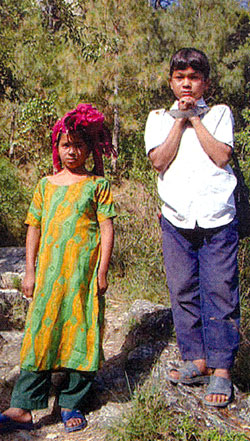 We run into Grade 7 students Bimala Bohara and Krishna Rokaya (pictured) on the trail on 24 May. They were carrying small bags with just enough food for 15 days. They had been told by the Maoists to gather at a house in Gunjil Dhunga from where they were supposed to go and dig a 'martyr highway' in Rolpa. Krishna,13 was still wearing his school uniform. They had to go because the Maoists' edict was: 'One person per house, otherwise Rs 3,000 fine.'
Since there was no one in Krishna's house except for his mother and baby brothers and sisters, he was compelled to go. His family didn't dare say they couldn't send anyone. Krishna was among about 50 people who marched towards Rolpa that day. Among them was the son of the woman in whose house everyone had gathered. Her Grade 8 son was among those who went. "They say they will return in 15 days," said the mother, "Two days to go, two days to return and the rest to dig the road. I have given him some money so he can buy food to eat. I hope he'll be ok."
She has heard stories of others who have died during road construction or killed in crossfire. "But now there is going to be peace, no?" asks neighbour Lila Rokaya who also had to send her sister who was in Grade 7, "maybe they shouldn't have taken them."
Dil Shobha and Sapana Sunar worked in the highway last year when the Maoists asked for one person from every household. Sapana marched to Rolpa and worked on the road with her one-year-old baby strapped to her back. The Maoists would also make the workers drill, watch cultural programs and sing songs. Both Dil Shoba and Sapana's husbands have married second wives and don't live in the
village anymore.