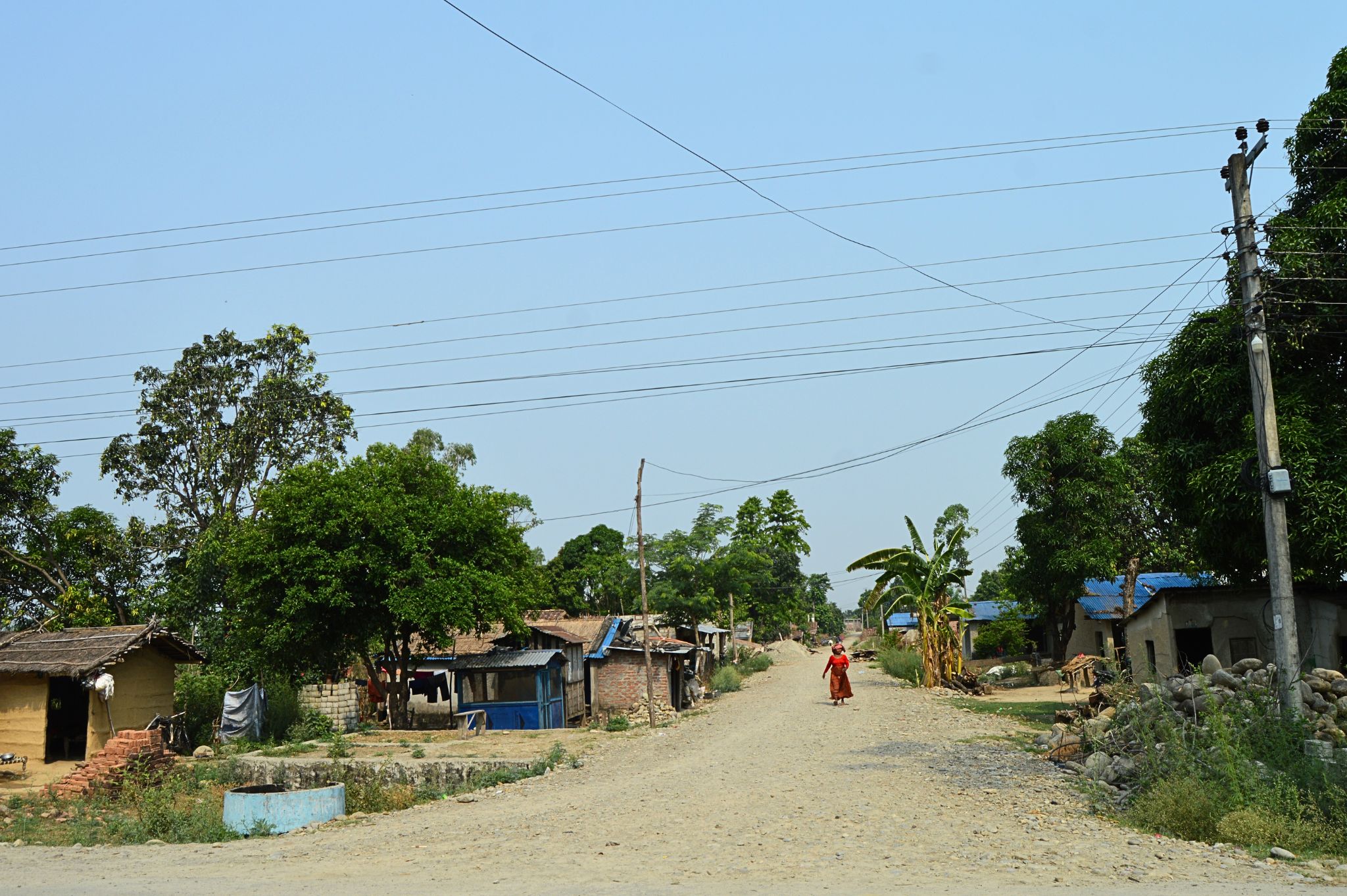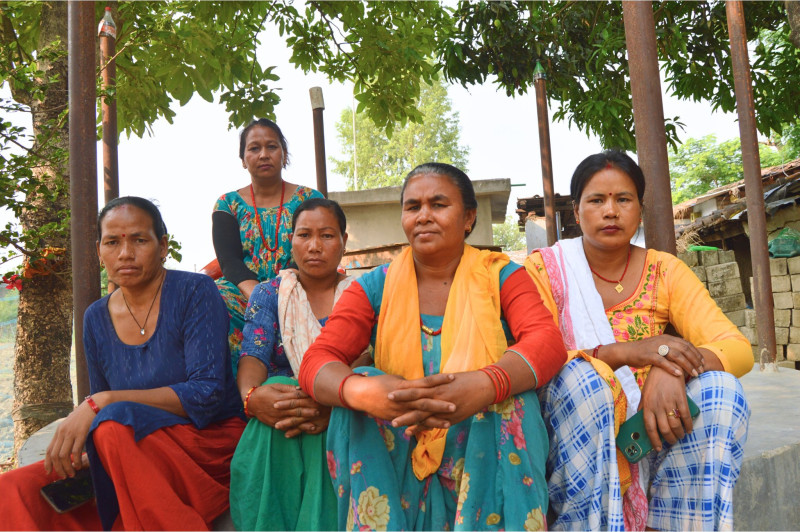
Pradeshani Chaudhary sits inside her mud plastered thatch house and looks out at the half-raised brick wall of her new home some distance away, dreaming about the day she and her family will move into the structure.
The front yard is piled with bricks, iron rods, and other construction material and tell the story of how Chaudhary’s life has changed since she was a slave bonded to a landlord under western Nepal’s Kamaiya system.
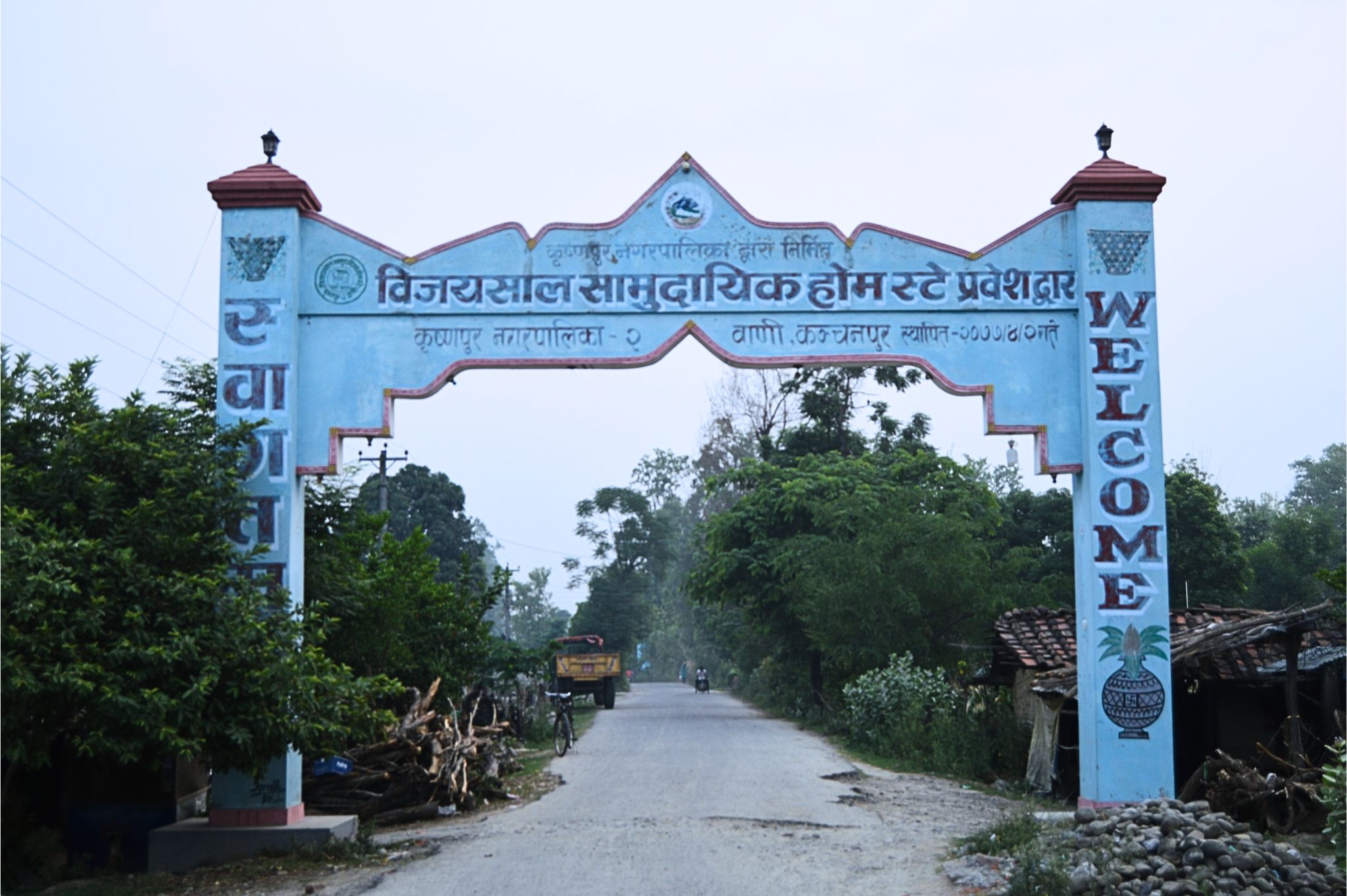
Chaudhary is now chair of the Bijayasal Community Homestay in the village of Bani in this district in the plains of Nepal’s southwestern corner.
Pradeshani was born into a Kamaiya family and grew up working alongside her family in the farm of her landlord, planting paddy, tending to the crop and harvesting it in return for rice that was never enough to sustain the household. So the family looked for other ways to earn money to buy food.
“We went to the forest to pick sal flowers to sell, and with that we bought rice, but we still did not have enough,” recalls Pradeshani, now 50.
In 1996, Pradeshani married Bhagiram Chaudhary who was also from a Kamaiya family which lived on undocumented ancestral land on the banks of the Mohana River which was ravaged by floods every year.
Bhagiram’s family then had to borrow money from their landlord, and unable to pay interest or capital he and two brothers went to India to find work to pay back the loan. Pradeshani and her father-in-law continued working as bonded labourers back home.
This was when Nepal’s Maoist conflict spread to Kanchanpur, and Kamaiya families in Kanchanpur decvided to also fight their own non-violent struggle for liberation from landlords with support from the non-profit Backward Society Education (BASE), established by young activists from the Tharu community.
Many more bonded labourers, who had been conditioned into believing that it was their fate to be enslaved, joined the movement after they became aware of their circumstances.
Pradeshani’s father-in-law was among those who joined the movement.
On 17 July 2000, Nepal officially eliminated the Kamaiya system, liberating over 18,000 bonded labourers. Those emancipated now needed a place to live, but they had received neither reparations nor rehabilitation.