
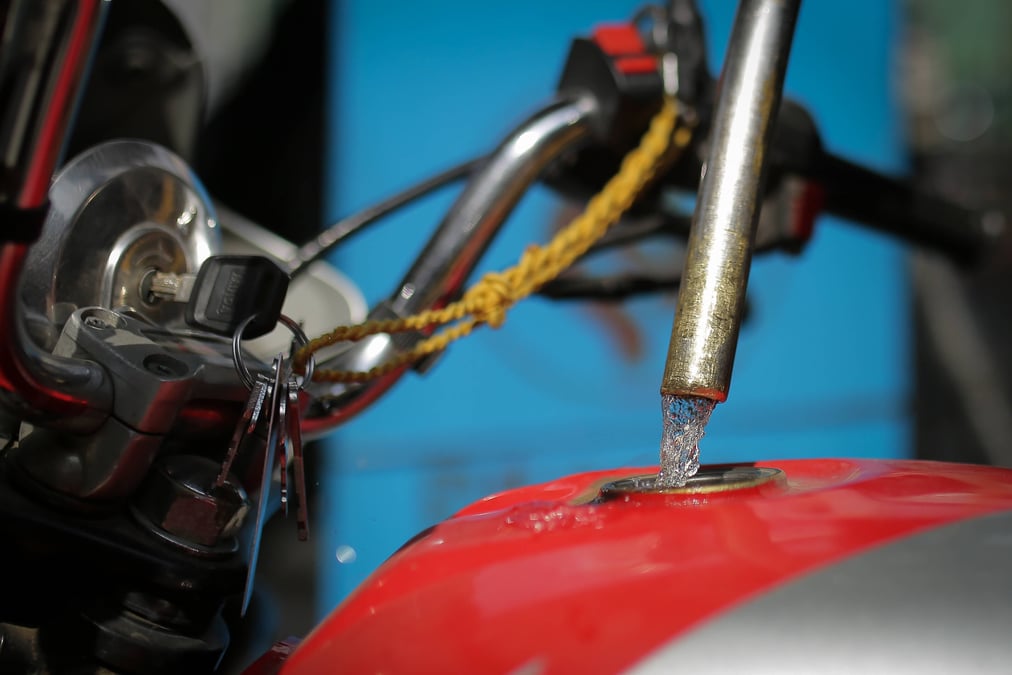
Every time the price of fuel rises in Nepal, the country performs a familiar ritual: a longer weekend is announced, officials speak of austerity, an odd-even for vehicle is mulled, and the nation tightens its belt, waits for the global market to settle, and then quietly returns to exactly where it was before: exposed and dependent.
With barely ten days of petroleum in reserve, this is not crisis management but crisis theatre. And we have been performing it, with minor variations, during every crisis in the past 50 years.
Crude oil prices have surged past $100 per barrel (from $72/barrel before the war) and further increase is expected if the Strait of Hormuz continues to be disrupted much longer. The oil shock hit Nepal hard with the new government raising fuel prices four times in the past month and petrol hitting Rs232 per litre, up from Rs152.
But it is spoken of as an external factor, something visited upon Nepal from the outside over which we have no control. That framing may be comforting, but dishonest. This is not the cruelty of circumstance. It is a harvest of a structural negligence so deeply embedded that successive governments mistakenly treat it as normal.
In 2015, Nepal’s economy was brought to its knees when fuel supply from India was stopped for nearly five months. Factories shuttered, hospitals ran short of medicines, private vehicles were off the roads, and earthquake relief was stuck.
Black market petrol was sold in mineral water bottles by the roadside for three times the official rate. When it was over, the reckoning was swift and the promise was absolute: Nepal would build strategic petroleum reserves sufficient to last 90 days.
This was not an ambition. It was treated as a covenant, a debt owed to the 800,000 during that bleak winter 10 years ago. A decade later, Nepal holds only up to 13 days of fuel reserves.
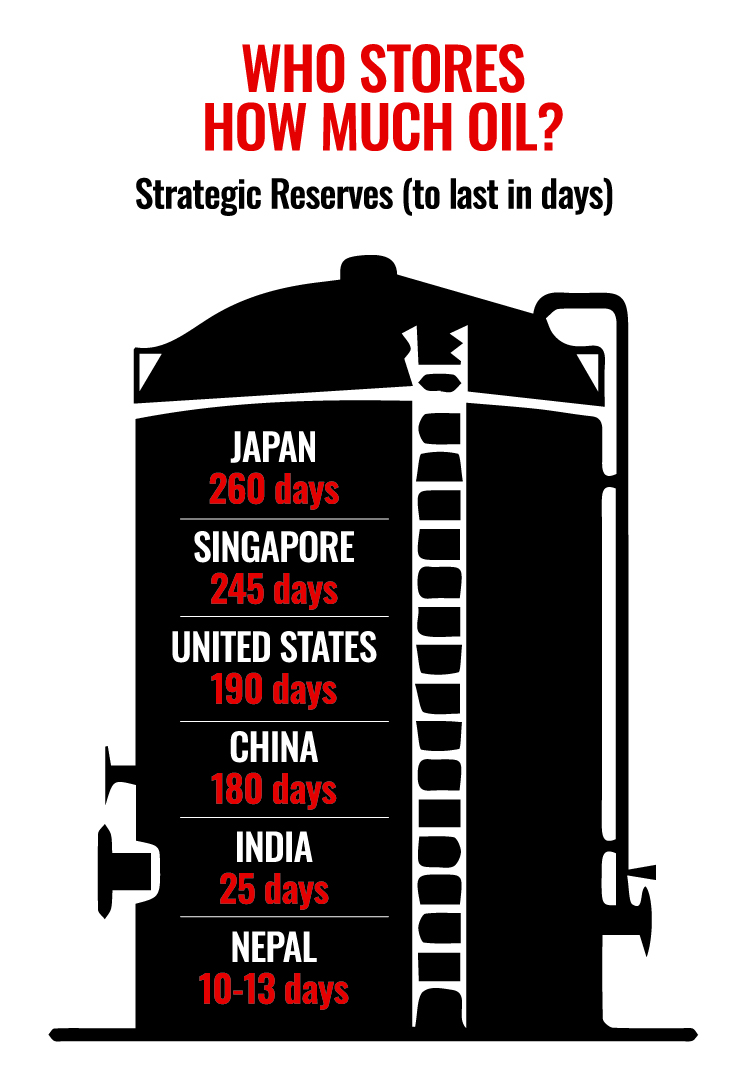
That number, not any trade statistic, policy paper or any diplomatic disagreement, is the failure of every government that has held power since to give Nepal a breathing space on energy during a crisis. It is the ledger on which their energy stewardship should be judged.
The Lothar oil terminal is under construction, and its expansion plans exist only on paper. Construction timelines slip, budgets stretch, and in the meantime the country wakes every few years to the same queue outside every petrol station, the same panic, the same ritual of weekend closures and official proclamations.
What makes this particularly difficult to defend is not the vulnerability itself, Nepal is landlocked, import-dependent, and subject to geopolitical pressures it cannot fully control. These are genuine constraints. The tragedy is that the vulnerability is entirely foreseeable, and has been for years.
Strategic petroleum reserves are not a sophisticated intervention. They are a buffer, the most elementary form of national insurance. Every major economy that imports fuel maintains them. The International Energy Agency (IEA) sets 90 days as the global standard. India holds 25 days and is working toward 45. Jordan, similarly, dependent on imports, holds 60 days. Nepal, with the full knowledge of what it means, holds just 13 days.
The argument has never been that storage capacity is impossible to build. It is that they have never been made a legislative obligation, never written into law with a deadline, a penalty, and a mechanism for enforcement. Every government has treated it as a target rather than a threshold. And targets, in the history of governance in Nepal, have an unhappy tendency to drift.
Nepal now exports electricity to its neighbours. The country that cannot keep its petrol stations stocked for a fortnight earns revenue from selling hydroelectric power. Many new passenger vehicles sold here run on electricity. The grid is more than 95% renewable. By these measures, Nepal is ahead of countries with vastly more resources.
This is no small achievement, it reflects a genuine and organic momentum in the economy, driven as much by citizens choosing electric vehicles for practical reasons as by any government mandate.
But this momentum is built on an unstable foundation. The energy transition, however real, has not yet reduced Nepal’s vulnerability to petroleum shocks. Diesel still moves nearly all freight. LPG still cooks most meals. Aviation, industry, and heavy transport remain entirely fossil dependent.
The tactical response, price adjustment, tax relief, demand suppression, addresses none of this. It is the work of a country that has accepted its own fragility as a permanent feature, and learned to manage the symptoms rather than treat the condition.
The new government arrives with something its predecessors did not have: an unambiguous parliamentary majority and a mandate built explicitly on the promise of structural reform. Political capital of this magnitude must be spent on hard decisions, or it is spent on nothing at all.
The hard decision here is not complicated: it requires a single piece of legislation, an Energy Security Act that mandates a minimum strategic petroleum reserve of 60 days within three years, establishes an independent monitoring body, and makes non-compliance a matter of ministerial accountability rather than administrative aspiration.
This is not a target, not a policy. It is a law.
There will be other wars, droughts, border disruptions, geopolitical tremors and crises that create a fuel shortage and sky high prices. The question is not if that day will come, but when.
Will Nepal, by then, have built itself a margin of survival? The pledge of 2015 to build strategic reserves is still unfulfilled. The new government can finish the job.
Ashutosh Dev is a PhD researcher at Victoria University of Wellington and a New Zealand Award Scholar specialising in renewable energy systems, energy resilience, and the socio-technical transitions of the Global South.