
Himal Khabarpatrika: What are the challenges to overcome before the constitution can be written? 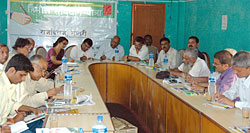
Ashok Chaudhary (advocate): All the parties have not accepted the political changes wrought by the Jana Andolan and the Madhes movement. Because we don't yet have an environment for languages and cultures other than Nepali, the basis for a balanced constitution is not in place.
Amarkanth Jha (professor): When the South African constitution was written, political parties and constitution experts were in agreement on how to go about it. We too need to have a common political mechanism.
Raju Paswan (rights worker): There can be no constitution without political agreement. We have to address the demands for ethnicity based provinces. The government needs to hold talks with the armed groups in the Tarai and address Madhesi grievances first.
Suman Raj Pyakurel (UML): The constitution can't be written while the Maoists still have an army. This needs to be sorted out before we move ahead.
What do you think of the demand for One Madhes One Pradesh? On what basis should provinces be designated?
Himmat Singh (senior advocate): It should be All Madhes One Pradesh. The constitution can have provisions to maintain Nepal's territorial integrity.
Hasim Ansari (National Muslim Front): We Muslims don't consider ourselves Madhesis, even if we live in the Madhes. The Muslim community of the 10 districts where there is a Muslim majority says: under no condition will the demand for One Madhes One Pradesh be granted.
Yukti Lal Marik (Dom Upliftment Society): There will be no place for Dalits in One Madhes One Pradesh. We need proportional representation and participation in all parts of the country.
Suman Raj Pyakurel: There are no majorities in any part of the country, so ethnic federalism doesn't make sense. Provinces should be designated on the basis of whether they can survive in the long term.