
|
|
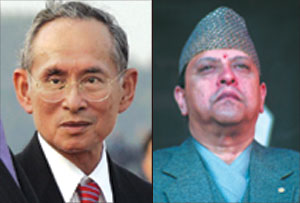
Nepal shares much with Thailand. Neither was colonised by European powers. In both places, unique courtly rituals and religious practices have thrived. Thai Buddhism is an effortless synthesis of aspects of Hinduism, a mirror image to faith in Nepal. And then there's royalty: once both countries had well-regarded constitutional monarchies. Now-with even Nepali banknotes ready to see the last of Gyanendra Shah-only the Thai royal dynasty has the respect of most citizens.
That situation may be changing rapidly. King Bhumibol Adulyadej is a popular, even beloved, head of state. But the military coup in Thailand last year that dislodged Prime Minister Thaksin Shinawatara has so far been a political, public relations, and economic disaster. Thais know King Bhumibol gave the takeover his tacit support. Some even say his court encouraged the generals to step in to what was admittedly a messy, corrupt, and increasingly unstable situation.
In the past, the Thai king had been renowned for staving off military takeovers, or condemning army brutality against protestors. Back in the days when only military strongmen could run Thailand, the king occasionally mediated between opposing camps of putative dictators. Like Tribhuban in Nepal, King Bhumibol is also credited with helping establish the democratic system that has since been wiped out in Thailand.
Other eerie parallels abound. The Crown Prince of Thailand, Maha Vajiralongkorn, has long been seen as a wayward, thuggish womaniser, although he's apparently burnishing his image as his father grows frailer. The same Thai public that loves Bhumibol is troubled by the prospect of his son ascending the throne. Of course, Thais have to keep these fears to themselves as strict lese majeste laws punish perceived insults to the Crown with heavy fines and jail terms. Here's one area where Nepal never got so absurd over monarchy.