
From the founding of the Nepali state by Prithvi Narayan Shah till recently, Nepal’s foreign policy has been guided by the doctrine of equidistance between its two giant neighbours.
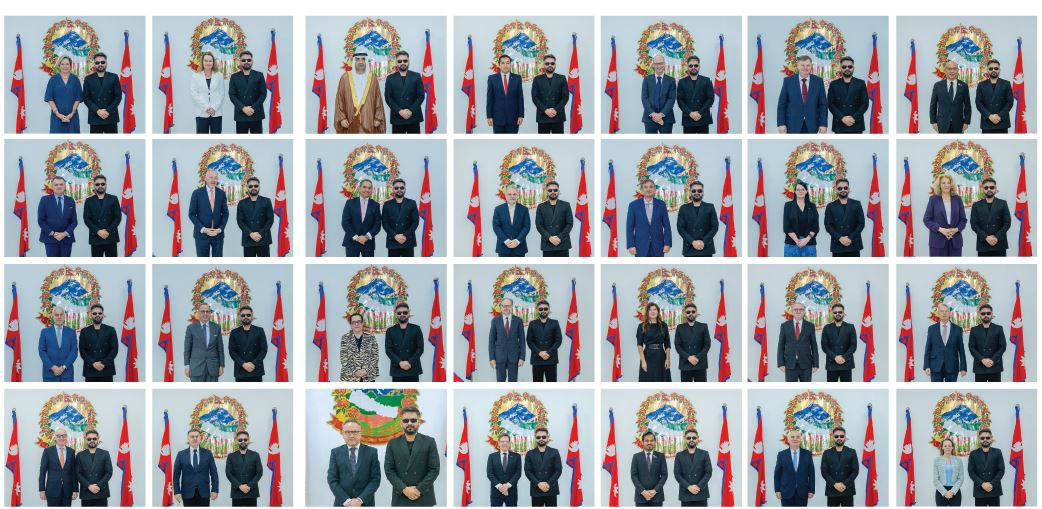
It has been a difficult balancing act, but Prime Minister Balendra Shah’s standoffish diplomacy may be having the unintended consequence of pushing New Delhi and Beijing to share a common concern about Nepal’s new government.
The ruling RSP has said it does not want Nepal to be treated as a buffer state anymore, but it was this status that gave the country a degree of geopolitical stability over the past decades. India and China may be rivals, but they have enough on their plates, and do not want any unpredictable surprises along their Himalayan borderlands.
Beijing’s interest in Nepal mainly concerns the activities of Free Tibet activists, especially in a future post-Dalai Lama scenario. It accepts that Nepal is in India’s sphere of influence, but does not want the Americans and Europeans to be too active here. New Delhi on the other hand would like to see a pliant government in Kathmandu that understands its concerns on security and river sharing.
When India welcomed the new government and invited Prime Minister Shah for his first foreign visit, it was seen as a chance for New Delhi to reboot relations, and understand him better. But not only has Shah refused to give the time of day to Indian Foreign Secretary Vikram Misri, he has irritated Delhi by reviving the Limpiyadhura claim and taxing Nepalis along the border.
The nationalism card plays well in Nepal, so the prime minister is branding himself as someone who can stand up to the neighbours and global powers. Says Akhilesh Upadhyay at the Institute for Integrated Development Studies (IIDS): “Designated ministers have been meeting with foreign delegates even if the Prime Minister isn’t. We must welcome this new way of governance.”
He adds, “Previous governments issued statements on the Lipulekh dispute through the press, the current leadership has used the Foreign Ministry to commit to resolving territorial disputes through diplomatic channels, which is a positive move.”
But other experts question how Nepal’s leadership expects to settle this territorial dispute through diplomatic channels when the prime minister is personally unwilling to engage in any diplomacy with India at all. It looks like his reclusiveness has begun to rankle members of his own RSP party.
RIFTS WITHIN
While RSP Chair Rabi Lamichhane, Finance Minister Swarnim Wagle and Foreign Minister Shishir Khanal have not voiced their concerns publicly, they are said to be increasingly frustrated with the PMO’s interference in the running of the party and their ministries.
The only RSP member not mincing his words is MP Amresh Kumar Singh, who came out swinging this week against what he said was the prime minister’s authoritarian tendencies and disregard for democratic norms. With his past proximity to the Indian leadership, Singh’s words may reflect some of New Delhi’s frustration as well.
China has been wary of the involvement of what it sees as the involvement of the Free-Tibet activists in the September protests, and suspicions of former Home Minister Sudan Gurung’s ties to them. The kerfuffle this week about a leaked audio allegedly of a Chinese attempt to bribe Kishor Shrestha of Jana Aastha weekly for exposes on Gurung and businessmen appears to have been a sloppy attempt to drag China into the fray.
In a rare statement, Chinese Ambassador Zhang Maoming rejected the allegations: ‘We strongly condemn such acts of deliberate denigration of China … China has always been adhering to the principle of non-interference in other countries’ internal affairs, has been consistently and firmly supporting Nepal’s efforts in safeguarding its national independence, sovereignty, and territorial integrity… Let reason and wisdom put an end to rumors.’
Meanwhile, the US seems to be seeking another attempt at diplomatic engagement with Under Secretary of State for Public Diplomacy Sara B Rogers arriving for a three day visit to Nepal on 30 May. It remains to be seen if the PM will be willing to meet Rogers.
RSP party chair Rabi Lamichhane is set to visit India next month, where he is expected to meet with Prime Minister Narendra Modi. Although not officially announced, some view it as a chance for the RSP and the BJP to size each other up on a party-to-party level.
Experts warn that the head of government’s continued refusal to participate in diplomatic processes could harm Nepal’s international standing, ultimately impacting development partnerships and aid, as well as FDI.
“Nepal’s international standing has always been a sore spot for our leadership and has bred a feeling of inferiority in political leaders, we are seeing the same thing happen now with the prime minister,” says political analyst Indra Adhikari. “But it is in the national interest for the PM to meet foreign delegates regardless of their rank – we are not in the position to be selective.”