
 |
Probably the most visited and arduous high altitude pilgrimage site in South Asia is Mount Kailash (6714m), the centre of the universe in Vedic thinking, where thousands of Hindus, Buddhists, and Jains circumambulate the sacred mountain and bathe in the nearby Lake Manasarovar (4560m) every year. Most of these pilgrims are unaware of and ill prepared for the hypoxia (low oxygen) caused by high altitude, and not surprisingly many fall ill and some succumb to their illness.
Unfortunately, because there are no records, the extent of the problem is unknown in Kailash. Often patients are misdiagnosed as having altitude sickness and treated incorrectly. In addition, many of the pilgrims are elderly and have concomitant illnesses. Sometimes the strongly devout pilgrims feel privileged to die in the precincts of the holy mountain and do not want interventions. Indeed, many factors conspire to work against the safety and rescue of these pilgrims.
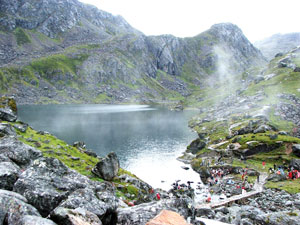
But closer to Kathmandu is Gosainkunda. On 1 August, the eve of Janai Purnima, Gosainkunda Lake (4300m) will be the venue for the climactic enactment of the greatest Vedic tradition.
In their quest for amrit (the elixir for spiritual immortality), the titans and gods collaborated in churning the ocean. Unfortunately from the murky depths of the ocean, the first thing to rise was Kalakut, a deadly poison.