https://www.youtube.com/embed/SCmfLUwnPKM?fbclid=IwAR3h1k_eTwFhVoE8SrMAO8kKO15azOH-_Kmr4uQSrfQ0WUpu3iDAPPajf0I
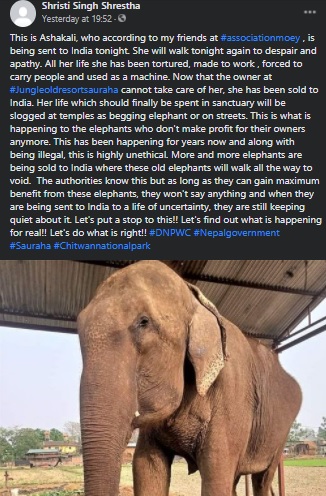
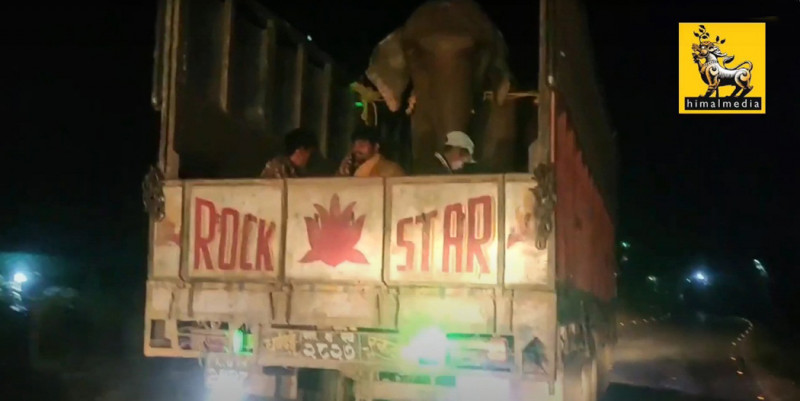
A domesticated elephant used for safaris in Chitwan National Park which was being illegally transported to India in contravention of the CITES (Convention on International Trade in Endangered Species) is being tracked by Nepal police at the border.
The 50-year-old female elephant belongs to Jungle World Resort, and is named ‘Ashakali’. A video of the truck showed its number to be: ना ४ ख २८२७.
Wildlife activists say more elephants have been sold to buyers in India for up to Rs9 million each since the pandemic began, and safari tourism in Nepal’s national parks collapsed.
Jungle World Resort director Tokraj Khatiwada admitted he had rented Ashakali from India at Rs80,000 a month, and since there had been no tourists upkeep of the animals was difficult and he was sending her back.
“You are now all raising the issue of elephant rights protection, but did any of you help feed these animals during the lockdown? The national park did not help either,” Khatiwada told us on the phone from Sauraha. He warned: “We were allowed to send back two rented elephants to India before this, so it is legal. If we are stopped, there will be an agitation here."
Set the elephants free, Michelle Szydlowski
According to CITES, endangered wild elephants cannot be domesticated, and it cannot be traded across borders. Many of the 216 captive elephants used in Nepal’s tourism industry are imported from India in contravention of Indian law. It is an irony that some of these elephants are now being sold back to India.
Hari Acharya, spokesperson of the Department of National Park and Wildlife Conservation says, “No one has filed for an application on transporting Ashakali, so the process is illegal. We have written to the authorities at the border to increase vigilance.”
According to the convention, the CITES Management Authority in both countries have to give permission for the cross border transport for endangered species. For example, 16 captive elephants were brought from India in 1986, and 4 Nepali rhinos sent to India in exchange.
CITES does not allow the export of captive elephants for commercial purposes. Sources said the elephants were being sold to a new zoo in Gujarat. Up to five elephants have been sent to India since the lockdown went into effect last March, sources said.