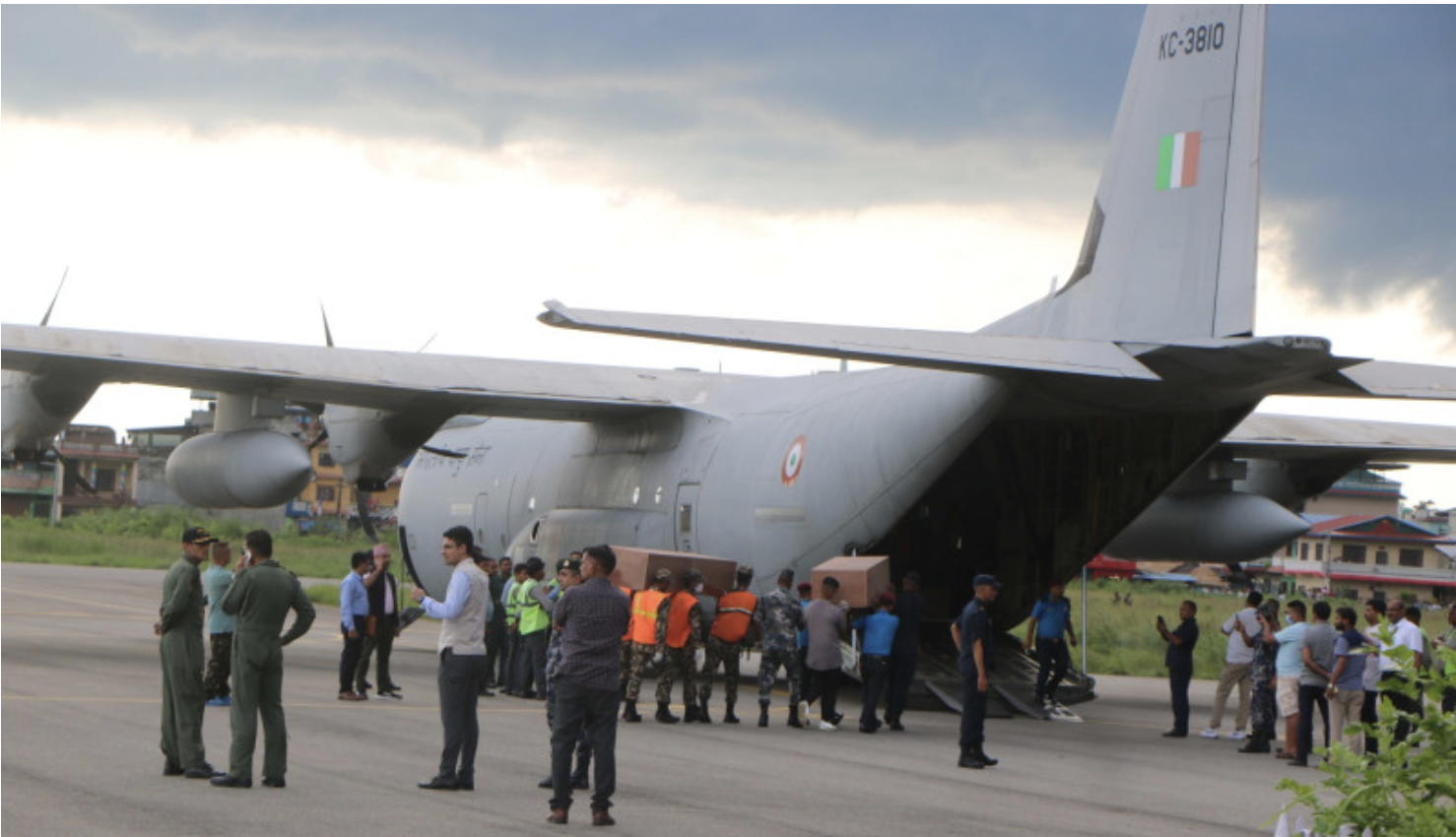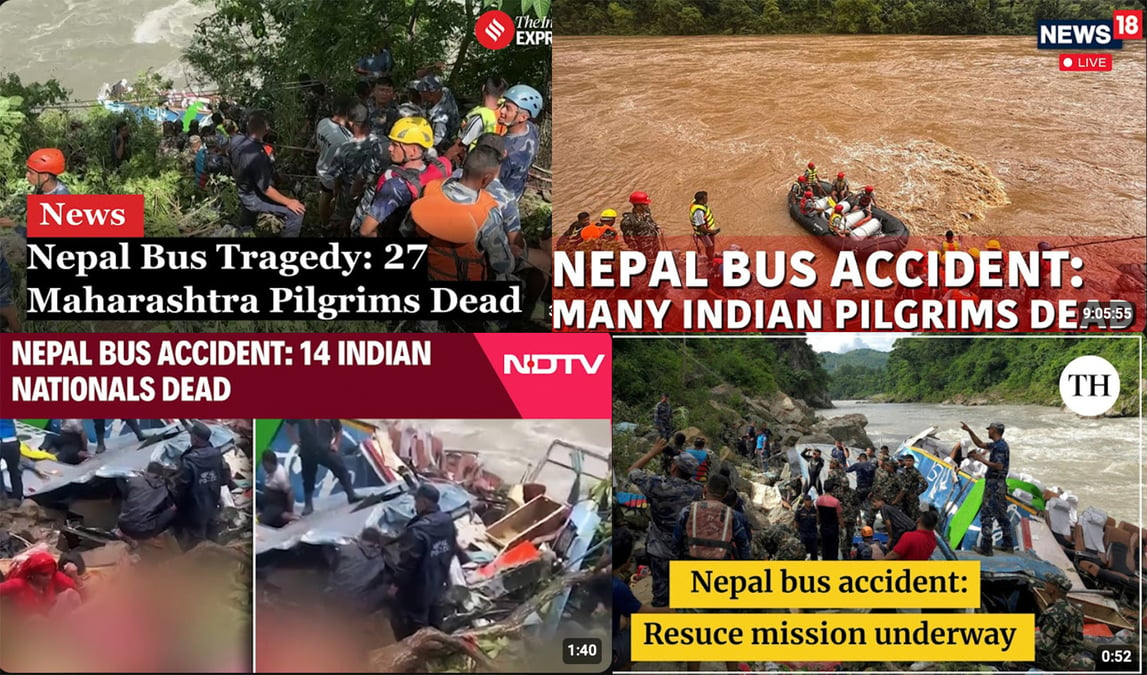
The death of 27 Indian pilgrims in a bus en route from Pokhara to Kathmandu on Friday got prominent attention in the Indian media (pictured), and the tragedy is expected to dampen tourism prospects.
Most tv channels and Saturday morning’s newspapers gave prominence to news of the accident of the Indian-registered that plunged into the Marsyangdi River from the Prithvi Highway carrying 43 passengers and crew.
The Indian pilgrims were travelling in two buses to the four holiest places of Hindu worship and had finished the India part and were headed to Muktinath and Pashupati in Kathmandu.
Indian media coverage focussed on Nepal’s poor highway and aviation safety record, listing the twin bus plunge in July that killed 59, seven of them were Indian nationals. The reports also recalled two recent air crashes in Kathmandu that killed altogether 24 people.
On Friday itself, a bus travelling from Rautahat to Pokhara was hit by a large boulder that fell down the mountain near Mugling, injuring 19 passengers. The accident happened near the site where a mudflow swept two buses into the Trisuli River on 12 July. The buses and some of the bodies of the passengers have still not been found.
Another school bus in Pokhara fell off a serpentine road and crashed into three taxis on Friday. Although there were no fatalities, the accident followed another school bus crash last month that killed a teacher and student.
Nepali tour operators say the prominent media coverage of Nepal’s poor transportation safety record may impact on the number of Indian tourists and pilgrims visiting Nepal in the upcoming autumn peak season.
“There are regular air crashes and bus disasters, and all this international publicity is going to hit the tourism business hard,” says Sirish Subedi, a tour operator in Pokhara. “The accident of the bus carrying Indian pilgrims will especially affect Indian arrivals, which had started picking up.”