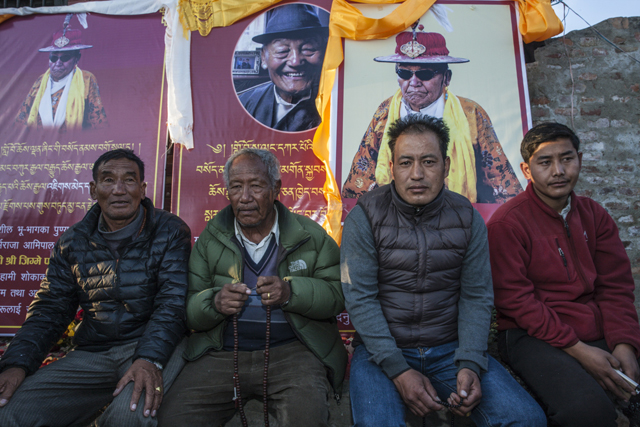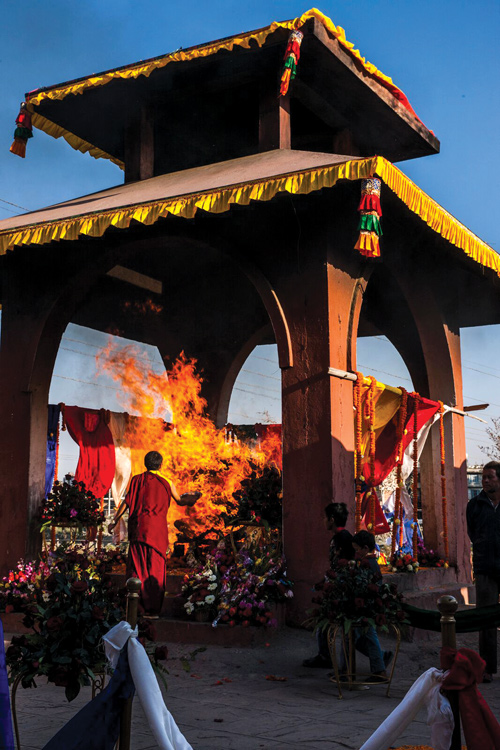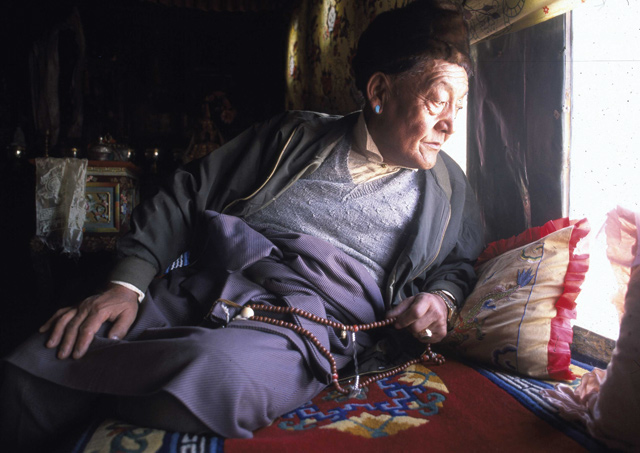
Jigme Dorje Palbar Bista, the King of Lo, or Upper Mustang, died in Kathmandu on 16 December. He was 86, and had ruled his kingdom for more than half a century with equanimity. We shared an affinity for horses and a love of the landscape he called home.
In Nepali, people referred to him as the Mustang Raja, one of four ‘petty kings’ – including local rulers in Bajhang, Salyan, and Jajarkot – who retained regional power even as their territories were incorporated into the emerging nation-state of Nepal in the mid-18th century. These kings were recognised by Nepali law from 1961 until 2008, when Nepal transitioned from a Hindu monarchy to a secular republic.
In Tibetan, Bista was called Lo Gyalpo evoking a sense of respect and deference. The fact that Jigme Dorje Palbar Bista had been officially stripped of his raja title by the Nepali state did little to affect his importance in the lives of Loba, people from Upper Mustang.
Bista was 25th in a lineage of rulers that dates back to the late 14th century, and the founding of the kingdom by a western Tibetan leader named Amepal. In 1964, when he was in his mid-thirties, Bista assumed the title of Lo Gyalpo after the death of his father. He was his father’s youngest son.
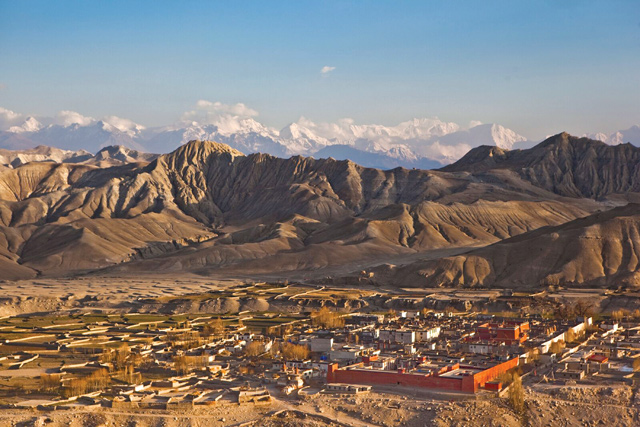
Bista married Sidol Palwar, a refined, elegant woman who traveled from Shigatse, Tibet, to Lo as a bride in 1950, before the political upheavals of 1959. They had no living biological children, but the couple adopted their nephew, Jigme Singe Palbar Bista, as son and heir.
Over the past half-century, Bista ushered his community through massive political-economic and sociocultural transitions: the stationing in Mustang of Chushi Gangdruk, the Tibetan Resistance Army, from 1961 until 1974, opening Lo to foreign tourists in 1992, the decade-long war (1996-2006) and its attendant impacts on all aspects of life in rural Nepal, even in a district that saw minimal direct conflict, the end of the Nepali monarchy in 2008, the recent completion of a motorable road that now links Mustang with the Chinese border to the north and Pokhara to the south, and the earthquakes of Spring 2015.
Bista has also lived to see the impacts of climate change on Mustang’s environment, a complex social ecology that balances irrigated agriculture, pastoralism, and trade. Two of Lo’s villages have been relocated in recent years as a result of water shortages as some of Mustang’s glaciers shrink. This and the recent discovery of uranium deposits in Upper Mustang indicate some of the environmental and geopolitical crucibles facing this region.