
 |
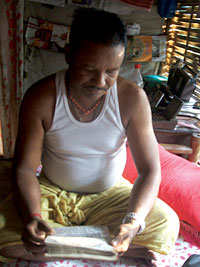
A bell chimes through the morning air at the Bhutanese refugee camp in Beldangi, Jhapa, waking a few residents. Pandit Arjun marches briskly out of his hut in Sector C, murmuring vedic hymns and wearing a saffron dhoti, a sacred thread and a holy mark on his forehead. This priest has in the last decade been the chief reciter of the Purana on 21 occasions, but he is a low-caste Biswokarma, a Dalit.
This is no ordinary scene, and how Arjun Biswokarma got to be here is a remarkable story of perseverance amidst the thwarted dreams of the refugee camps in Jhapa.
Eighteen years ago, Arjun Biswokarma was a farmer in Bhutan's Chirang district where for generations his family performed its caste-prescribed duty to make tools like khukuris and hoes. People from all around visited him to purchase these tools, yet few of his mostly high-caste customers dared enter his home, worried they would contract ritual impurities. Like other Dalits, Biswokarmas aren't allowed near high-caste people and as a result spend much of their lives in isolation within communities.
When as a child Arjun decided he wanted to study, he discovered he wasn't allowed to go to school where, school administrators worried, he would pollute his high-caste classmates. An insistent Arjun asked to be allowed to listen to the teachers from outside the classroom, at a distance from his classmates, but he was denied even this.
Bitter but desperate to learn, Arjun bought religious texts at an Indian market and studied them himself. A quarter of a century later, he has amassed an impressive collection of religious books, like the ancient Veda, from which he draws great inspiration.