
 MIN RATNA BAJRACHARYA |
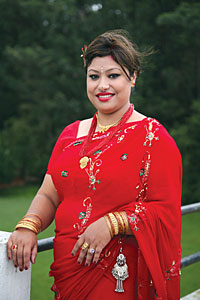
On Sunday, Hindu women in Nepal will be decked up in different hues of red as they make their way to temples to worship Shiva and Parbati, the divine couple who epitomise the ultimate conjugal bliss.
Tij starts with dar khane din, the day of feast, as women get together and eat into the night to prepare for the next day of fasting. Tij is when the women replicate the fast observed by Parbati in order to 'obtain' Shiva as consort, and later that night the fast is broken with puja and fruits.
Tij is the day Nepalis celebrate womanhood. Single, married and even widowed women, break out in songs about relationships, their daily lives, pining for their husbands who have gone abroad, loneliness, inequality, discrimination, abuse, bigotry and war. It is Nepal's own version of International Women's Day.
As the structure of our society changes, so does the way we celebrate our festivals. Till a few years ago, it was only Bahun and Chettri women who observed fasts, today women from different ethnicities have embraced this custom as their own as well. And there are even some husbands who mark Tij with a 'solidarity fast'.
"I will fast for my husband's long life if he fasts for me, why is it that only women have to give pain to their bodies?" asks an educated married Bahun woman from Kathmandu. She says she is not a feminist, "but unlike our rural sisters I see this as a practice started by men so that they can feel good about themselves."
She has a point. But what she finds repressive is found to be liberating by many. In rural Nepal women look forward to this day so that they can pack their bags and go to their maternal home where their mothers and sisters are waiting. It is the time women reconnect, vent their feelings and find comfort in other women. And in the cities, women are not frowned upon if they are not wearing red on Tij, if they observe the fast or if they do Shiva puja.