
Susta: A rough road track with fields on one side and a river on the other; Bhojpuri-speaking villagers, many of them Muslims; a single decrepit police post; the winter fog; and a border where you can cross into another country without even realising it - to anyone who has travelled in the Nepali Tarai, this would sound like just another of the hamlets that mark our southern plains. But Susta stands out, for in the Nepali nationalist narrative, it is seen a 'wound', and an 'attack' on territorial integrity. 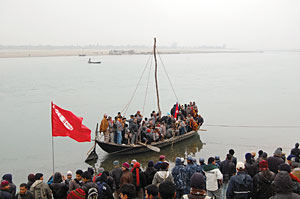
To get to Susta, you have to cross the Narayani River. It takes a ramshackle boat more than half an hour - after getting stuck in the middle - to travel across little more than 20 metres. Like in other cases of what's termed 'border encroachment', the river lies at the heart of the issue. Its shifting course has led to the fluidity of the boundary.
On the other side, three tractors are loaded up with Nepali Maoists and onlookers who have arrived to inspect 'Indian expansionism' first hand, and driven deep to the village. Some residents complain that they have land certificates, but the land itself has been 'taken away' by India. Others point out that they are surrounded by Bihar and UP on three sides, and have to go to market in India even for basic purchases - where they are harassed. They cite clashes that have occurred over the last four decades.
When asked about their demands, most residents present the following list. Give us citizenship, for more than 60
per cent of villagers are not legally Nepali. Construct a bridge so we can cross to the Nepali mainland more easily. Give us full VDC status so we don't have to travel to Triveni for every small thing. Build a health post. And demarcate the border with India.
Notice a pattern? All these demands have more to do with the utter failure of the Nepali state rather than grand Indian hegemonic designs. The lack of penetration of the state in its own territory; its diplomatic laziness and ineffectualness; its administrative failure to provide basic infrastructure; and the tendency of politicians to opportunistically whip up passions, these are at the root. India can only be blamed for its pettiness, and lack of diplomatic magnanimity. Instead of allowing such issues to fester, India would earn significant goodwill if it were willing to make certain concessions.