

Dolpo is home to many of Nepal’s protected mammals including the snow leopard, Himalayan wolf and musk deer, and is a major storehouse of high-value biological resources like the yarsa. It is endowed with some of Nepal’s most scenic natural landscapes such as Phoksundo Lake, the holy Crystal Mountain and Kanjiroba Himal, and is also the last remaining repository of the Bon culture.
The larger part of the district is made up of Shey-Phoksundo National Park, which was set aside in 1984 for the conservation and management of its nature and cultural heritage. However, Shey-Phoksundo is not treated as a national park: it is used by outsiders and even the government mainly for revenue extraction rather than conservation.
For a small fee, outsiders are allowed to roam across the high slopes every spring to pick yarsa, severely disrupting the ecology of the region. In 2016, I recorded two snow leopard cubs that had been tranquilised by yarsa harvesters, probably by poisoning. I saw a blue sheep being poached and three stone traps set for these animals, which are the main prey of snow leopards. One of these traps was first recorded in 2011, and is still there.
Recently, we rescued blue sheep trapped in wire snares 5km from the National Park and Nepal Army post in the village of Tso. Momo dumplings made with the meat of blue sheep are in high demand in the Lamar border checkpoint between Dolpo and Tibet.
While working on my thesis on the impact of the yarsa collection on the snow leopard, I found that nearly seven out of every ten respondents had no permit slip from the national park to harvest yarsa. Local residents have to pay Rs500, Dolpo citizens Rs2,000 and outsiders Rs 3,000. The park collected Rs9.5 million from yarsa harvesters last year.
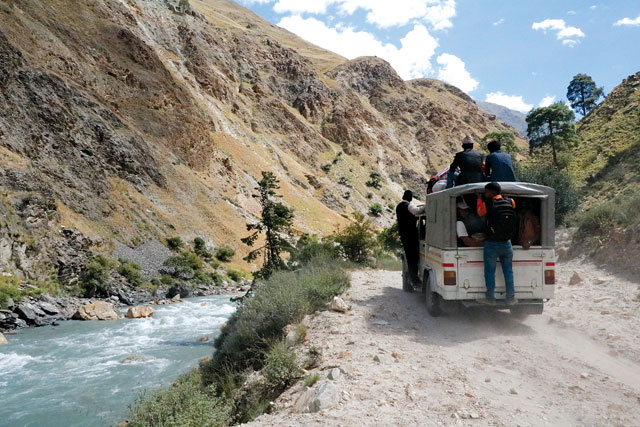
With the road connecting Dunai within two years, Dolpo needs to adopt a strict eco-tourism model. Only 431 foreign tourists visited the national park last year, but most of their fees went to the national exchequer rather to the local economy. This number will grow, with a large influx of Nepali visitors once the road is complete. The challenge will be to conserve Dolpo’s natural resources and protect its cultural heritage from greater tourist inflows.