

The symbolism and practices surrounding menstruation differ across cultures: in some it is largely concealed and in other more conservative societies, it becomes visible and more stigmatised. But the common feature is that menstruation is a taboo.
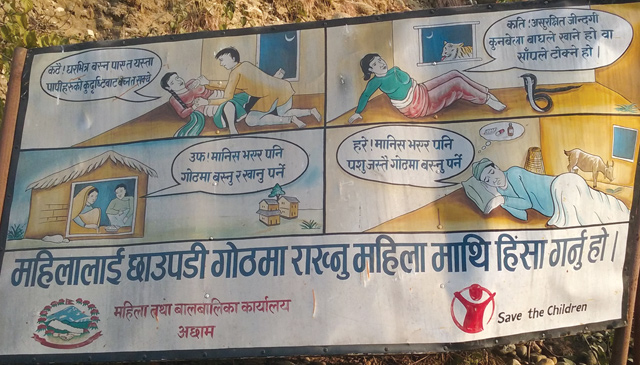
In some extreme cases, like in parts of the mountains of western Nepal, women are banished to the cowshed for four days in a month. In the past months alone, two young women have lost their lives, once more sparking national outrage over the practice, known as chaupadi.
In December 2016, 15-year-old Roshani Tiruwa in Achham district was found dead in a tiny menstrual hut. A month earlier, Dambara Upadhyay, 26, also died while living in the outhouse during her period.
Snake bites, wild animal attacks, suffocation from smoke, and sexual harassment and assault are threats that many menstruating women and girls face during this monthly exile.
Also read: Period of banishment, Subeksha Poudel
In 2005, the Supreme Court outlawed chaupadi and in 2008 the Ministry of Women, Child and Social Welfare promulgated guidelines to eradicate it. However, a 2011 UN report of Achham district estimated that about 95 per cent of women still practiced chaupadi. This staggeringly high figure alone shows that changing age-old traditions and social attitudes requires more than legal reforms and guidelines.
The impact of stigma compounded with poor menstrual hygiene hinders equal and meaningful participation of women and girls in education, economic activities, and perpetuates the cycle of gender inequality and social exclusion. Menstruation affects school attainment with a third of girls missing schools during periods in Nepal.
Poor menstrual hygiene also results in reproductive health ailments such as urinary tract infection, and other problems arise from internalised feelings of shame and untouchability. Creating a safe and enabling environment for women and girls to manage their menstruation hygienically, and with dignity is therefore an important development and human rights agenda.
Breaking the taboo on talking about periods is the first step, with interventions required in both schools and communities. According to WaterAid’s 2009 study in Nepal, only 17.2 per cent said that they were informed about menstruation by teachers, majority of whom avoided reproductive health topics, prescribing self-study instead. Another study shows that participants learnt about menstruation towards the end of secondary school, but many had already started their periods by then.