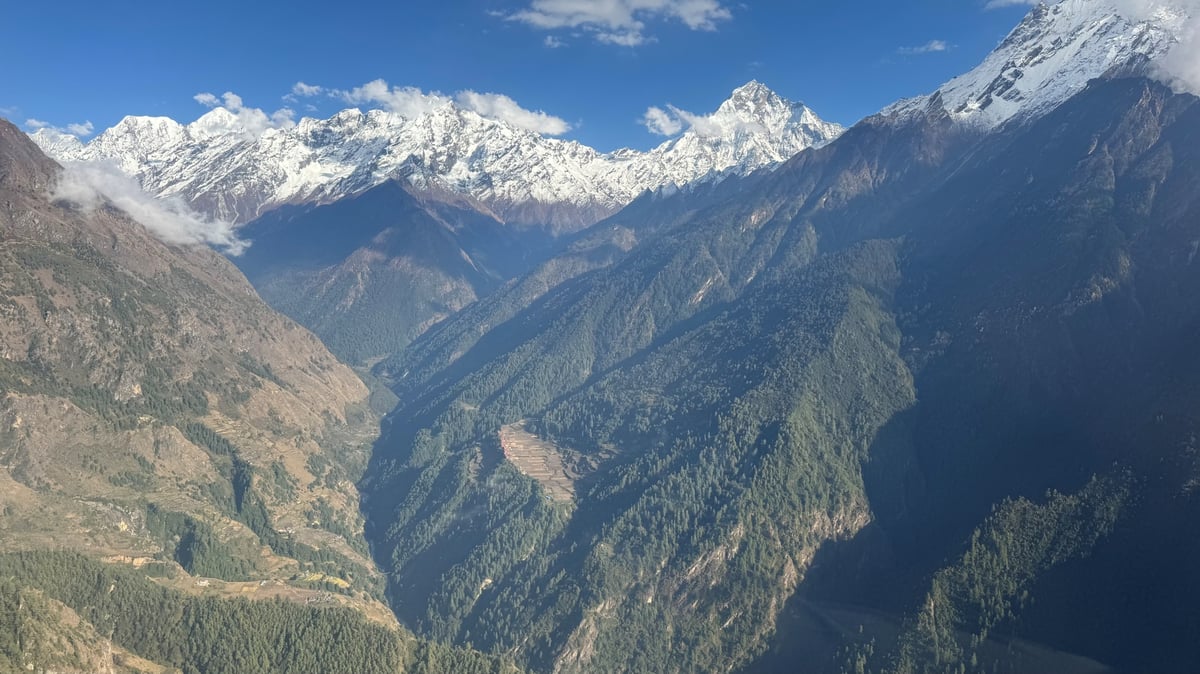
Tsum Valley is regarded as a sacred beyul because of its pristine beauty. All photos: KUNDA DIXIT
On a relief flight one month after the 11 October flood on the Budi Gandaki, I was struck by the stark contrast between the sheer beauty of my home valley and the overwhelming devastation we saw below.
Tsum Valley and the Manaslu Trail have been cut off from the outside world for the past month, and local residents are running out of basic food and everyday items. Stranded trekkers were evacuated by helicopter, and there has been no tourism income since.
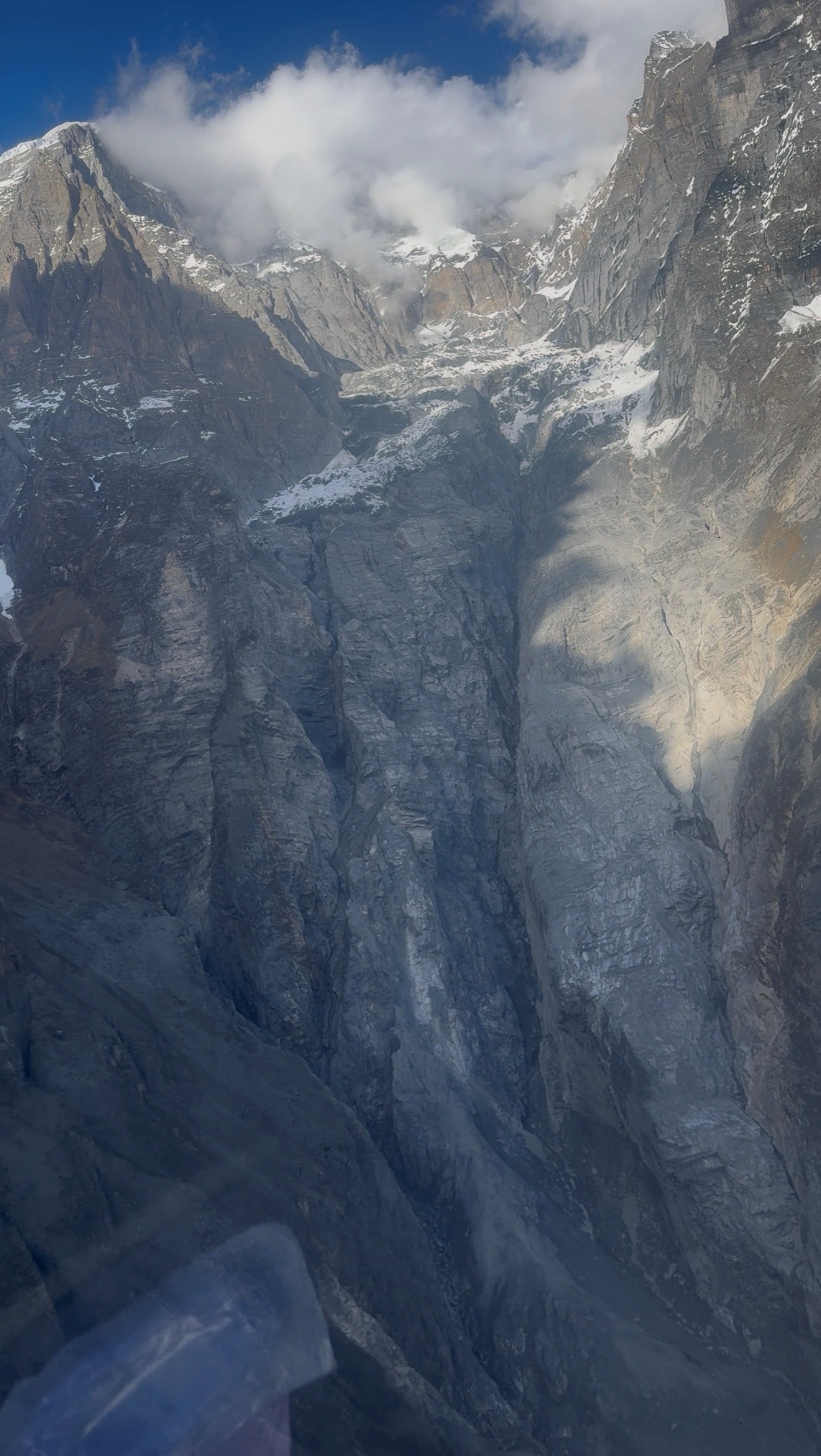
Tsum lies to the north of the Ganesh Himal massif, and an ice-rock collapse high on Sringi Himal (7,165m) caused a hyper-concentrated slurry flood several hundred metres high to rush headlong down the Ungiling River, and dam the Syar Gorge. The impounded lake burst in stages, sending successive walls of black mud down the Budi Gandaki. It surged in slow motion like paste, taking away bridges, roads, hydropower plants.
The scar of the ice-rock avalanche below Sringi Himal.
Fortunately, the villages of Chumchet and Chumling, near where I was born, were spared. But five herders who were in the path of the debris flow right below the mountain were swept away, as were their goats, sheep, cows and dzo. Sheds, high pastures, terrace farms and forests were all destroyed.
“The ground started shaking like an earthquake and it woke me up,” recalls Mingmar Dolma whose husband was taken away by the flood, along with their cattle. Another herder Karma Lama also died, Yau Ambi lost his mother.
The Budi Gandaki flood was caused by an ice-rock avalanche on Sringi Himal similar to the one on the north face of Langtang Lirung in August that killed at least 6,000 people. But the casualty and damage in the October flood here was much lower because the avalanche volume was smaller, there was more effective early warning to downstream residents, the mud flow moved slower, and the Budi Gandaki Valley is not a trade, tourism and hydropower corridor like the Trisuli, therefore was not as densely populated.
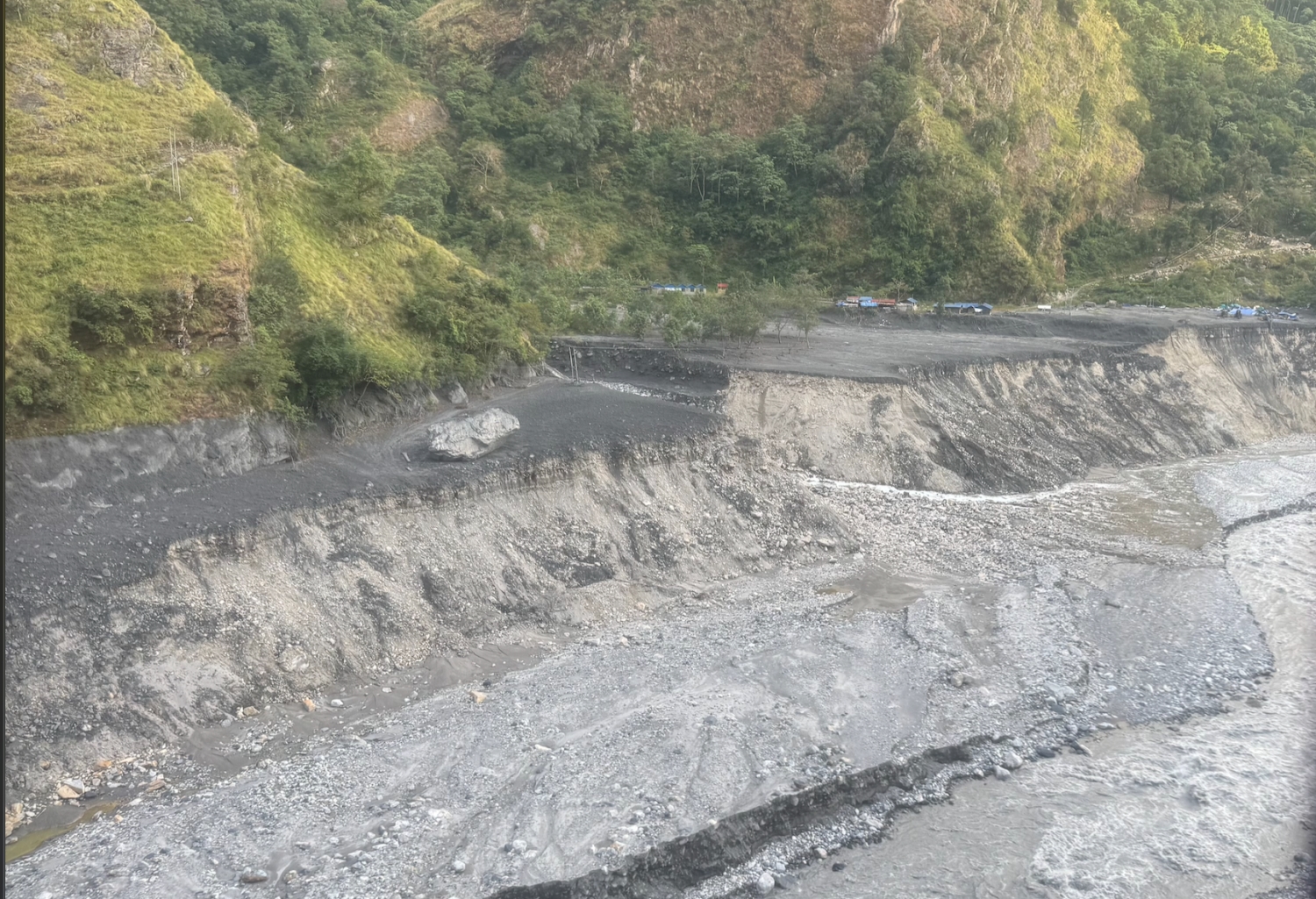
A house-sized boulder was brought down by the power of the flood and deposited on a farm terrace high above the Budi Gandaki in Philim.
Chhiring Sangmo had travelled before the flood to Chumling to meet her family, and had been stuck here for more than a month because even the foot trails were swept away by the flood. “We are cut off from everything, and there is no way in and no way out,” says Sangmo, who finally hitched a ride back to Kathmandu in a relief helicopter.
Local people here know Sringi Himal that towers over the valley as Tashi Palsang. It is a holy mountain in this sacred beyul Kyimolung, and our forebears used to perform kora around the peak until the border with Tibet was closed off after 1959.
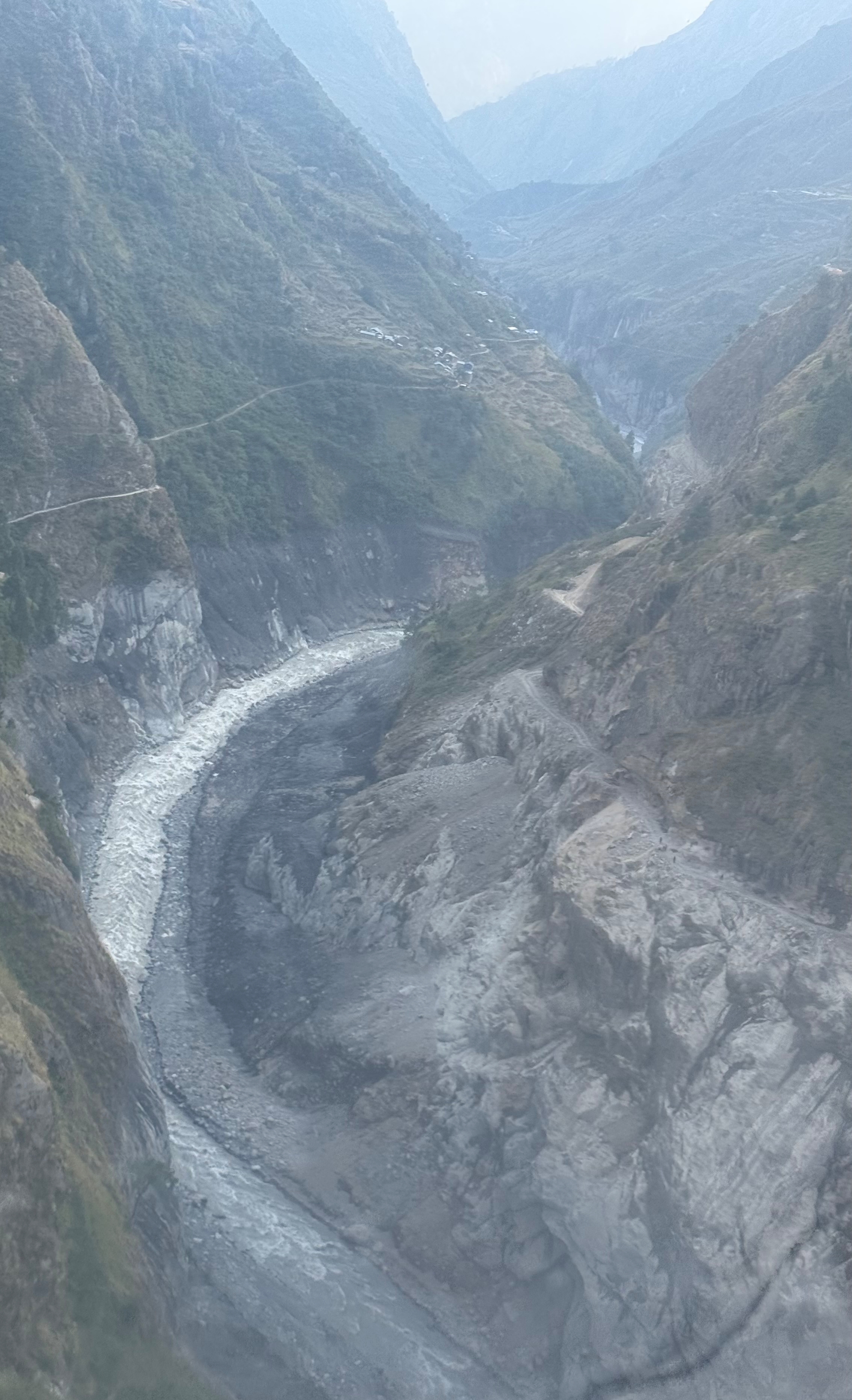
Flying up the narrow gorge of the Ungiling, the scar left by the flood is 800m above the river bed in some places. Trees have all been knocked down by the shock wave from the avalanche, they are covered in dark grey dust and all lie pointing down valley.
Locals have a name for the black debris: ‘peru’ is the rotten dark slate and ‘yeru’ is the black sand. The flood carried this sediment in pasty surges 90km downstream right to the point where the Budi Gandaki meets the Trisuli at Benighat to mix with the white-brown sediment of the 26 August flood.
The height of the flood on 11 October at the confluence of the Syar Khola and Budi Gandaki at Lokpa.
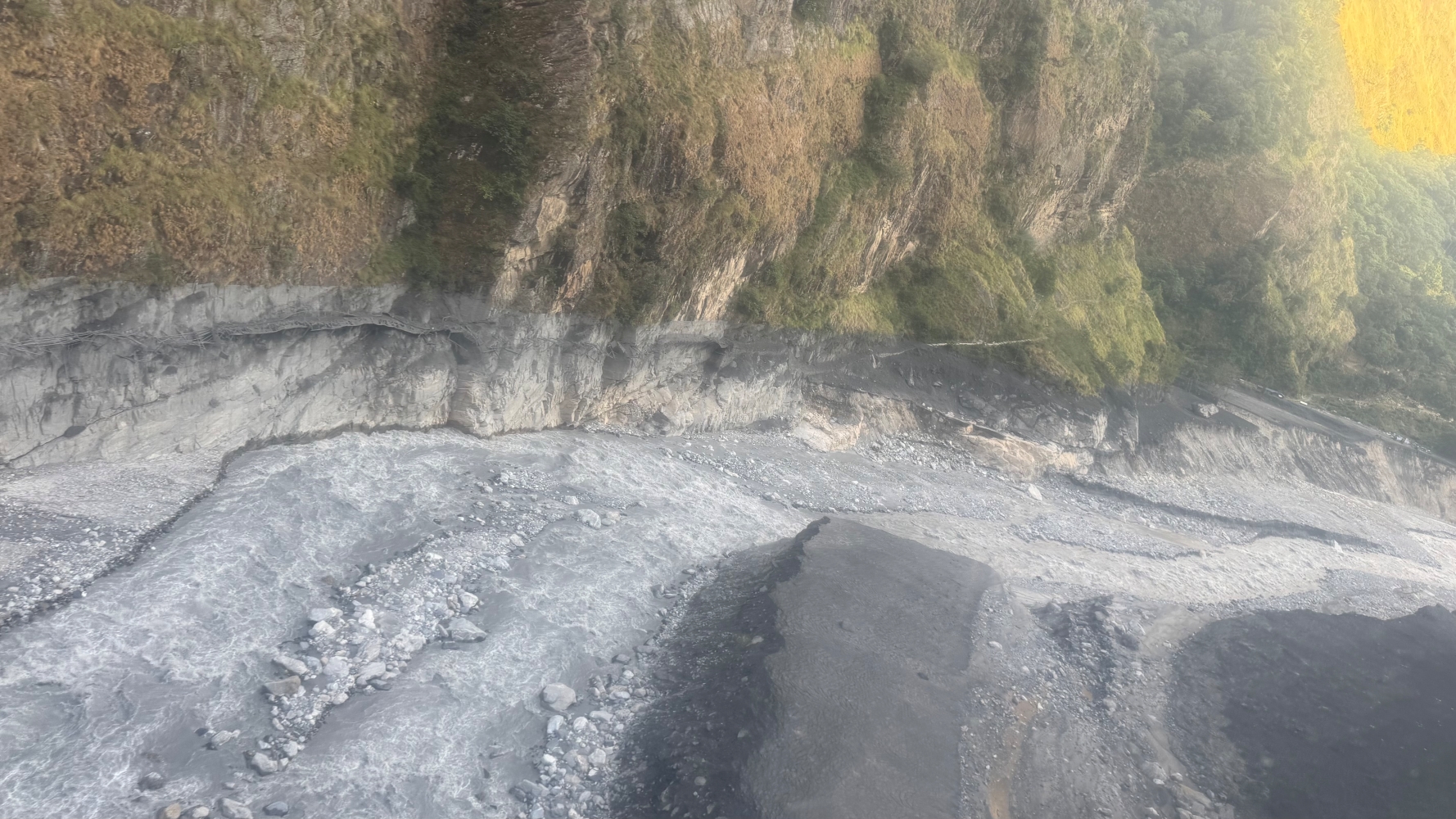
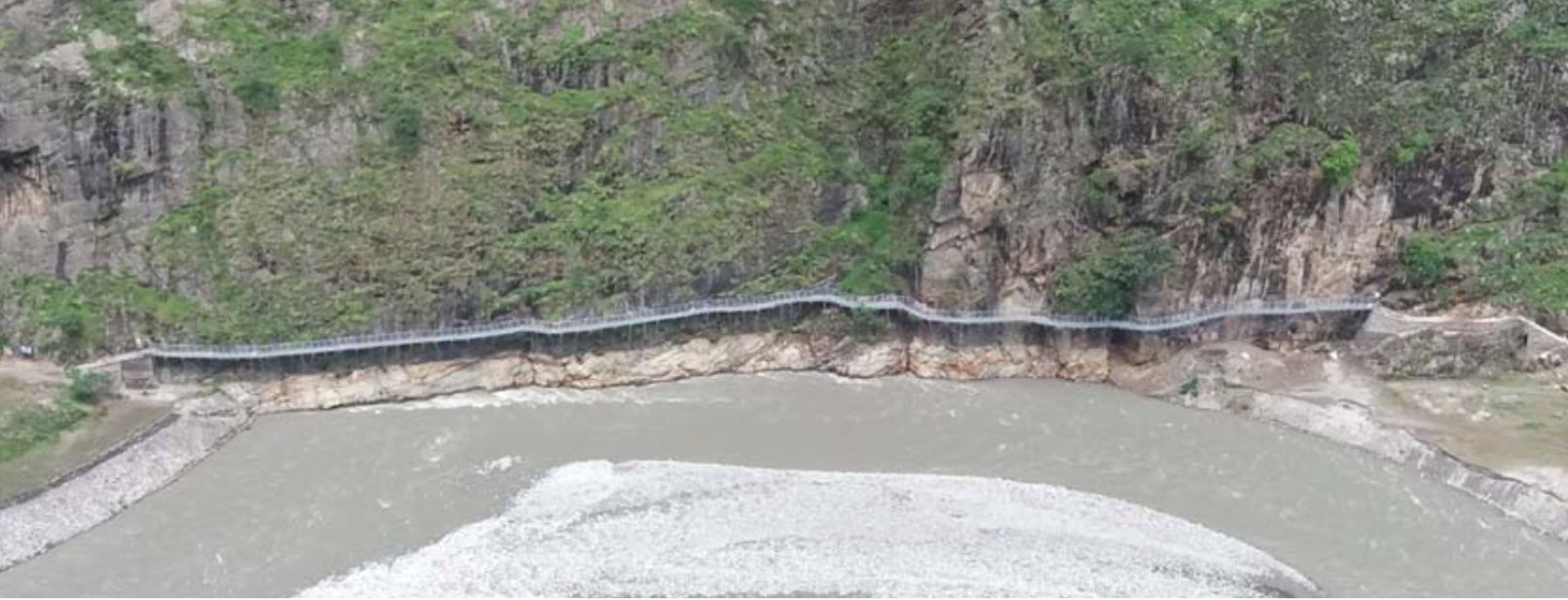
Dozens of trail bridges, two major motor able bridges and two cantilever platforms built after the 2015 earthquake along the vertical rock faces at Yarubagar and above the Sardi were swept away. Four temporary wooden bridges connecting the main Manaslu trail and Tsum with the roadhead downstream were washed away when Cyclone Arnab brought down another flood last month, but have been repaired in less than a week to partially reopen the trail.
Further downriver, there is a boulder bigger than a house deposited on what used to be a farm terrace in Philim, 60m above where the Budi Gandaki is now flowing. The river bed itself is now about 15m higher than it used to be and the dark debris is piled high along the banks. Vultures wheel overhead to feed on carcasses.
In Chumchet, relatives have completed the first round of death rituals and are preparing for the 49th day. But there is little time to mourn, the buckwheat needs to be harvested, and the vegetable gardens tended since that will be the only food for a while. Some are collecting deadwood in the forest to stock up for Tsum’s harsh winter.
Due to outmigration, there are more elderly people than children in the villages. Lodges and trails that would be teeming with trekkers in this season are deserted. But life must go one, even though the landscape below has been changed beyond recognition.
The cantilever bridge at Yaru Bagar after it was built in 2016 (above), and destroyed by the 11 October flood (below).
Today, the most urgent concern for the people of Tsum is reconnecting the valley with the outside world. With the road will come food and fuel. The trails serve as lifelines: footpaths for local people, mule tracks for transporting essential supplies and trekking routes for visitors. The Sardi Gorge is a chokepoint, and since the cantilever platform was been swept away the four wooden bridges need to be repaired.
Without them, there is no overland access to Tsum Valley. Helicopters are the only other option, but they are expensive and getting permits to this restricted area near the border is a long drawn-out process.
We recently air lifted 350kg of rice, lentils and cooking oil for each affected family with help from donors, including Nepali Times. This assistance will not take them through winter, and more will be needed until the trail is open again.
FUTURE-PROOFING TSUM
In the longer term, the cantilever trail on the Syar Gorge and Yarubagar will have to be built higher up the cliffs so they are not destroyed by a future flood. Suspension bridges over the Sikhyu Khola and Ungilung that were swept away also need to be rebuilt.
That is the only long-term, sustainable restoration plan: one that allows mules to carry essential supplies, enables local people to travel safely throughout the year, and gives trekkers the opportunity to return to and experience Tsum Valley for the sprint 2027 season.
Tsum Valley is much more than a trekking destination in the Himalaya. It is home to our resilient community, a vibrant and living culture, ancestral landscapes and a way of life deeply connected to the mountains. Its people need more than sympathy, they need solidarity, practical support and, above all, the restoration of the connectivity that sustains their lives.