
In Bengaluru last April, a 32-year-old passenger traveling from the UK arrived with a cargo consignment from Vienna.
Declared as ‘grey stone stele of Padmapani’, airport customs officials instantly suspected that its intricate craftsmanship must have significant cultural and historical importance.
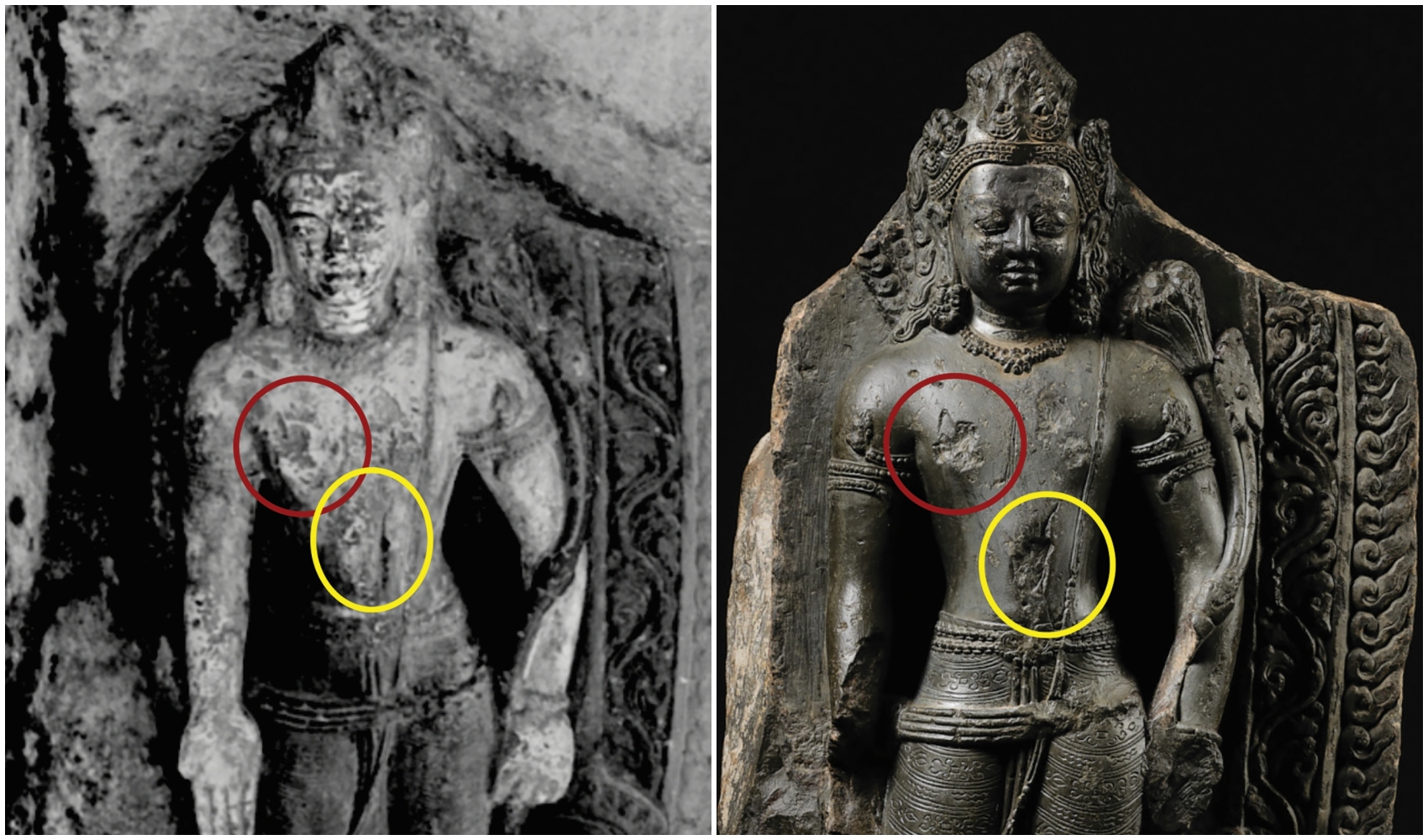
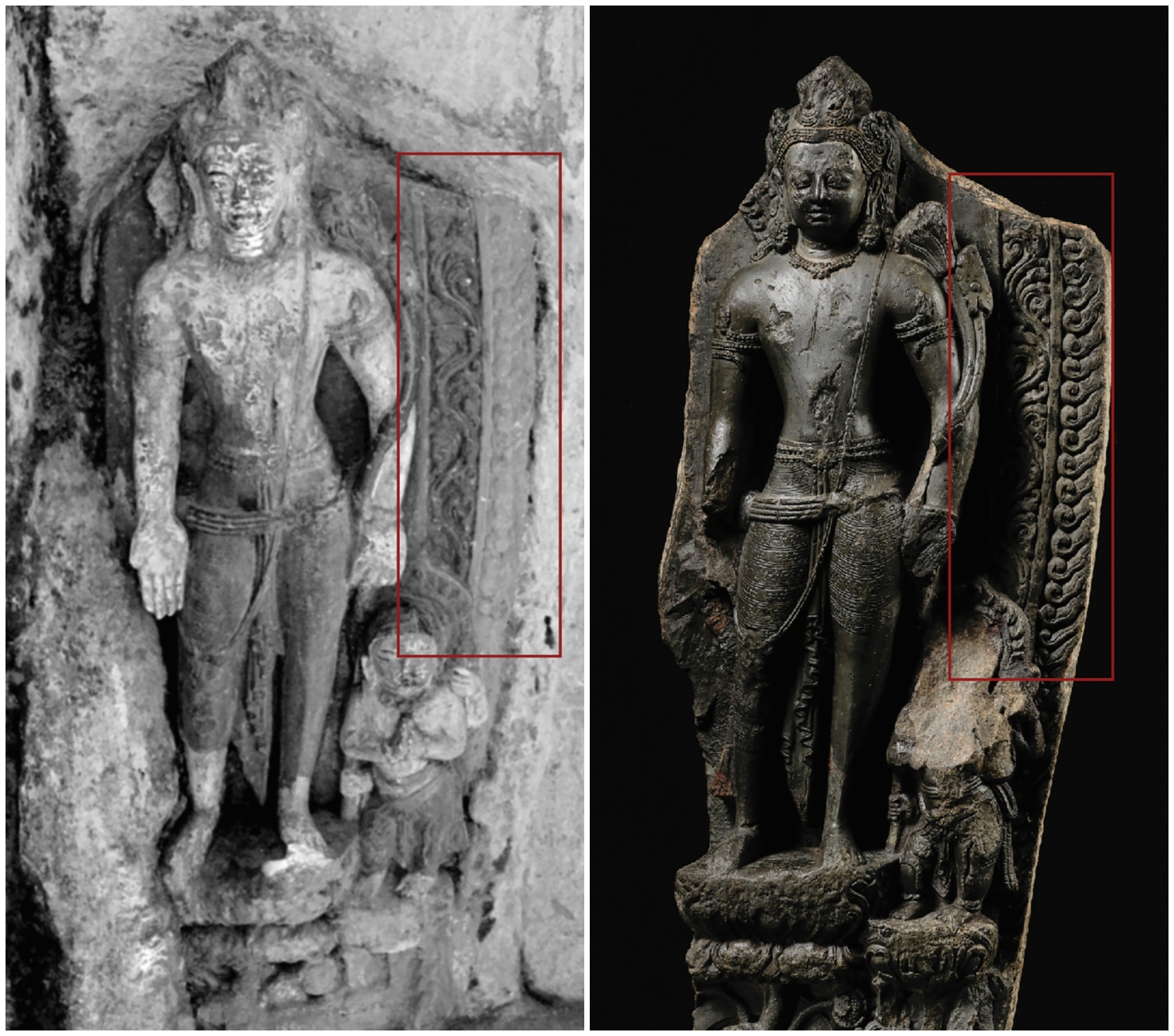
Upon further investigation, it turned out to be a ninth century Boddhisatva Padmapani stolen from the Boudhanath Stupa in Kathmandu. The item was later confiscated after the Nepal government confirmed it as a stolen cultural artefact, which activists had previously intercepted at an auction gallery in Vienna.
Nepal’s Department of Archeology (DoA) was already gathering evidence of its trafficking to submit to the Viennese gallery in hopes of its voluntary return to Nepal. Versions of this deity are worshipped in Kathmandu Valley as Rato Machindranath.
In fact, the stele was just one of six artefacts, first flagged by the Lost Arts of Nepal page, that were set for auction in Vienna in 2025 despite substantial evidence, in books, archives and databases indicating that they had been stolen from their original shrines in Kathmandu Valley.
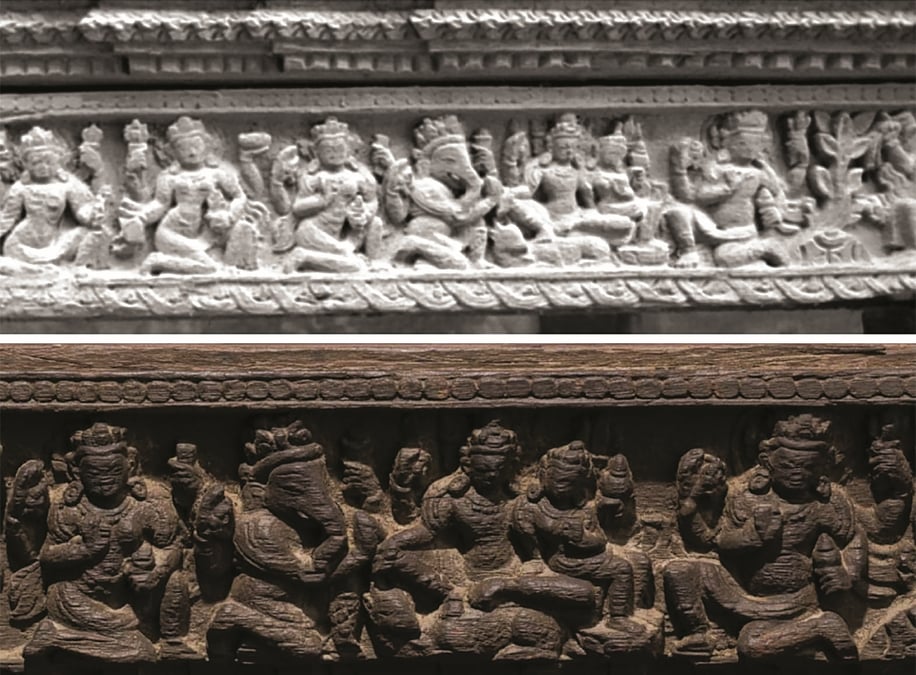
In the two auctions last March and April, were an ornate 19th century repoussé of Chamunda in Lot 66 associated with the Balkumari Temple in Thimi that started at €500, and was ultimately sold for €2,016, while Lot 122 was an 18th century large wooden frieze from Kaasthamandap which was removed from auction after various groups sent photographic and historical evidence to the gallery.
Besides the Boddhisatva Padmapani (Lot 297) the April auction also included two other stone steles: a Shridhara Vishnu (Lot 29) from Chyasalhiti, and a Ganesh (Lot 31, relisted Lot 311 in April 2026) traced to the Bagh Bhairav temple in Kirtipur. This auction of the Handley collection also included a large wooden torana liked to Asan (Lot 302).
Activists with the Nepal Heritage Recovery Campaign were working closely with the Nepal Embassy in Vienna, and the DoA in Nepal. Among the six objects in this collection, some had previously been flagged at other auctions and subsequently vanished from the market until this particular auction.
The alarming number of items with evidence of trafficking is just a fraction of the objects traded at auctions, raising questions about how they were stolen and smuggled out of the country. The provenance for many of these objects describe that they were initially acquired by collectors during extensive travels in Asia.
Police reports of the thefts have not yet been found, since it was not a common practice for formal reporting of such losses. They were instead handled within communities or local institutions, and often, replicas were promptly installed for worship. This has sometimes led auctioneers to assume largely that the objects may have been voluntarily sold by their custodians.
Nepal’s Ancient Monument Preservation Act 1956 places strict restrictions on the export of archeological, historical and artistic objects more than 100 years old.
In the absence of a police report, it is the paper trail of export permits and approvals that can be followed to understand whether an object had been legally taken out of the country. Some argue that the burden of proof should fall on those claiming a legitimate provenance to produce the documentation showing that the object was indeed lawfully transferred and exported.
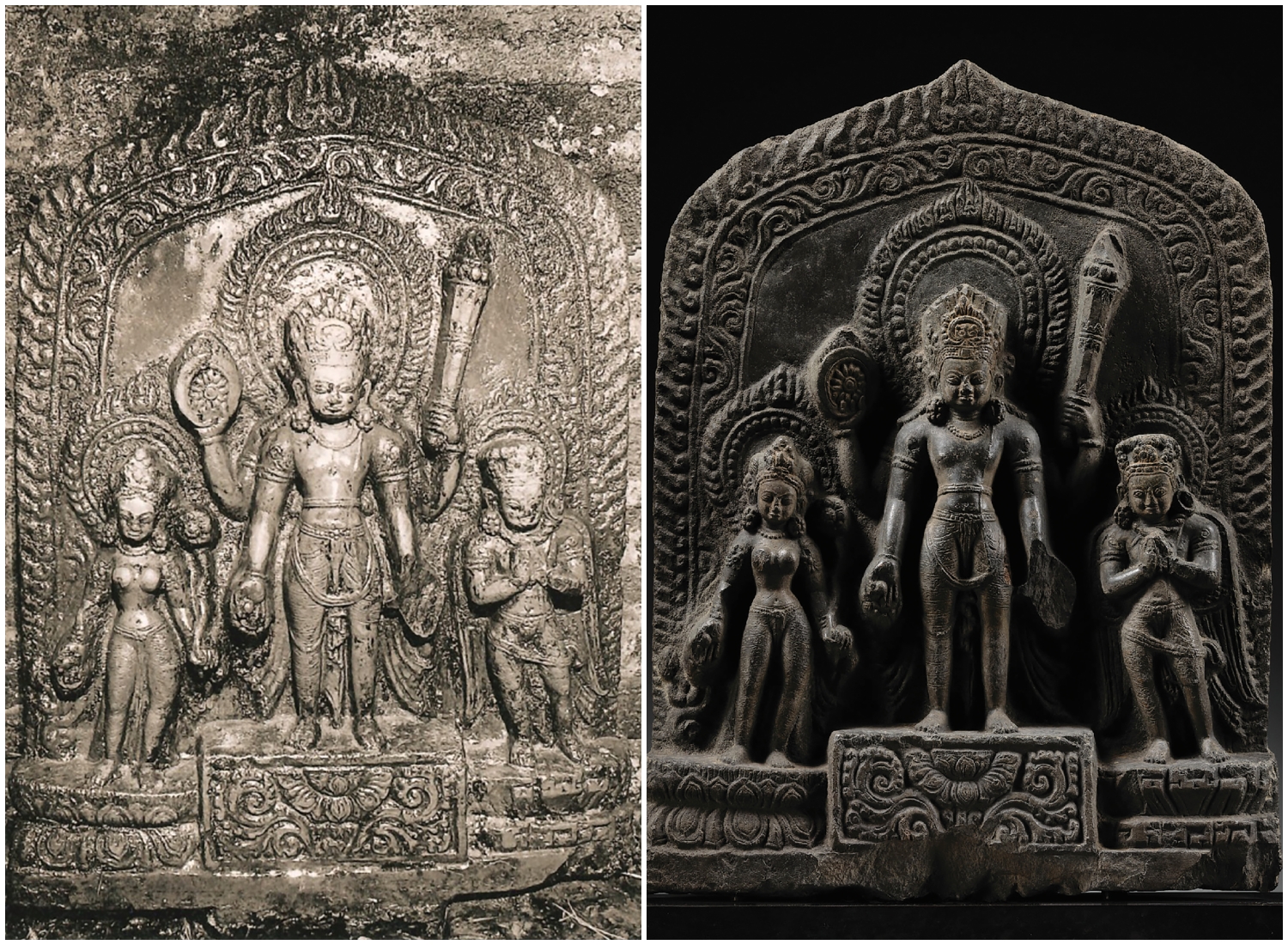
In the case of the Shridhar Vishnu the evidence is hard to dismiss. With the starting price at €7,500, the relief closely matches a Shridhar Vishnu from Chyasalhiti complex in Patan, documented as pl. 186 by art historian Lain Singh Bangdel in his book Stolen Images of Nepal. Despite submission of the evidence, the piece was sold for more than €9,000.
PROOF
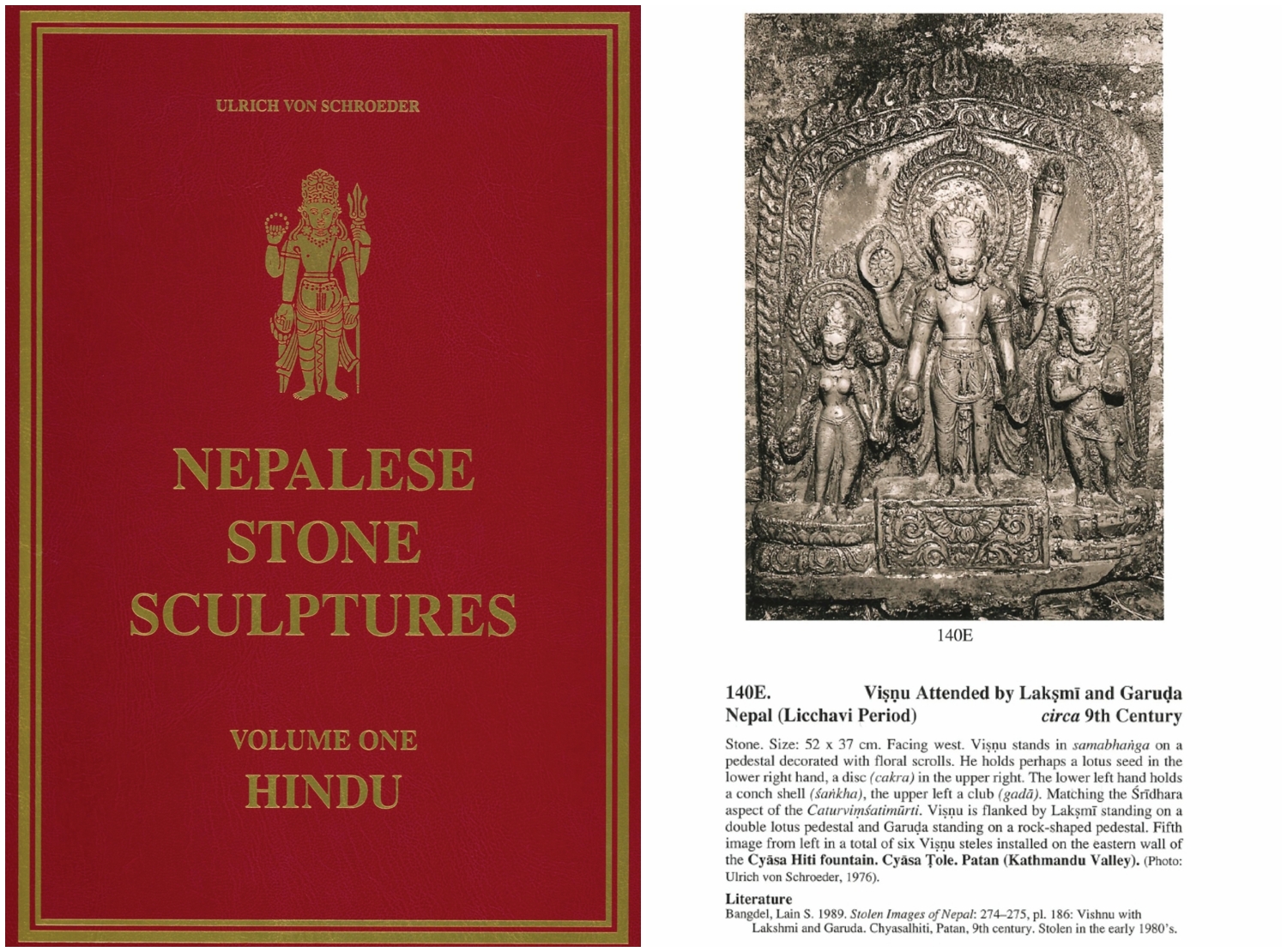
In fact, the mutilated left hand of the central Vishnu figure and damage on the mace and on the hands of the smaller Garuda figure, and the matching height of 52cm reveal it to be 140E from the book Nepalese Stone Sculptures by Ulrich von Schroeder.
Screenshots posted on the gallery website details where in Chyasalhiti this relief was placed, with a dated in-situ photograph from 1976. Crucially, just below this text appears the citation Schroeder uses of Bangdel’s Stolen Images of Nepal, pl. 186, which legibly reads ‘Stolen in the early 1980s’.
Such records from historic books has, in other cases, been enough basis for many global repatriation processes. But this was not the case for the Vienna auction of the Kathmandu Valley items.
A different story is emerging around another of the six objects: an 18th century wooden panel associated to the Kaasthamandap, or Maru Sattal. Sources have indicated their willingness to voluntarily repatriate this piece which was estimated to sell for €10,000. Measuring 3.6m, in-situ photos from the Huntington archives and authors like Mary Slusser show a close match with the intricately carved figures of Umamaheshvara, Bodhisattvas, Ganesha and other mythical creatures and devotees.
This panel was inherited by Peter Kienzle-Hardt from the collection of his adopted father, Dr Horst Kienzle. Provenance information mentions that it was acquired between 1950-1985 during his travels in Asia.
Kienzle-Hardt had earlier approached a museum in Vienna to sell a large Dipankar Buddha head in 2001. The curator discovered that it had been stolen from Nagbahal in Patan just a year before. It was subsequently repatriated to Patan where it appears annually during the Samyak Mahadan festival.
Kaasthamandap is Kathmandu’s oldest structure, with many historians crediting it as the origins of the city’s name. Beyond its religious significance, it historically served as a rest house for travellers and merchants, and is still used as a marketplace, and a stage for local music and dance, much like Vienna’s ornate Rathaus.
The frieze itself is an important component of the building, which collapsed in the 2015 earthquake and was rebuilt. Placed around the temple, it depicts the story of the Buddha and is material evidence of how Nepali society transmitted oral stories and mythologies through generations.
It is encouraging that the gallery plans to return this panel to Nepal to be placed back on Kasthamandap together with a plaque documenting the repatriation.
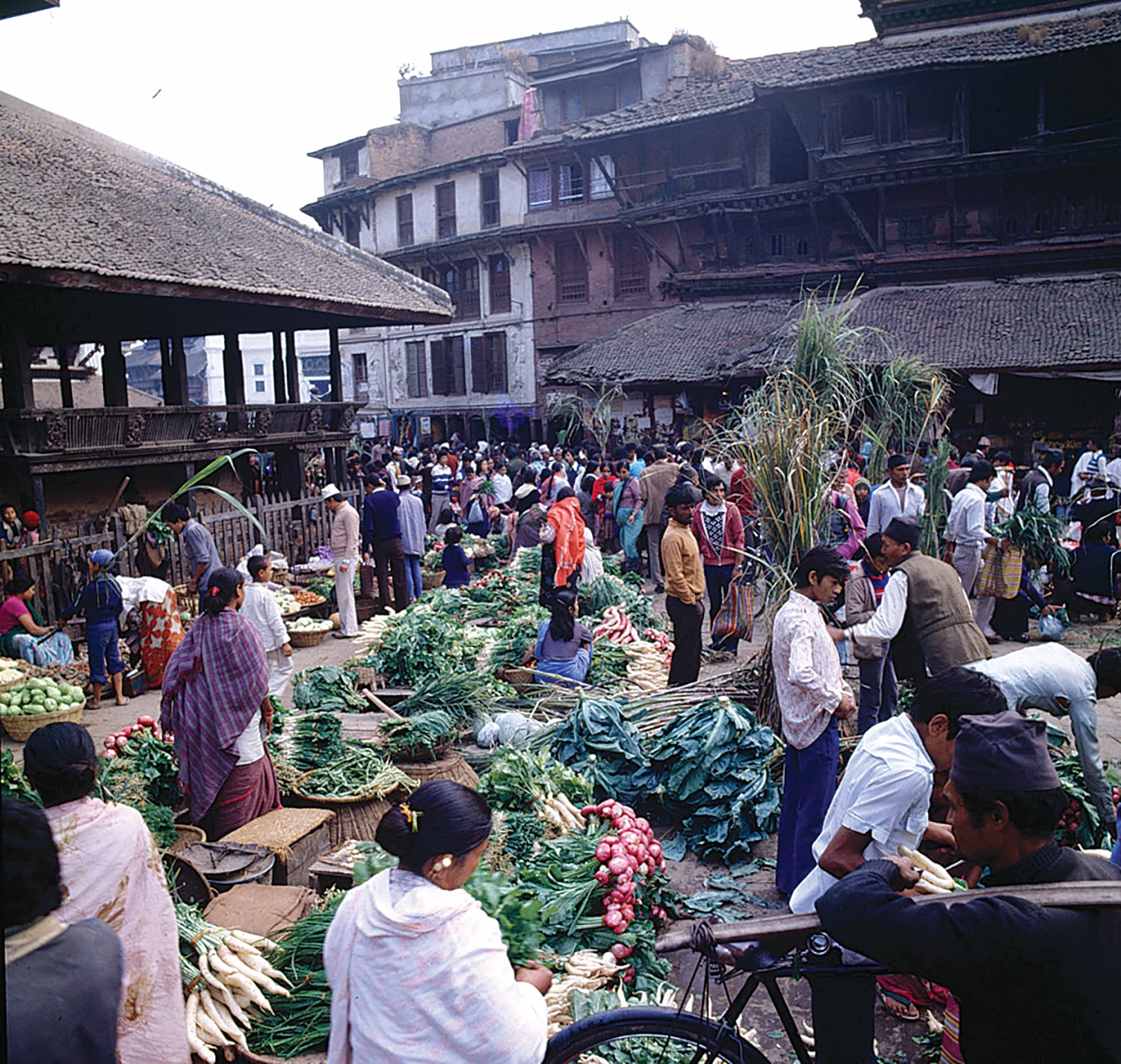
There is much enthusiasm in the local community about welcoming the gods they remembered seeing as children, and a deeply emotional relationship people share with their heritage is evident. Repatriated gods are increasingly becoming reconsecrated in their original temples for active worship, reinvigorating Nepal’s intangible culture (see column, right).
This emotional dimension is impossible to capture through provenance and ownership documents alone. The gods connect Nepali communities to their history not just as works of art, but as objects of devotion cared for across generations.
The gods and temples are material inheritance left by ancestors who commissioned them to give thanks for good harvests or hopes of good fortune. This relationship is a part of daily life as locals walk to school, commute, buy vegetables, or shop.
The return of the panel opens the possibility of strengthening this relationship between people and their heritage. But it is also important to restore the other objects at the Viennese auction.
For those who have spent years tracing them through photographs, books and auction catalogs, the question rarely ends with ownership. For them, and for the communities who remember the objects, it is a question of where they belong.